TL;DR
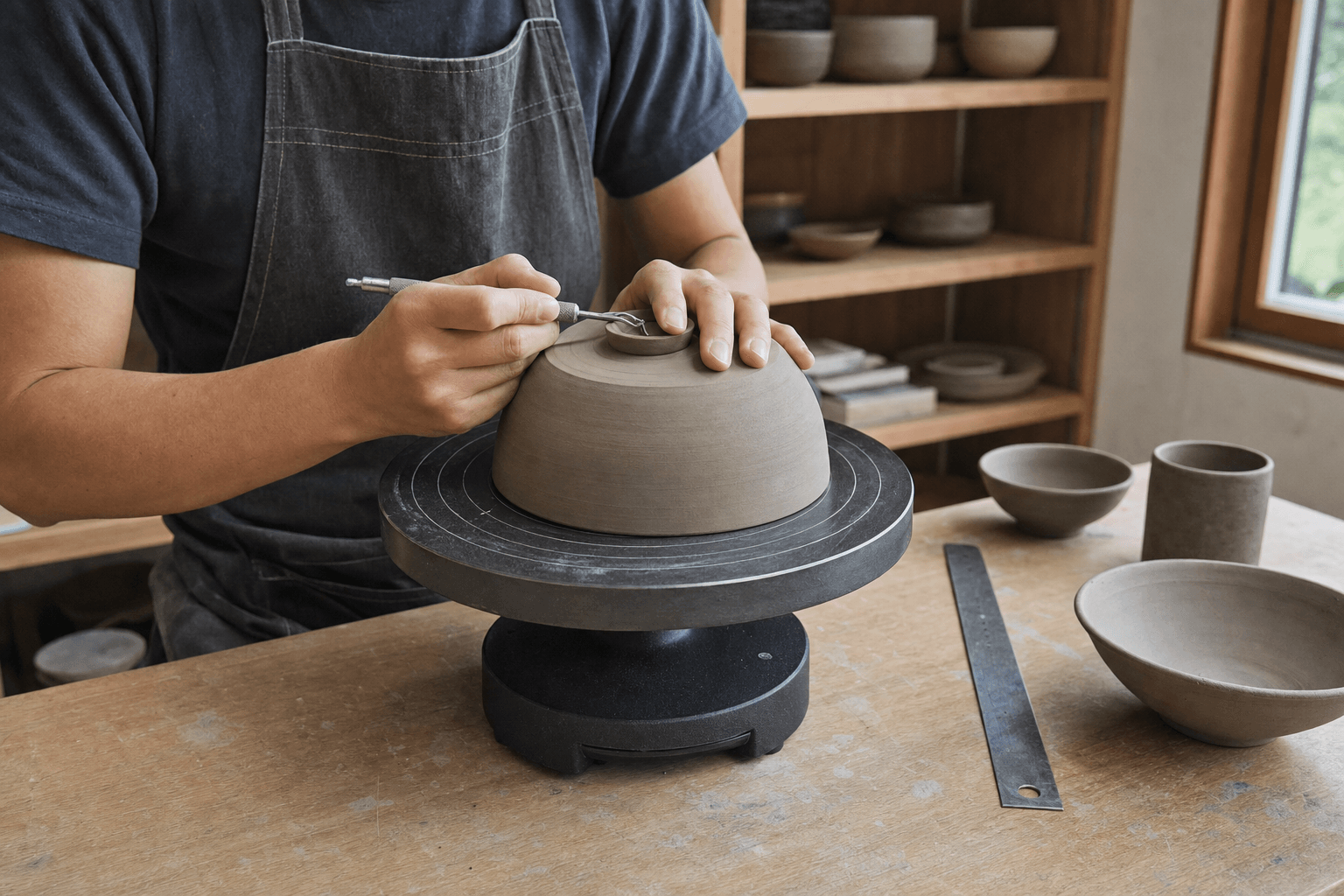
A pottery trimming turntable is a tabletop tool you turn by hand. It helps you inspect the profile, foot ring, and centering of leather-hard ware while making slower, controlled trimming passes. It provides no continuous power like a pottery wheel, so begin by measuring the forms you make most often, then compare tabletop diameter, rotational feel, base stability, and cleaning features.
What can a trimming turntable improve?
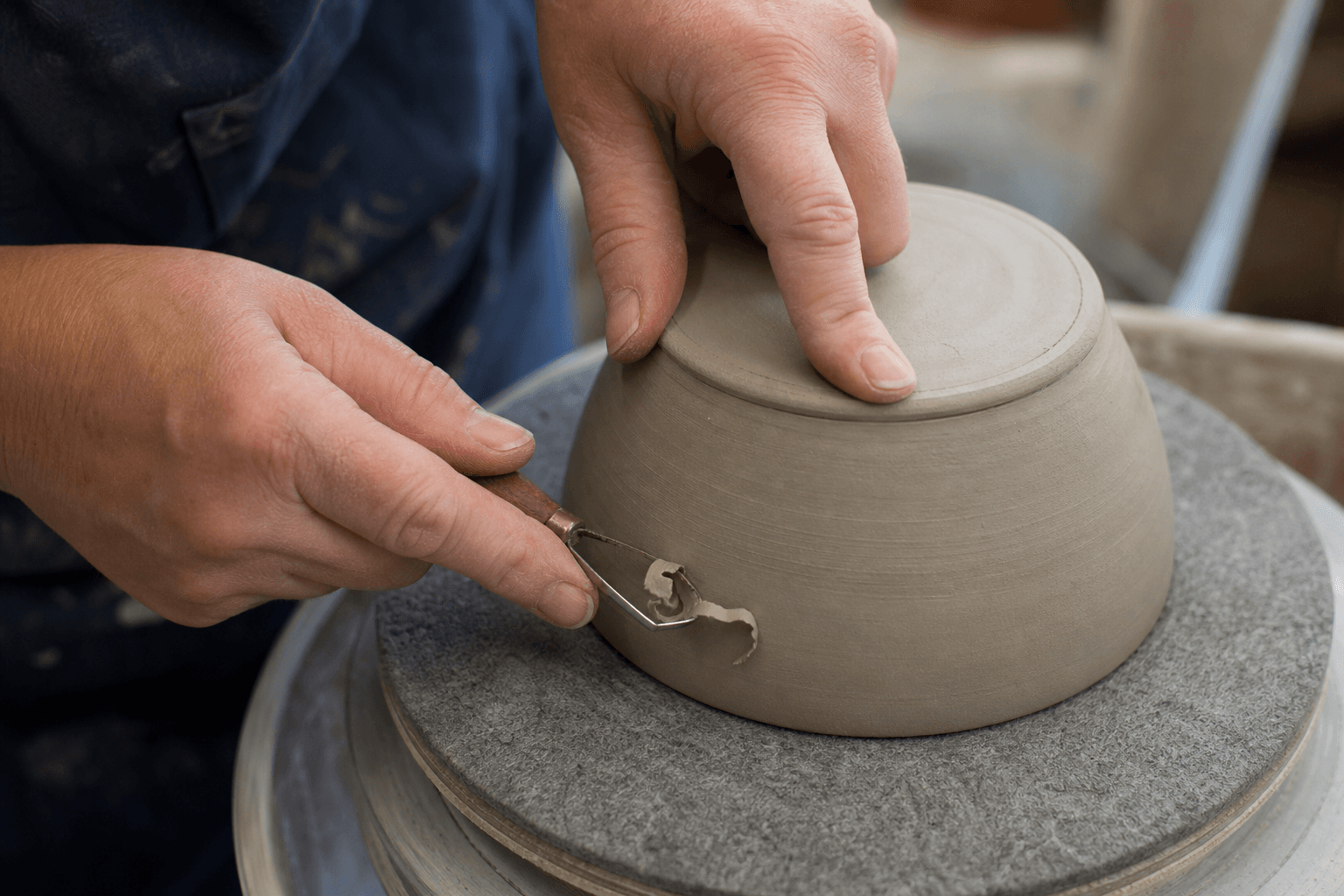
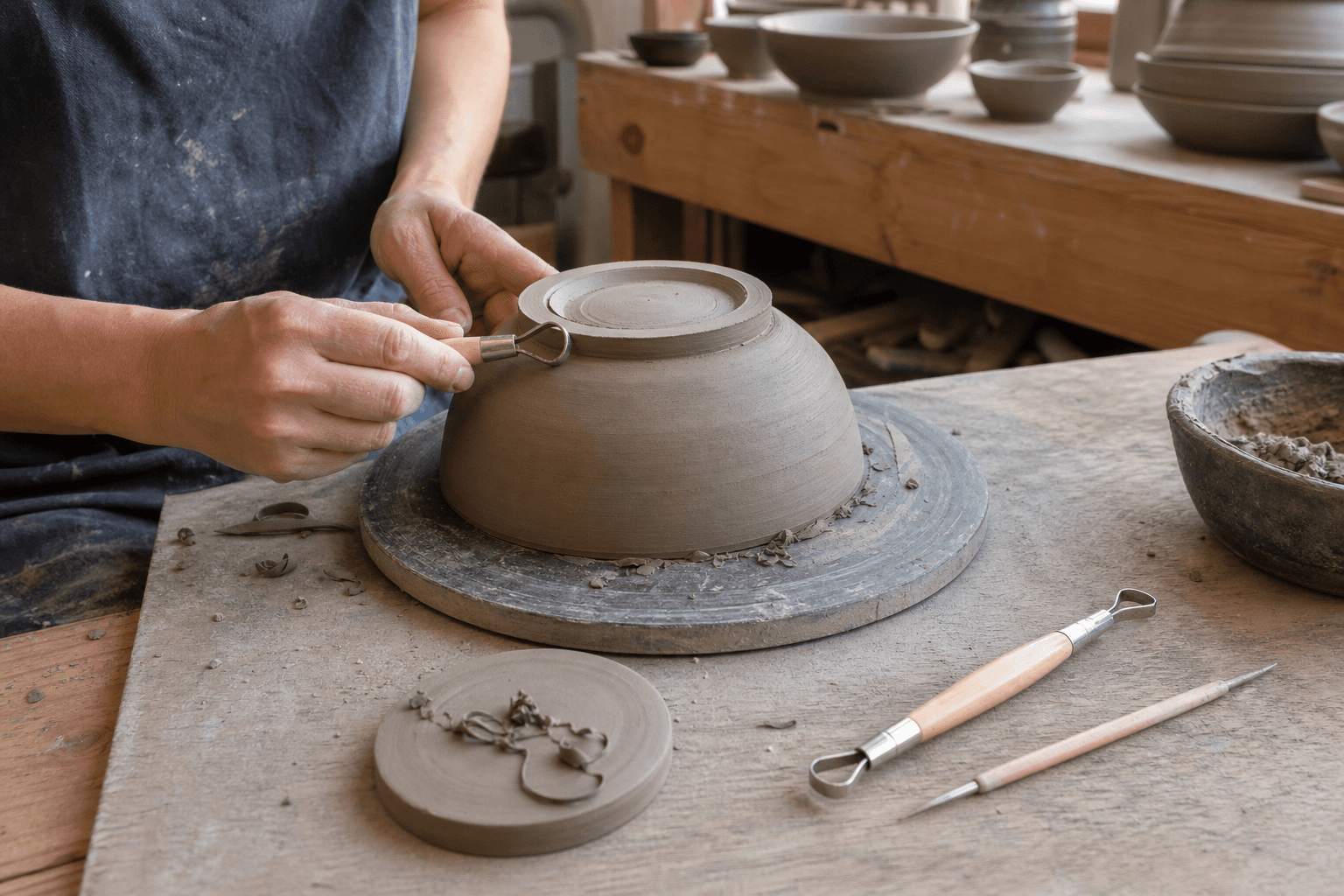
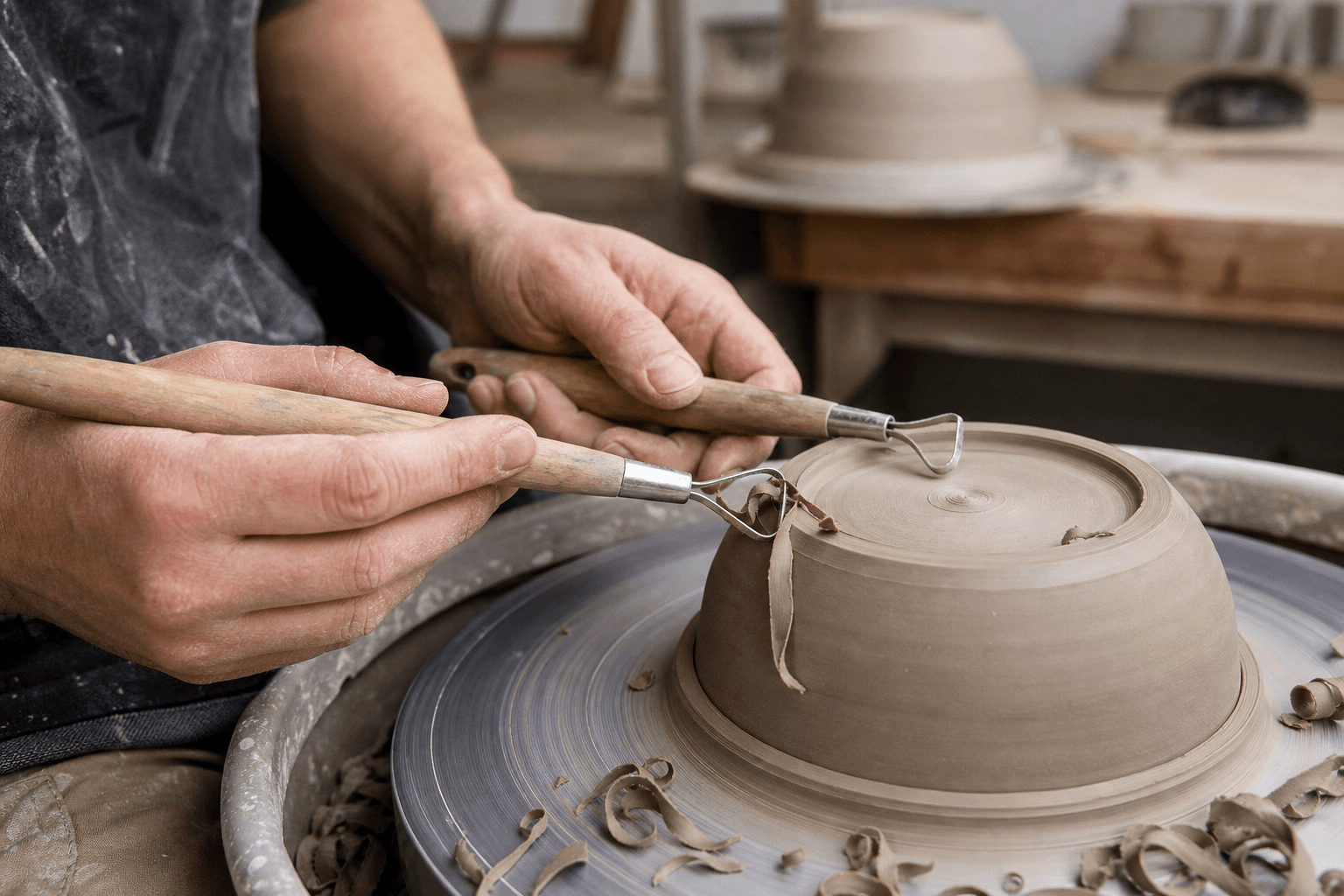
A turntable lets you reposition a piece smoothly in front of your tool, so you do not have to keep moving the ware by hand. That makes it easier to maintain a consistent viewing angle and trimming rhythm. Concentric markings can help with centering, though they do not prove that the ware is perfectly centered; confirm the remaining clay thickness with a checking method suited to the form.
Hand-turning table or wheel for trimming?
A pottery wheel is usually more efficient when you need continuous cutting or are working on larger pieces. For light trimming on the foot rings of cups and bowls, scribing lines, or checking a profile, a hand-turning table is quieter and does not require foot-pedal control. Models with greater inertia turn more smoothly, though they take longer to stop and make fine positioning slower. Models with less inertia are easy to brake at any point, but they require more frequent pushes.
How should you choose the tabletop diameter and construction?
Start by measuring the largest base you trim, then leave room for your fingers, clay dabs, and trimming tools. Cups may be best served by a compact tabletop, while wide bowls and plates need more complete coverage. Check each of the following:
- Whether the manufacturer's stated load capacity covers the wet ware you typically make
- Whether the tabletop material withstands routine wiping and resists clay sticking
- Whether the bearings turn evenly and whether there is noticeable side-to-side wobble
- Whether the base's weight or nonslip design can reduce shifting
- Whether clear concentric rings are provided and whether the tabletop can be removed for cleaning
If the product page leaves out these details, confirm them with the seller before browsing the studio equipment catalog for comparison. Do not order based on appearance alone.
Run these checks on arrival before deciding whether to keep it
Place the turntable on a level, sturdy workbench and spin it empty to check for wobble and unusual noise. Then set on a scrap piece in a size you commonly use and test starting, continuous rotation, slow positioning, and stopping. Secure the ware during trimming, keep your fingers away from the tool's path, and stop the turntable before repositioning the piece. Maintain the bearings and removable parts according to the product instructions. For more studio layout ideas, see this pottery workflow article.
Keep this nearby while you make, then let the next piece be your own.