TL;DR
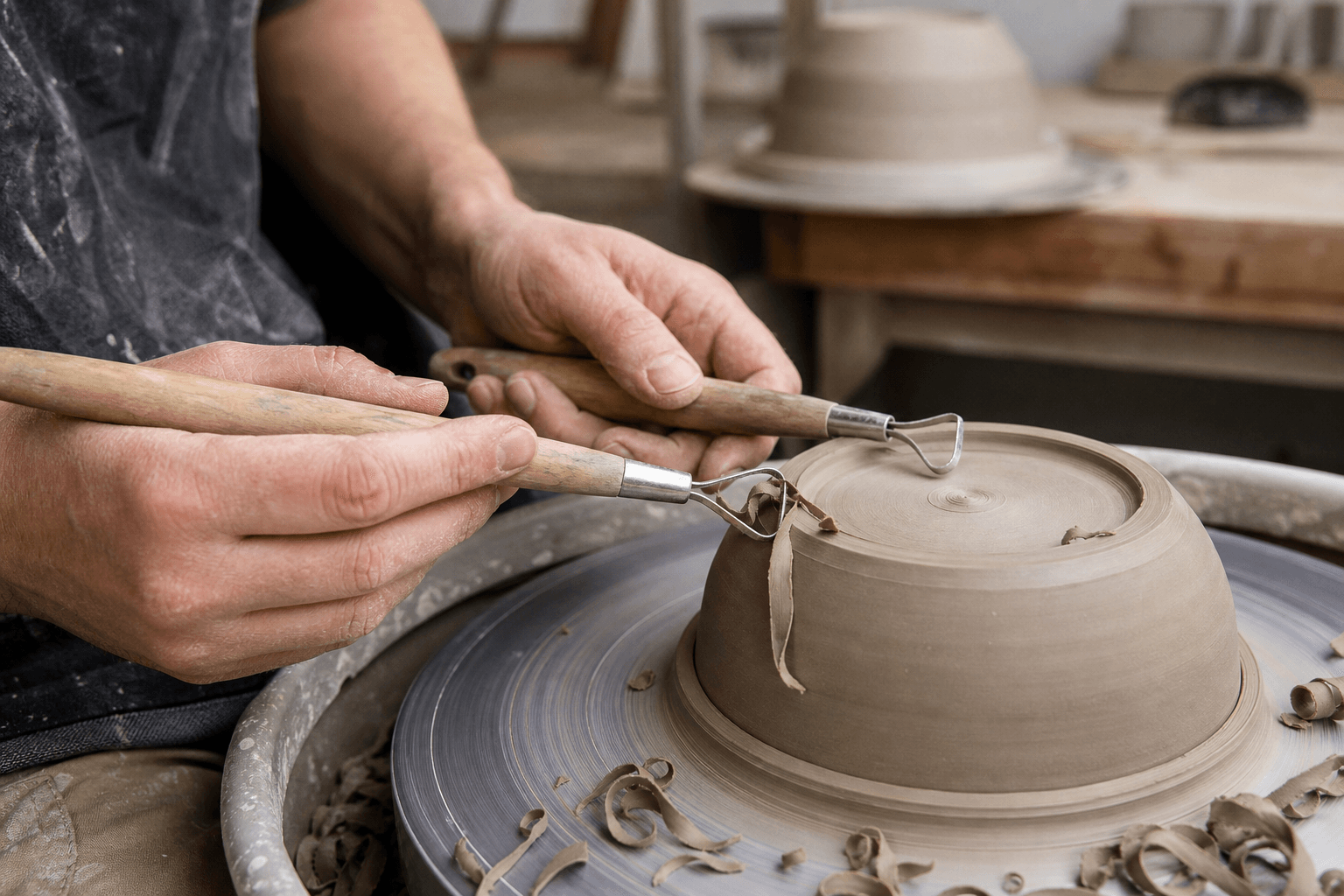
The best pottery trimming tools are not defined by brand or price alone. Compare the steel, cutting-edge geometry, and shaft flex to the clay stiffness, trimming stage, and foot-ring shapes you make most often. If you are unsure, start with one medium loop tool and one stiffer tool, then compare the waste ribbon, surface marks, and hand fatigue across the same form.
What should you compare before buying pottery trimming tools?
Use this order: edge behavior, shaft control, steel durability, then handle comfort. A tool that feels impressive in the package may still be a poor match for your clay or trimming technique.
Before choosing, write down three details:
- Do you mostly trim soft leather-hard clay, firmer clay, or both?
- Are your forms narrow and detailed, or wide with broad foot rings?
- Do you remove a lot of clay, or mainly refine a finished profile?
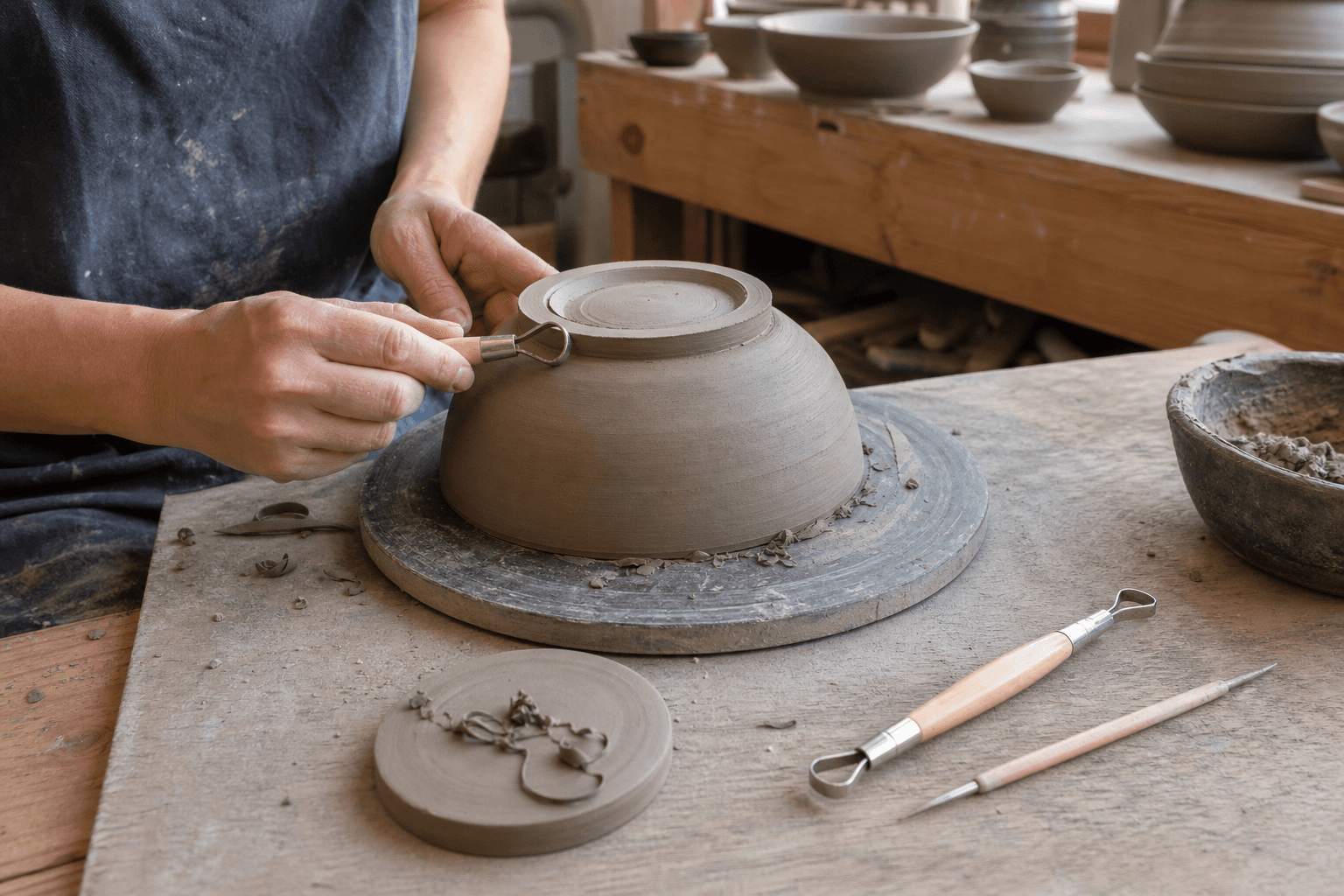
Those answers narrow the choice more effectively than a long list of brand names. A broad loop can remove clay quickly from a larger foot, while a narrow loop gives more control around curves and small details. Many potters eventually keep several shapes, but the first tool should match the work you repeat most often.
For a wider overview of essential tools and tools you can postpone, see Pottery Tools for Beginners: The Starter Kit.
Steel type affects maintenance more than cutting style
The steel label is useful, but it does not tell you everything about how a trimming tool will feel. In practical studio use, steel affects edge retention, resistance to corrosion, stiffness, and how easily the tool can be maintained.
Stainless steel is convenient when tools are frequently exposed to water and wet clay. It generally reduces concern about surface rust, but stainless does not automatically mean the tool has the best edge or the stiffest shaft. Inspect the actual loop and joint rather than treating the material label as a quality guarantee.
Carbon or other harder tool steels may offer a crisp, durable edge, depending on the alloy and heat treatment. They also need more careful drying and storage. A damp tool left in a bucket or under clay can develop corrosion, even when the cutting edge still looks usable.
Thin spring steel loops can feel responsive and cut cleanly, but their behavior depends on thickness and shape. A very thin loop may suit delicate finishing cuts and feel too flexible for heavy stock removal. A thicker loop can resist bending but may require more pressure on tight curves.
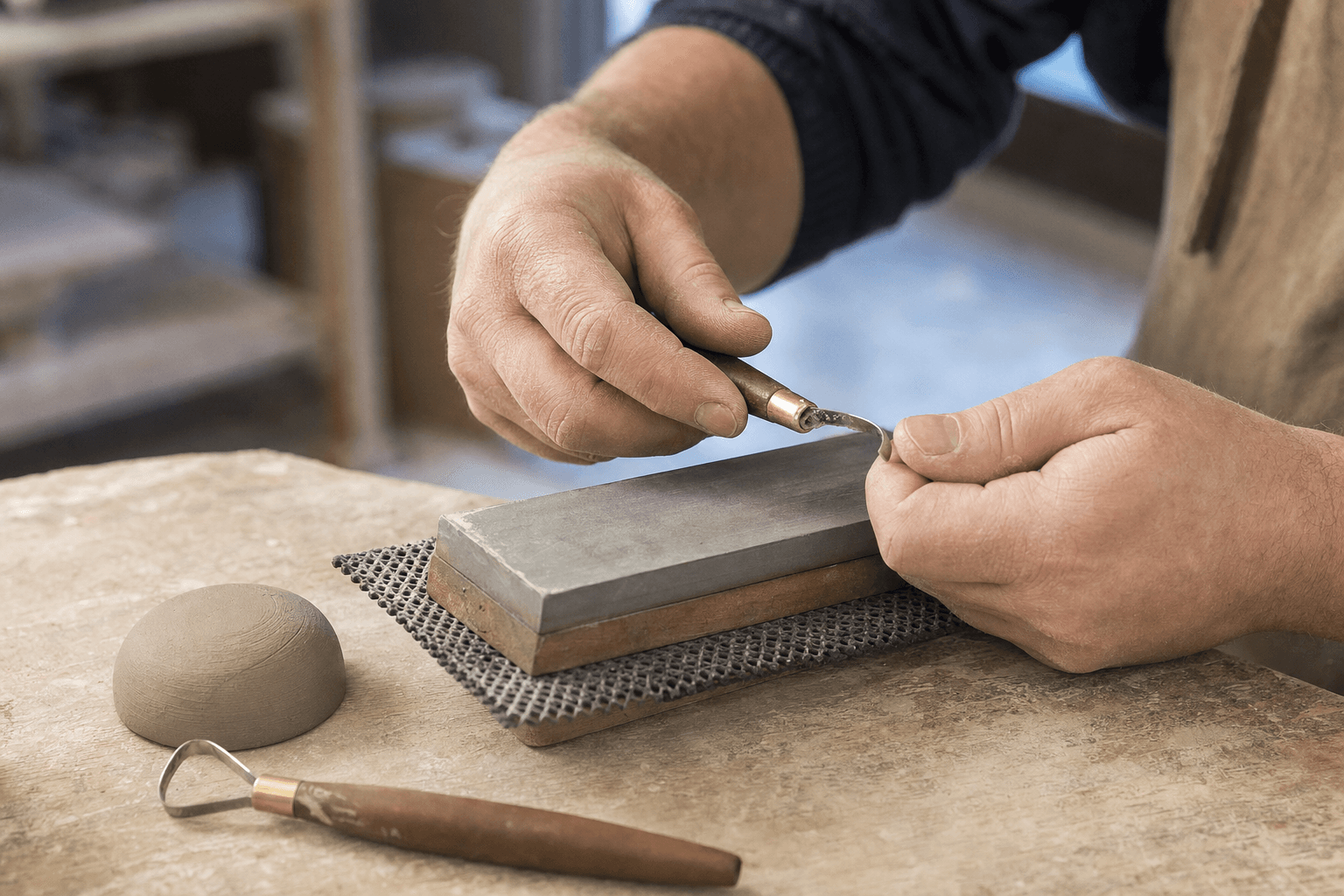
Keep tools clean after use, dry them before storage, and inspect the joint where the loop meets the shaft. If an edge becomes damaged, follow a cautious sharpening process rather than changing its original shape at random. A Practical Guide to Sharpening and Maintaining Pottery Trimming Tools covers inspection and maintenance decisions in more detail.
Which edge geometry suits your trimming work?
Edge geometry controls how the tool enters the clay and how much material it removes per pass. Look at the loop's width, thickness, cross-section, corner shape, and bevel.
- Narrow loops fit small feet, sharp transitions, and detailed relief. They concentrate force in a small area, so they can leave deeper marks if you push too hard.
- Wide loops cover more surface and can make broad foot rings faster to establish. They need enough room to turn without catching the wall or adjacent clay.
- Rounded edges tend to make smoother transitions and are useful when refining a curve.
- Sharper corners help define steps and inside angles, but they demand lighter pressure and closer attention to the direction of travel.
- Thicker cross-sections usually feel more resistant to bending. They can be useful for removing a larger amount of clay, while thinner sections can feel more delicate and precise.
A tool does not need to be aggressive to be effective. If the loop chatters, digs in, or leaves torn clay, the issue may be a mismatch between edge shape, clay firmness, and pressure rather than a lack of sharpness.
How much shaft flex should a trimming tool have?
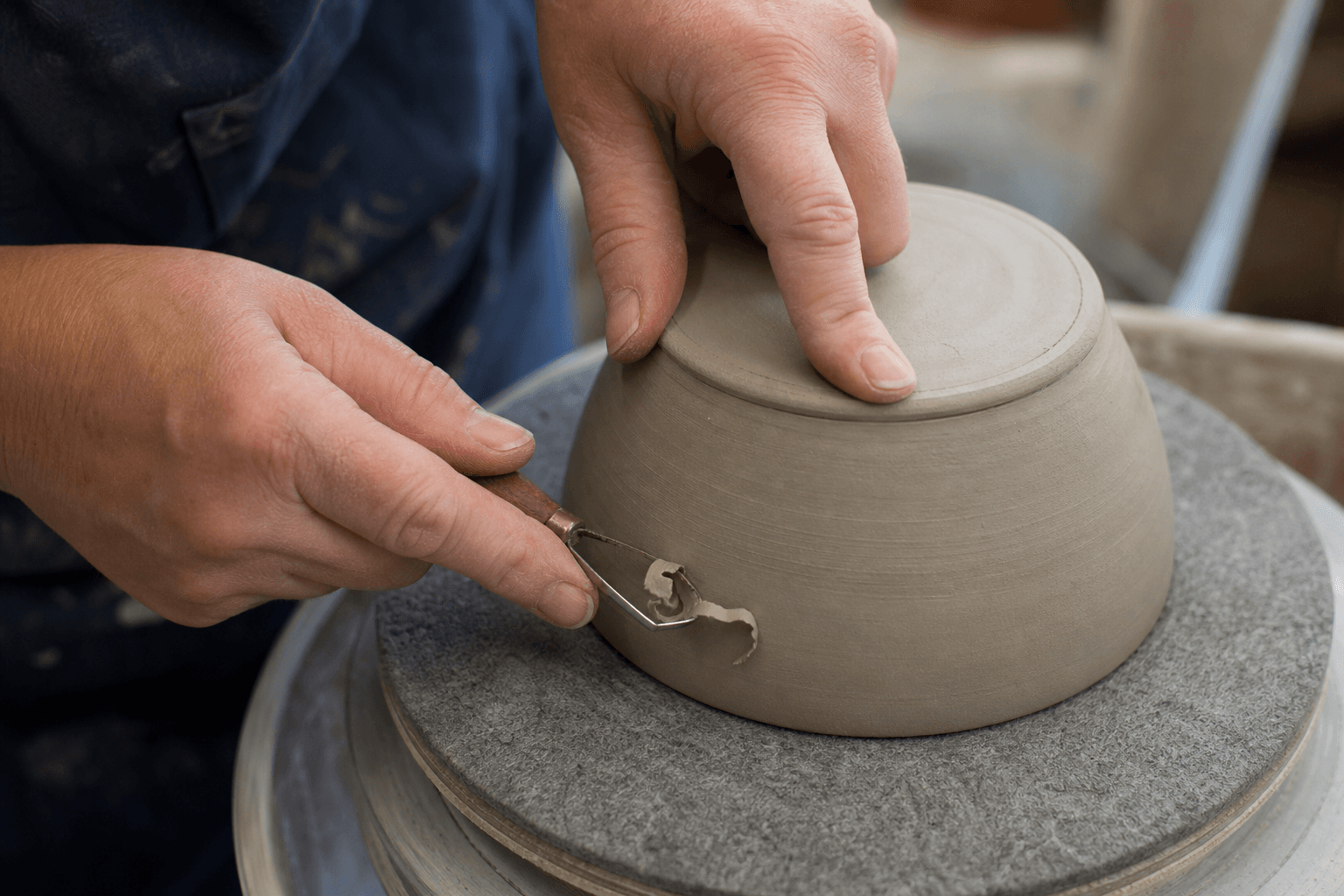
Shaft flex is the tool's feedback system. A flexible shaft can soften small changes in hand pressure and follow a rounded profile. A stiff shaft transfers more of your movement directly to the loop, which can make heavier cuts and straight transitions easier to control.
Choose a more flexible shaft when you often:
- Refine rounded bowls and curved outer walls
- Make light finishing passes
- Prefer a forgiving feel while learning pressure control
Choose a stiffer shaft when you often:
- Remove a thicker layer from firm leather-hard clay
- Establish flat or stepped foot-ring surfaces
- Want immediate feedback when the loop contacts the clay
Flex is not simply good or bad. Too much flex can make the cutting edge wander, especially when you are trying to keep a foot ring even. Too little flex can make light work feel abrupt. Hold the tool by its normal grip and make a small, controlled movement in the air. You are not testing cutting performance, but you can notice whether the shaft feels stable, springy, or awkward before buying.
A simple comparison test for your shortlist
When two tools look similar, compare them on the same leather-hard test piece instead of changing tools and forms at the same time.
1. Mark two equal sections on the underside of a practice form. 2. Use the same trimming direction and roughly the same number of passes on each section. 3. Observe the clay ribbon, surface tearing, chatter, and corner control. 4. Check whether your wrist or fingers tense up with one tool. 5. Repeat the test after the tool has been cleaned and dried.
Record the result with simple notes such as “clean ribbon,” “too springy,” or “good for narrow curves.” This creates a useful personal shortlist without assuming that a higher price equals better control.
If the turntable itself is making the work difficult, tool changes may not solve the problem. Compare tabletop size, rotational inertia, bearings, and base stability in How to Choose a Pottery Trimming Turntable: Control, Size, and Inertia.
Best pottery trimming tools by studio need
| Studio need | Look for | Possible compromise | |---|---|---| | One general-purpose tool | Medium loop, moderate stiffness, comfortable grip | May be less efficient for very large or very small forms | | Large bowls and broad feet | Wider loop, stiffer shaft, stable handle | Less precise in tight curves | | Small cups and detailed feet | Narrow loop, controlled edge, lighter shaft | Slower for removing larger amounts of clay | | Light profile refinement | Smooth edge, moderate flex, easy hand control | Not ideal for heavy stock removal | | Damp or frequently washed studio | Corrosion-resistant steel and easy-to-clean handle | Steel type alone does not determine edge quality |
Treat this table as a starting point, not a ranking. A tool that matches your recurring forms will usually be more useful than a larger set of mismatched shapes.
FAQ: choosing trimming tools
Are expensive pottery trimming tools always better?
No. Price can reflect materials, manufacturing, handle design, or brand positioning, but it does not prove that the edge geometry and shaft flex suit your work. Compare tools against the forms and clay firmness you use.
Should a beginner buy a set or individual tools?
An individual medium tool is often easier to evaluate than a large set. Add a narrow or wide tool after you identify the limitation in your first tool, such as poor access to small feet or slow removal from broad surfaces.
How do I know when a trimming tool is worn out?
Look for a damaged or distorted loop, a joint that no longer stays secure, repeated tearing despite suitable clay firmness, or an edge that cannot be restored without changing its intended geometry. Stop using a tool if the loop or shaft is loose.
Does sharper always mean better trimming?
No. A sharp edge can still be a poor match for the clay or profile. Controlled contact, suitable geometry, and the right shaft stiffness matter as much as sharpness.
Keep this nearby while you make, then let the next piece be your own.