TL;DR
You can replace heating elements, patch firebrick, and swap thermocouples in most home kilns by following the manual and disconnecting power first. Anything involving the main electrical panel, circuit breakers, or permanent wiring requires a licensed electrician and local code compliance.
Heating Element Replacement
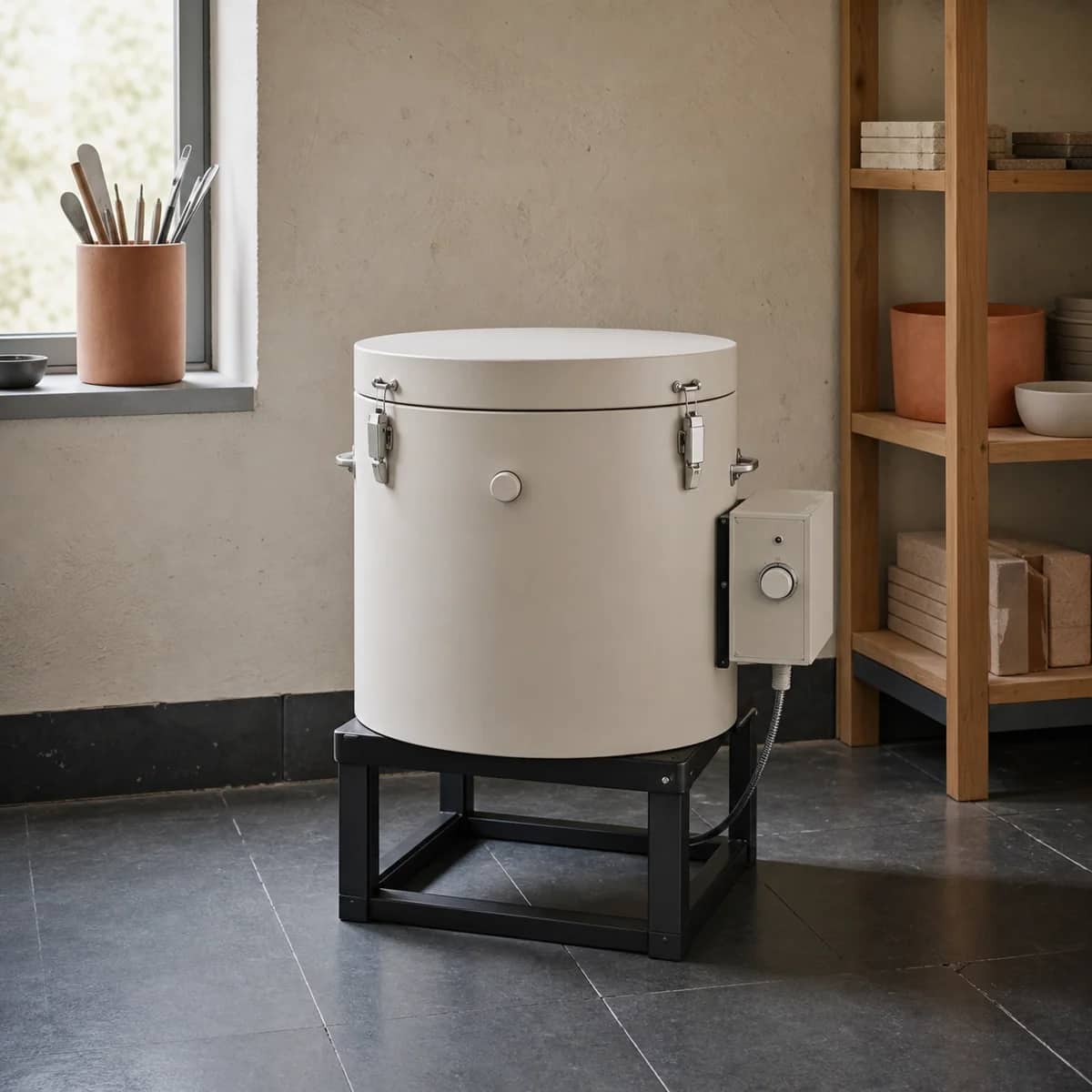
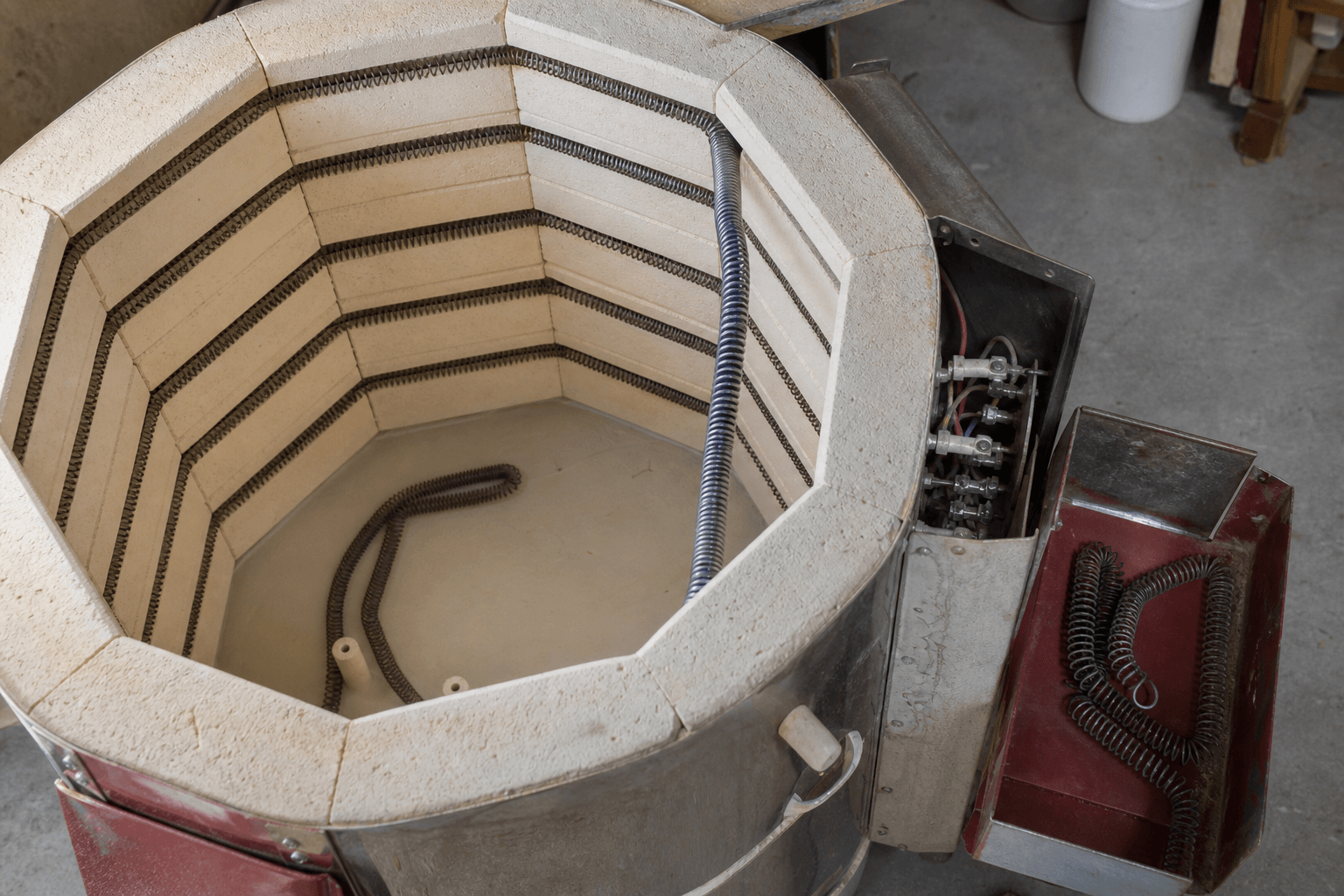
Elements wear out. They sag, develop hot spots, or break after hundreds of firings. Most electric kilns use grooved firebrick to hold coiled elements in place, and replacing them is a mechanical task, not an electrical one.
Disconnect power at the breaker before you start. Remove the kiln's access panel to reach the element pins where they connect to the power supply. Unscrew the terminals, pull the old element from its groove, and note how it was routed. The new element must follow the same path and sit fully in the groove without forcing it. Reattach the terminal screws and check that the element sits flat before closing the panel and restoring power.
Order replacement elements by kiln model and serial number. Generic elements often have the wrong resistance or coil diameter, which can overload the circuit or fire unevenly. The manual lists the correct part number.
Firebrick Patching and Replacement
Cracked or chipped firebrick is common around the peephole, door, and element grooves. Small cracks that do not affect structural integrity can be patched with kiln cement or high-temperature refractory mortar. Let the patch cure according to the product instructions, then fire the kiln empty to a low bisque temperature to harden it fully.
If a brick is broken through or a corner has crumbled away, replace the entire brick. Mostkilns use soft insulating firebrick that can be cut with a handsaw. Remove the damaged brick, measure the cavity, cut the replacement to fit, and apply kiln cement to the edges before setting it in place. Some kilns require you to remove multiple bricks to access one damaged piece, so check the manual's assembly diagram.
Never patch the element groove itself if the damage prevents the element from sitting securely. A loose element will arc or overheat.
Thermocouple Replacement
A thermocouple measures kiln temperature and tells the controller when to advance or hold. If your kiln fires to the wrong temperature, overshoots, or shows erratic readings, the thermocouple may be fouled or failing.
Disconnect power, then unscrew the thermocouple from its mounting port. Note the wire polarity before disconnecting it from the controller terminal. Install the new thermocouple in the same port, tighten it snugly, and reconnect the wires in the correct order. Most controllers label positive and negative terminals.
Clean the thermocouple port with a small brush if glaze drips or kiln wash has built up inside. A blocked port can give false readings even with a new thermocouple.
Where to Stop and Call an Electrician
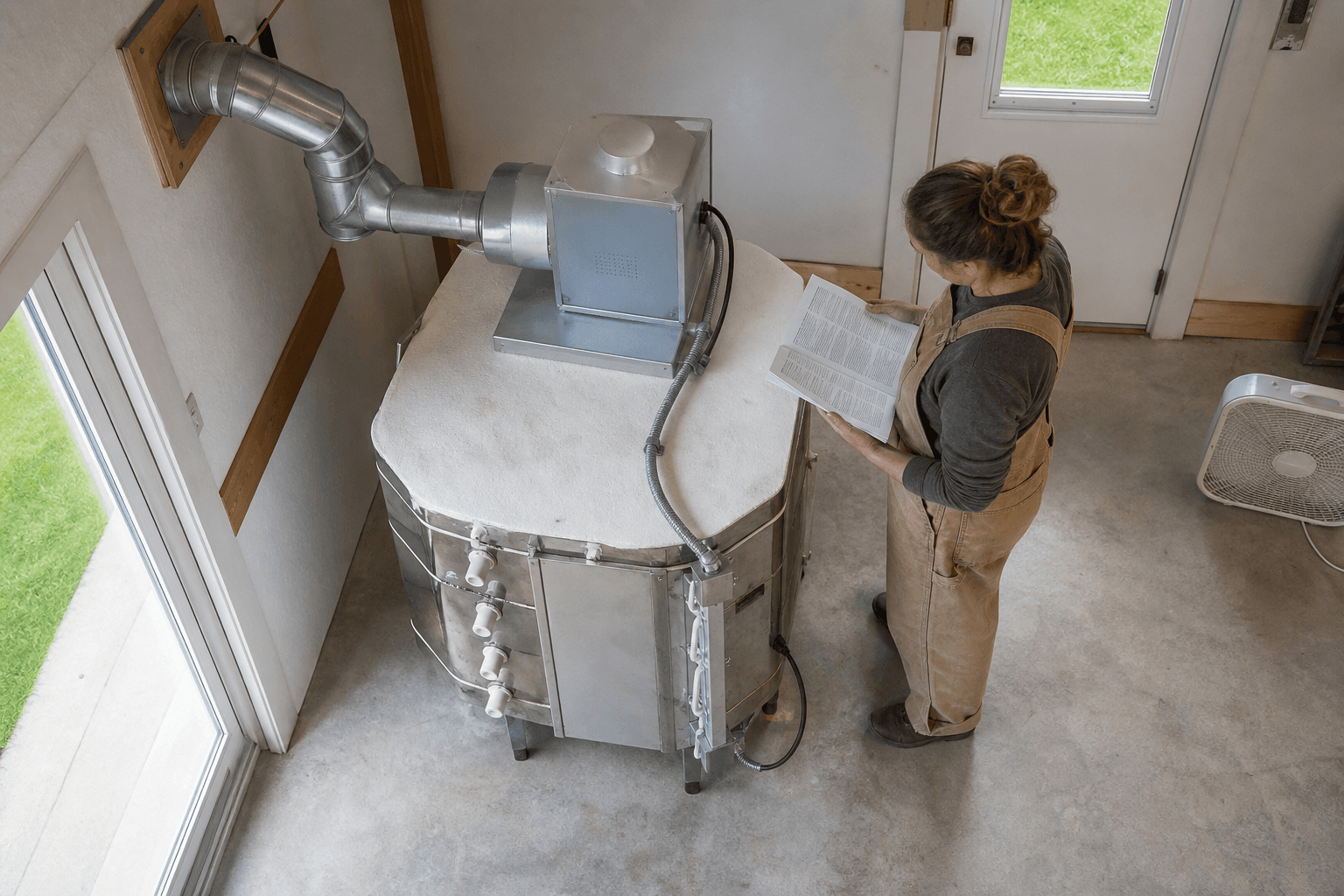
Anything beyond the kiln's terminal block requires a licensed electrician. That includes installing a new circuit, upgrading the breaker panel, running conduit, or replacing a damaged power cord that is hardwired into the wall. Local electrical codes govern these installations, and inspections are often required.
If your kiln trips the breaker repeatedly, the problem may be an undersized circuit, a failing breaker, or a ground fault. Do not attempt to bypass the breaker or install a larger one without confirming the wire gauge and circuit design. An electrician can test the circuit, verify the load, and determine whether the kiln, the wiring, or the panel is at fault.
Some older kilns have asbestos insulation or obsolete wiring. If you suspect asbestos, hire a certified abatement professional before opening any panels. Never sand, scrape, or disturb suspected asbestos material.
For kiln placement, electrical setup, and ventilation planning, see How to Choose a Pottery Electric Kiln for a Home or Small Studio.
Relay and Switch Replacement
Mechanical relays and infinite switches control power to the elements. If one section of the kiln does not heat, a relay may have failed. Relays are modular components mounted inside the control box, and most can be replaced by disconnecting the kiln, labeling the wires, removing the screws, and installing an identical part.
Order relays by kiln model. Generic parts often have different coil voltages or contact ratings, which can damage the controller or create a fire hazard. If you are uncertain about wire routing or part compatibility, consult the manufacturer or an electrician.
Infinite switches (the rotary dials on manual kilns) can also fail. Replacement follows the same process: disconnect power, label wires, remove the switch, and install the new one. Test the kiln empty after any control replacement to confirm even heating.
FAQ
Can I replace a kiln element while the kiln is still warm? No. Wait until the kiln has cooled completely and disconnect power at the breaker before opening any panel or touching internal components.
How do I know if a relay has failed? If one section of the kiln does not heat while others do, and the element in that section is intact, the relay controlling that circuit may have failed. A multimeter can test for continuity, or an electrician can diagnose it.
Is kiln cement the same as mortar? Kiln cement is a high-temperature adhesive for small cracks and joints. Refractory mortar is thicker and used for setting or replacing bricks. Both must be rated for the kiln's maximum temperature.
Can I use a different brand of thermocouple? Yes, as long as the thermocouple type (usually Type K for pottery kilns) and probe length match the original. Check the manual for specifications.
When should I replace all the elements at once? If one element fails and the others are original to the kiln or have fired more than 200 cone-equivalent cycles, replace all of them at the same time. Mismatched element resistance can cause uneven heating.
Keep this nearby while you make, then let the next piece be your own.