TL;DR
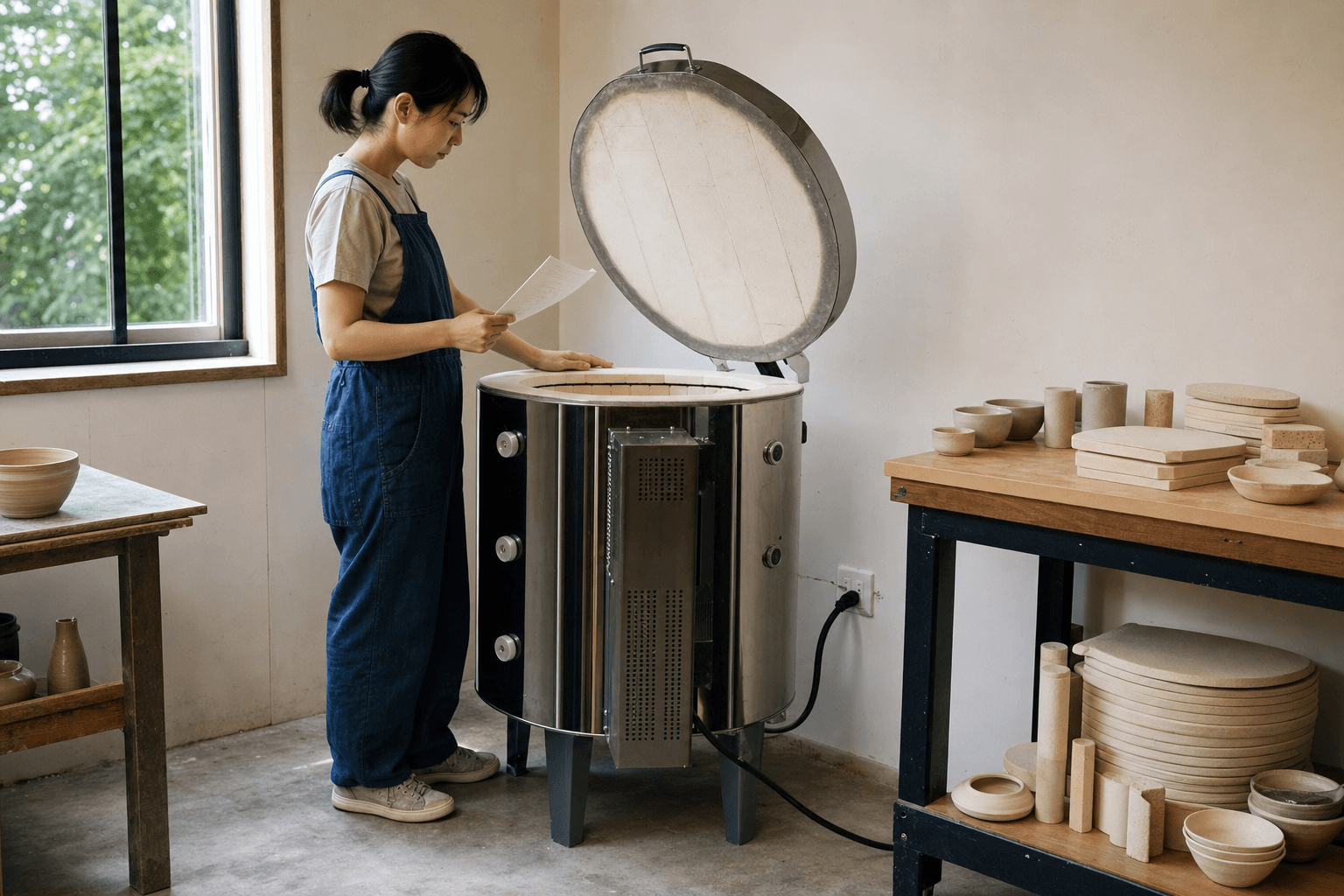
Choosing a pottery electric kiln for a home or small studio should start not with capacity or features, but with confirming that you have a suitable placement with the required clearances, an electrical setup that supports the kiln, and a firing frequency that lets you fill it.
Use This Checklist to Decide Whether Your Space Can Accommodate an Electric Kiln
Before browsing the electric kiln shopping page, write down the following questions. They will shape your decision more than product photos can.
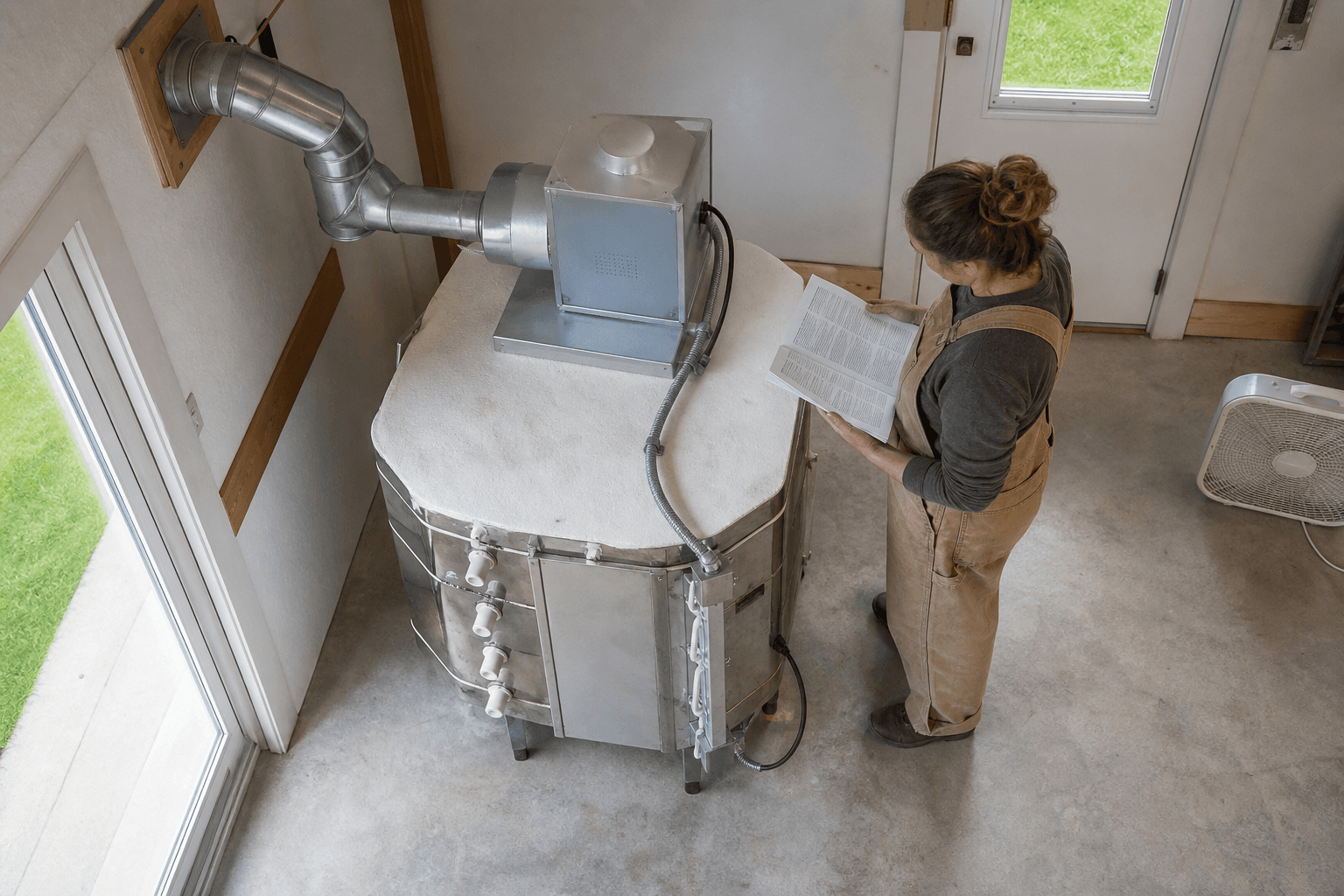
- Placement space: Can you maintain the clearances required by the equipment manual around the kiln without blocking doorways, worktables, or frequently used storage areas?
- Floor and surroundings: Is the location level and stable, and away from cardboard boxes, fabric, glaze packaging, and other flammable clutter?
- Electrical conditions: Does your existing power supply match the requirements in the manual for the model you are considering? A qualified electrician and local regulations should confirm this.
- Firing schedule: Do you usually wait until you have a full batch of work to fire, or do you need to fire small test loads more frequently?
- Delivery path: Can the kiln move smoothly from the entrance into the work area, and will there be room afterward to load and unload work and clean kiln shelves?
- Maintenance support: Can you access the manual, parts information, and customer service contact options for that model?
If you have not yet confirmed the space and electrical conditions, pause before comparing specific models. Addressing installation requirements first can reduce the hassle of later studio modifications.
Match Electric Kiln Capacity to the Size of Your Work
More capacity is not automatically better. The kiln’s interior needs to fit the work you make most often, your kiln furniture arrangement, and your typical firing load.
If You Mainly Make Small Pieces and Test Tiles
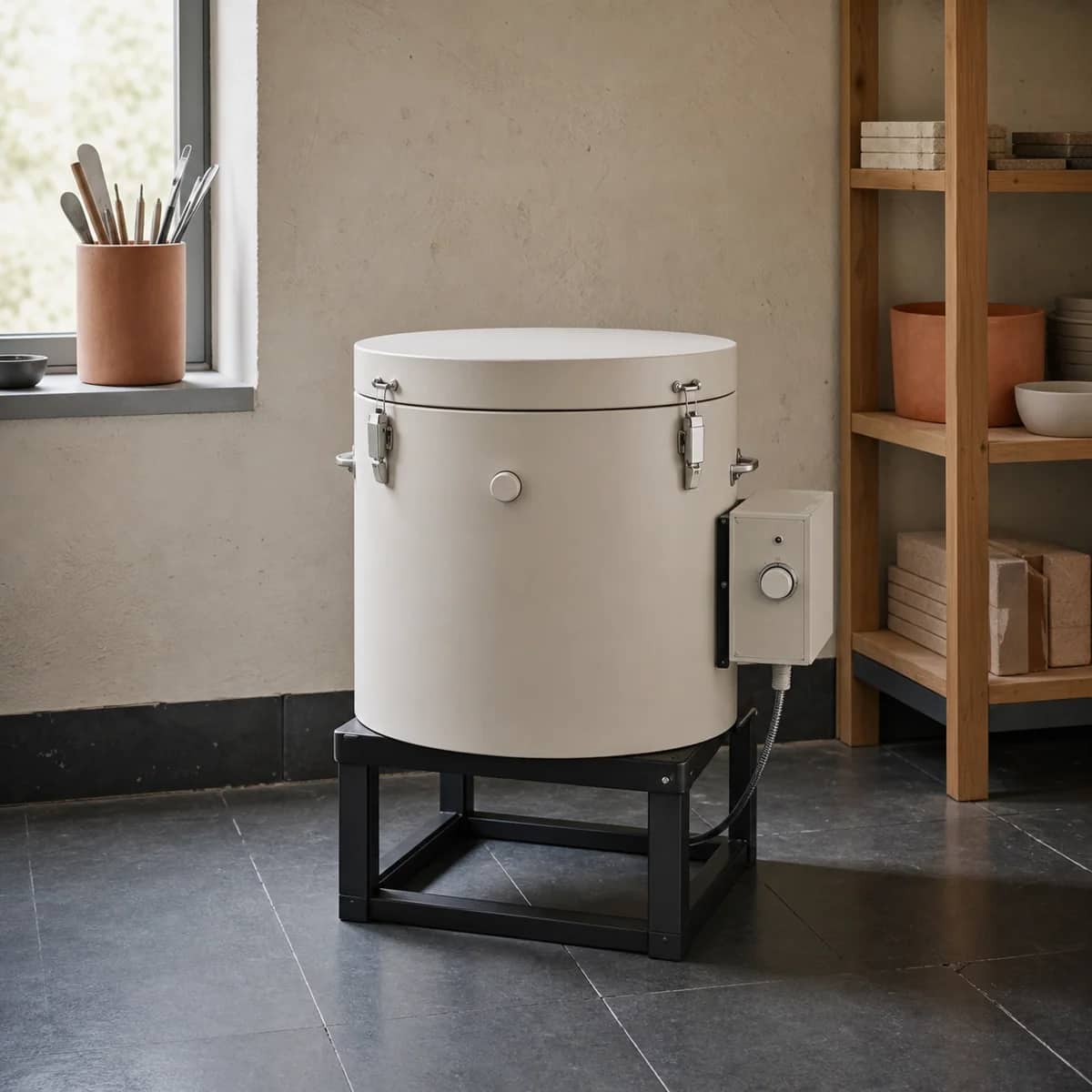
For cups, small dishes, test tiles, and small vessels, a more compact kiln is often easier to fill. Rather than looking only at total capacity, make sure the interior width and height can accommodate your usual combination of shelves and posts.
If You Often Make Tall Pieces, Plates, or Sets
Vases, tall cups, plates, and dinnerware sets are more likely to be limited by interior height, diameter, and shelf layout. Write down the dimensions of your most common work, then compare them with the interior dimensions in the equipment manual. Do not judge suitability by exterior dimensions alone.
If You Are Unsure About Your Firing Volume
Keep records over a period of time: note how many pieces you need for each bisque firing and glaze firing to fill your existing kiln furniture. If you regularly fire only a small number of pieces, a larger kiln may mean longer waits. If your work consistently does not fit, prioritize interior layout and capacity.
Plan the Kiln Location Before Arranging Your Worktables
An electric kiln should not be treated as another piece of equipment beside ordinary storage furniture. Plan its location around the installation requirements in the equipment manual, with a clear path for daily use.
Walk through the motions of loading the kiln, closing the door, checking the controller, retrieving kiln furniture, and moving cooled work. If you need to navigate around a wheel, clay buckets, or stacked cardboard boxes, every firing will add more disorder later.
One simple approach to studio zones is to:
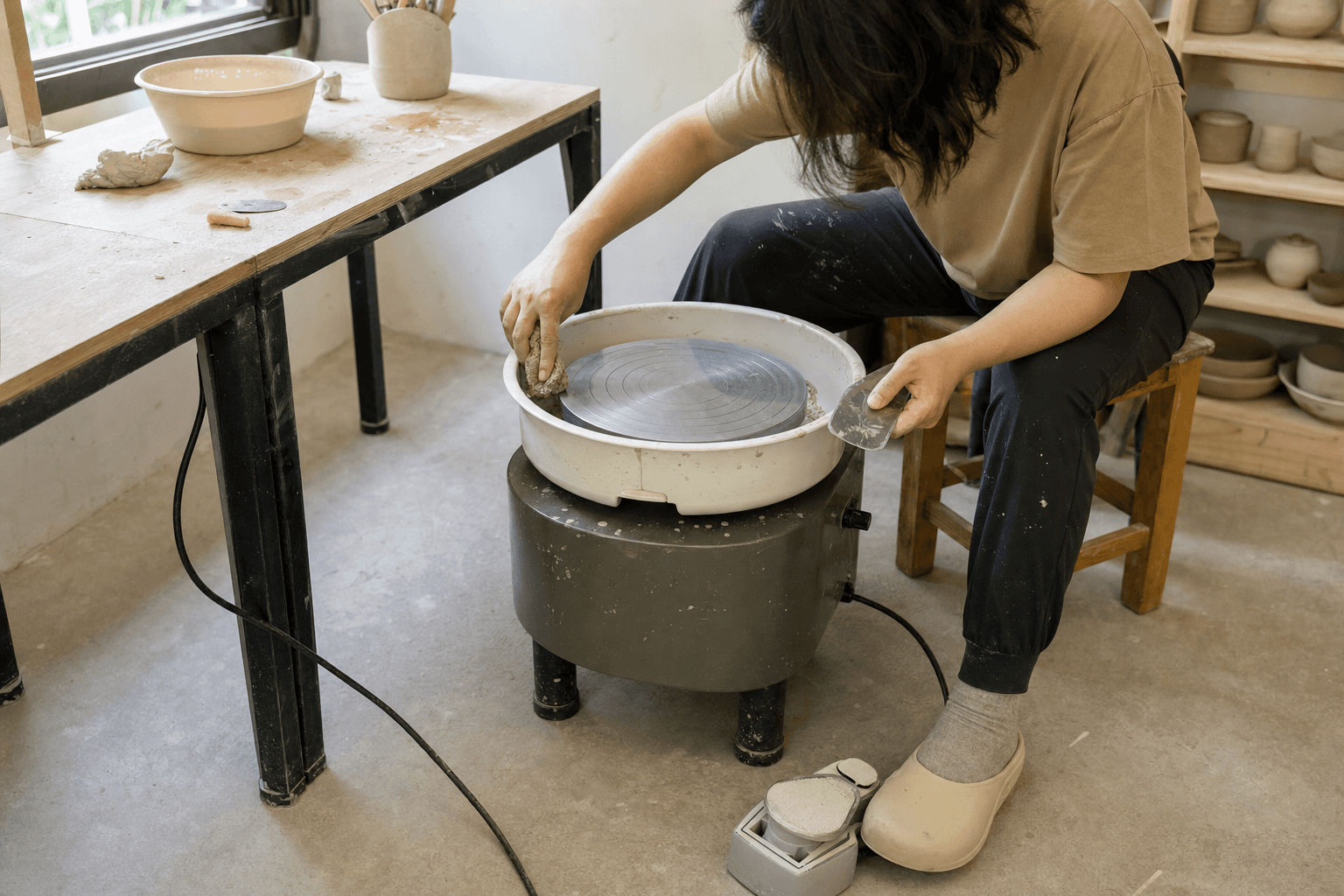
- Keep wet processes such as forming and trimming in an area with easy-to-clean surfaces;
- Store dried work and pieces waiting to be fired where they are less likely to be bumped;
- Reserve a separate, tidy operating area for the electric kiln;
- Keep kiln furniture where it is easy to reach while loading, without blocking walkways.
Ventilation, exhaust, wall clearances, floor conditions, and power arrangements must all follow the equipment manual and local requirements. If a new circuit is needed, an outlet must be adjusted, or existing wiring needs to be assessed, have a qualified electrician handle the work rather than modifying wiring yourself.
When Comparing Controls, Focus on What You Will Actually Use
For a small studio, the value of a control system lies in whether it makes firing schedules more consistent and easier to document, not in having the longest list of features.
Before choosing, ask the seller whether the controller manual is complete, whether firing information can be saved or viewed, which section of the manual to consult when a message appears, and what model information will be needed for future repairs.
If you are moving from manual controls to programmable controls, begin by building a consistent process: standardize your usual clay bodies, glazes, and kiln furniture arrangement, and record the program selected and results from each firing. For more ways to organize test tiles, glaze samples, and studio records, explore the pottery studio articles.
How to Compare New Kilns, Used Kilns, and Preview Products
Neither new nor used kilns are inherently better. What matters is whether you can verify the kiln’s condition and obtain ongoing support.
| Comparison item | More important to confirm for a new kiln | More important to confirm for a used kiln | |---|---|---| | Model information | Whether a complete manual and installation requirements are provided | Whether the model label and manual are still available | | Electrical conditions | Whether it matches the studio’s power supply conditions | Whether power components or wiring methods have been modified | | Kiln condition | Scope of shipping, installation, and warranty | Visible condition of the lining, door, controller, and elements | | Ongoing maintenance | Parts availability and repair contact options | Whether matching parts and repair support are still available |
Product details shown in previews may change, so do not make installation decisions based only on page images or brief descriptions. Before purchasing, request the official manual for the applicable model and have relevant professionals confirm the electrical and site conditions.
Set Up a Recordkeeping Method Before Your First Firing
Before first use, or after changing clay bodies or glazes, complete the required checks and procedures according to the equipment manual. Do not guess at preheating, program settings, or exhaust arrangements.
Your firing records can be simple, but they should be specific enough to include:
- The date and clay bodies and glazes used;
- The type of work and its general placement in the kiln;
- The program used or the corresponding settings in the manual;
- Observations after firing, including color, surface, warping, and glaze movement;
- One item you plan to adjust next time.
Adjusting your process after reviewing results makes it easier to identify the cause than changing clay, glaze thickness, placement, and program all at once. In the next firing, change just one factor, such as glaze application or where the work is placed, then compare the results.
During routine use, keep the area around the kiln tidy and inspect the door, controller, and kiln furniture as required by the manual. Whether you can leave the area, when to open the kiln after cooling, and how to handle unusual messages should all follow the equipment manual and local requirements.
Frequently Asked Questions
Can a Home Space Accommodate a Pottery Electric Kiln?
Whether a kiln can be installed depends on the installation requirements for the specific model, the layout of the space, electrical conditions, and local regulations, not simply the size of the room. Obtain the equipment manual first, then have a qualified electrician confirm the electrical conditions.
Should an Electric Kiln Go in a Garage or an Indoor Studio?
Choose a location that meets the manual’s requirements for space, environment, and ventilation, while avoiding blocked walkways and proximity to flammable clutter. Neither a garage nor an indoor space eliminates the need to confirm the specific installation conditions.
Should a Small Studio Buy a Large-Capacity Electric Kiln First?
Not necessarily. If your firing loads are small, choose a capacity that fits your usual work and kiln furniture layout while meeting your space and electrical conditions. Record your actual firing volume first, then decide whether a larger kiln is needed.
Keep this nearby while you make, then let the next piece be your own.