TL;DR
Electric kiln ventilation should move kiln exhaust outdoors through equipment compatible with your kiln and studio layout. Start with placement and the kiln manual, then compare a kiln-mounted downdraft system with an overhead hood; have a qualified electrician and, where needed, a heating or ventilation professional resolve installation questions.
Where should an electric kiln go at home?
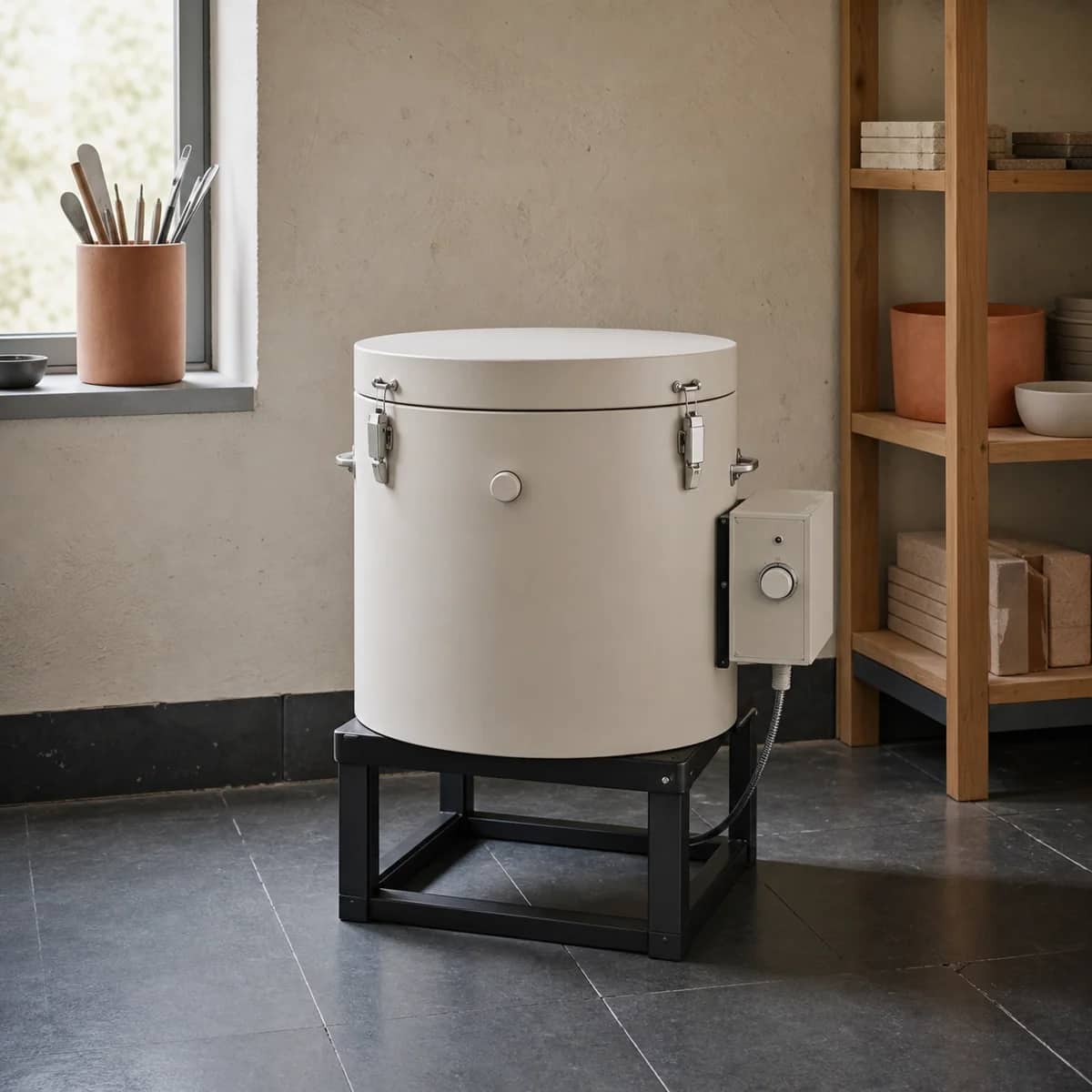
Choose the kiln location before buying ventilation equipment. The best location is usually a dedicated, uncluttered area with a practical route for exhaust ducting, adequate clearance around the kiln, and no stored combustible materials nearby. Follow the kiln manufacturer’s clearance requirements rather than copying a setup from a photo or another studio.
Keep the kiln away from living areas when possible. A garage, utility room, or separate studio may offer a better route to the outdoors than a kitchen, bedroom, or shared workroom. Do not assume that opening a window is an adequate substitute for a designed ventilation system. A window can change room airflow, but it does not necessarily capture emissions at the kiln or provide a reliable exhaust path.
Before ordering equipment, sketch the kiln position, the nearest suitable exterior wall or roof route, the duct path, and the location of any doors or windows. This simple layout test often eliminates ventilation options that look attractive but cannot be installed cleanly.
For broader kiln-capacity and location decisions, compare this setup with the guidance in How to Choose a Pottery Electric Kiln for a Home or Small Studio.
Downdraft or overhead hood: which option fits?
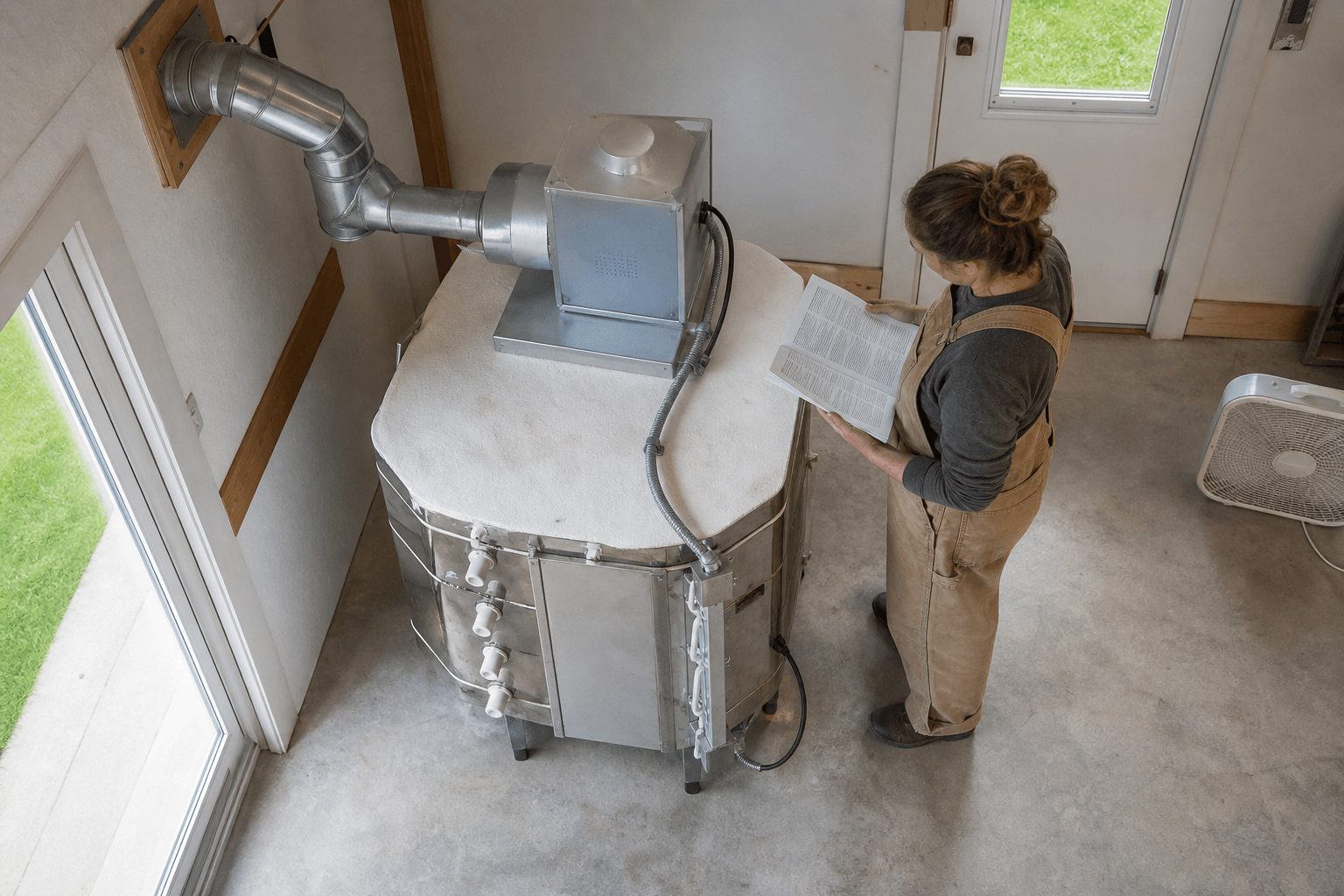
A kiln-mounted downdraft system draws air from the kiln area and sends it through ducting to the exterior. It is often easier to position close to the kiln and can leave the top of the kiln accessible. Check that the ventilation equipment is designed for your kiln model and that the installation method matches the manufacturer’s instructions.
An overhead hood captures air above the kiln. It may suit a fixed studio arrangement where ducting can rise directly and exit through an appropriate route. However, the hood must be positioned and sized for the kiln and room, and its performance depends on the surrounding airflow. A fan that moves air somewhere in the room is not the same as a system that captures and exhausts kiln emissions outdoors.
Use this comparison before choosing:
| Studio condition | More practical starting point | |---|---| | The kiln can sit near an exterior wall or short duct route | Downdraft system or compact exhaust arrangement | | The kiln is permanently installed beneath a clear ceiling area | Compatible overhead hood | | The duct path requires several bends or a long run | Ask the equipment supplier or ventilation professional to review the layout | | The room is shared with other making activities | Prioritize source capture and separation from occupied areas |
Treat this table as a screening tool, not an installation specification. The kiln manual and equipment documentation must decide compatibility.
How do you plan airflow and ducting?
A ventilation system needs replacement air as well as an exhaust path. If the room is tightly closed, an exhaust fan may pull air from unwanted locations or make doors difficult to operate. Plan where fresh air can enter without blowing directly across the kiln or interfering with the capture point.
Keep the duct route as direct as the building allows. Avoid improvised flexible tubing, unapproved materials, or routing that passes close to heat-sensitive surfaces. The fan, duct, termination point, and any transitions should be compatible with the selected kiln ventilation system. Do not modify the kiln or ventilation equipment unless the manufacturer specifically permits it.
The exhaust termination should discharge outdoors in a location that does not send air toward open windows, doors, or neighboring occupied spaces. Local building rules may affect the route and exterior termination. A qualified professional can determine what applies to your building.
What should you check before buying ventilation equipment?
Use this short compatibility checklist:
- Confirm the kiln model, size, control arrangement, and intended location.
- Read the kiln manual for ventilation, clearance, and room requirements.
- Check whether the ventilation system is made for that kiln or approved installation type.
- Measure the available duct route, including bends, vertical sections, and exterior access.
- Identify where replacement air will enter the room.
- Confirm that the fan and duct materials suit the operating environment.
- Ask whether the system requires a dedicated electrical supply or other site conditions; do not plan wiring from general advice.
- Check local electrical, building, fire, and rental-property requirements.
- Have a qualified electrician handle electrical questions and installation work within their scope.
If you are also planning clay storage and cleanup, keep ventilation equipment out of the way of your reclaim and wedging workflow. The Claylune studio resources can help you compare the kiln with the rest of a small-studio layout.
Test the workflow before the first firing
After installation, inspect the setup against the manual before operating the kiln. Confirm that the duct is secure, the exhaust route is open, the room has a reasonable replacement-air path, and no work surfaces or stored materials obstruct the system.
During the first use, stay attentive to ordinary observations: unusual noise, vibration, visible duct movement, unexpected room drafts, or signs that exhaust is not reaching the intended exterior termination. Stop and consult the manual or installer if anything differs from the equipment documentation. Do not treat a quiet fan or the absence of an obvious smell as proof that ventilation is adequate.
Record the kiln position, ventilation setting, and any workflow problems. If the room becomes uncomfortable, doors behave differently, or the duct route interferes with other work, solve the layout issue before treating the setup as finished. The goal is a repeatable studio arrangement that captures exhaust, preserves access to the kiln, and fits the building’s requirements.
Keep this nearby while you make, then let the next piece be your own.