TL;DR
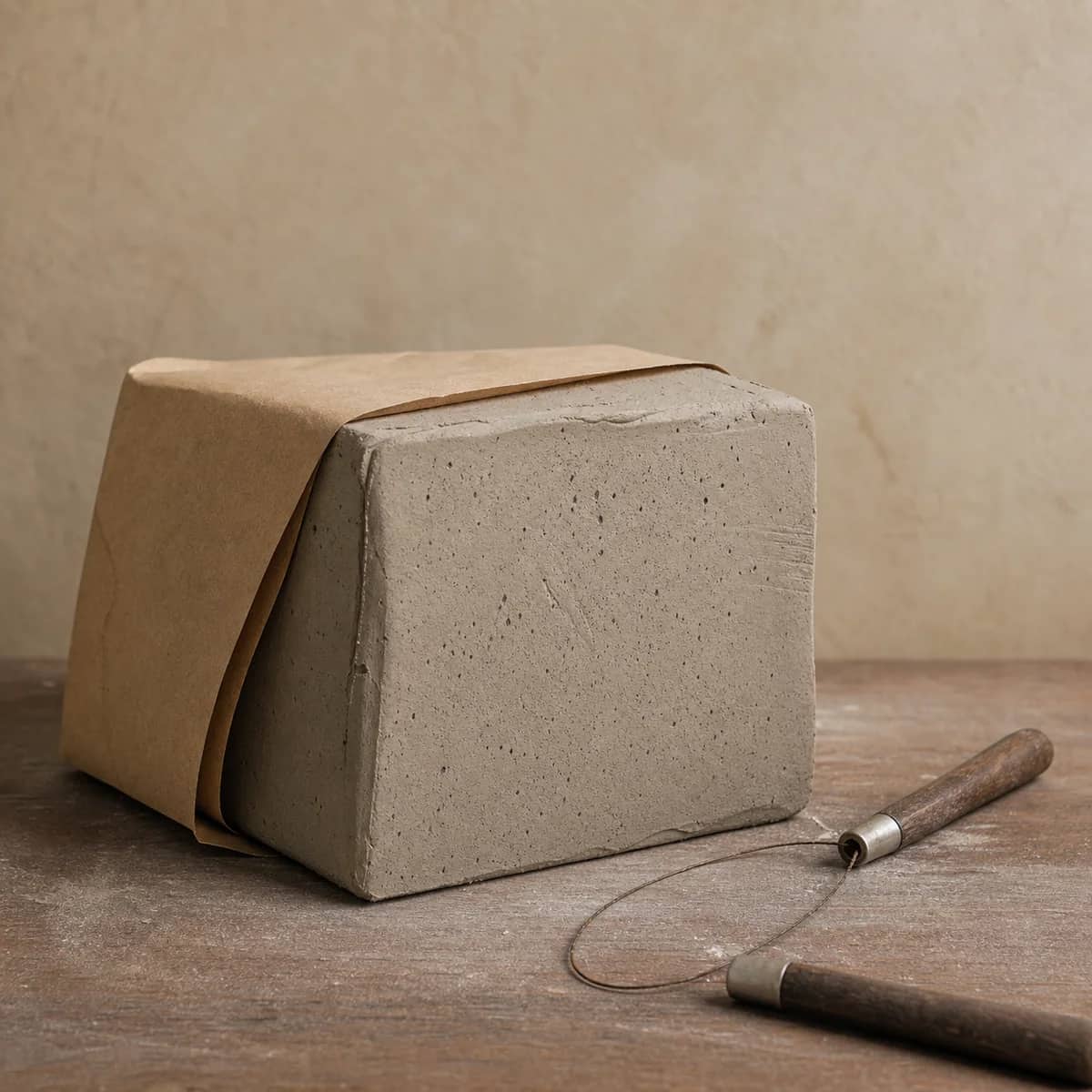
Speckled stoneware clay contains ingredients that reveal colored flecks or granular texture after firing. The speckles usually come from iron-bearing minerals, manganese-based materials, or intentionally added granular components in the clay body. It works well for mugs, bowls, vases, and small sculptural pieces that call for a natural surface, a handmade feel, and strong structural support. The final color, however, should always be judged against the firing range listed on the clay label and the results of test tiles.
What Exactly Is Speckled Stoneware Clay?
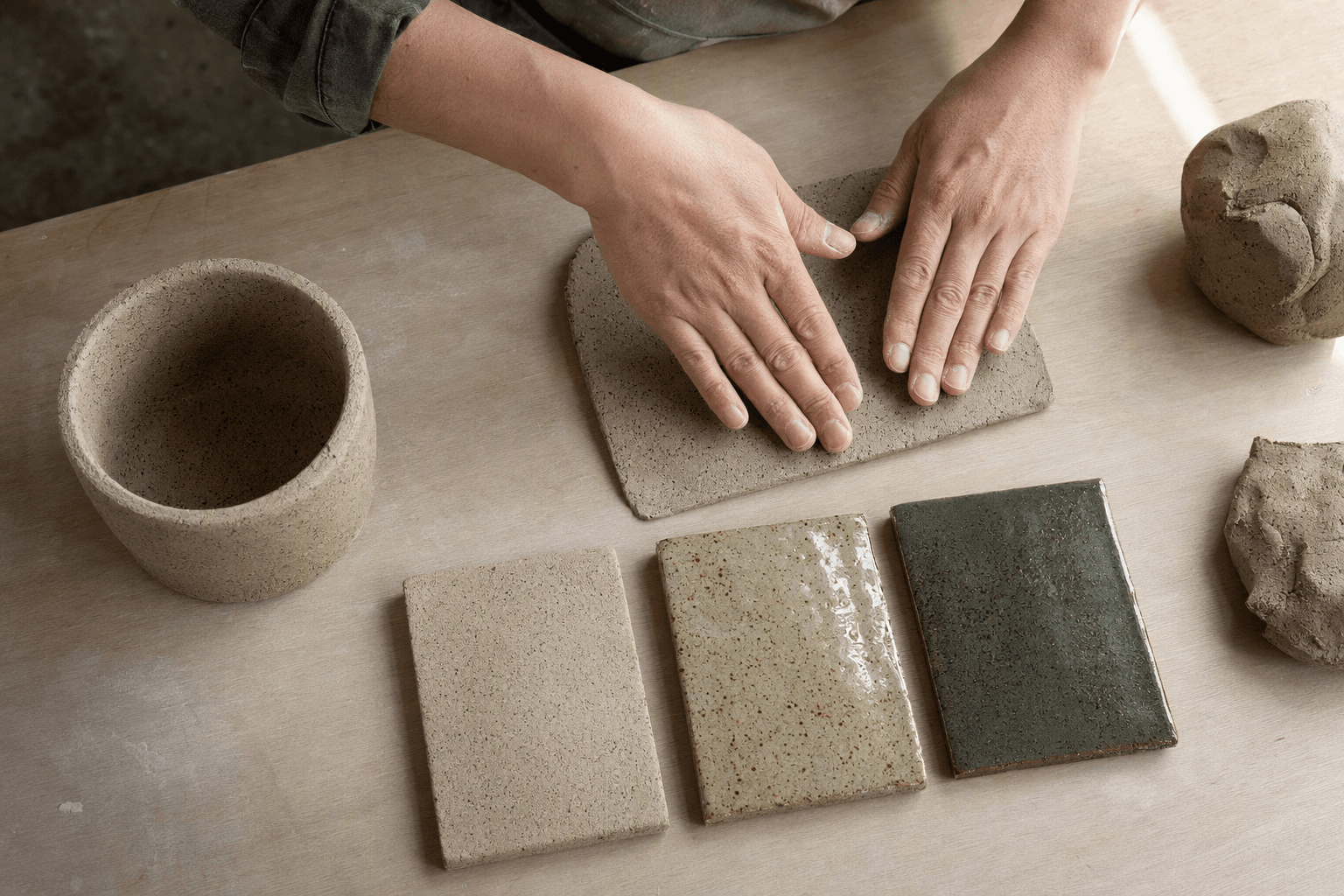
“Speckled” describes the visual effect after firing; it does not mean every clay body uses the same formula. Some speckles come from naturally occurring mineral impurities in the clay, while others come from coarser or finer granular additives in the recipe. At the greenware stage, you may see only small dark dots. During firing, the color and contrast around those particles can change. A glaze may make the speckles more pronounced, soften them, or partially conceal them.
It still belongs to the stoneware clay family. The key questions are whether the body’s plasticity, texture, shrinkage, absorption, and recommended firing range fit the way you work, not simply whether it has speckles. Before buying, review the label and technical information for available pottery clays, and do not judge the color from product photos alone.
How Do Speckles Form During Firing?
Before firing, the mineral particles are simply different ingredients dispersed throughout the clay body. As the temperature rises, the body gradually sinters. Minerals in the particles change color and create contrast with the surrounding matrix. Iron-bearing ingredients may produce brown, reddish brown, black, or softer warm-colored spots; other particles may retain deeper patches of color or fine textural marks. The actual result depends on the type, size, and distribution of the particles, the thickness of the clay body, the firing atmosphere, and the glaze coverage.
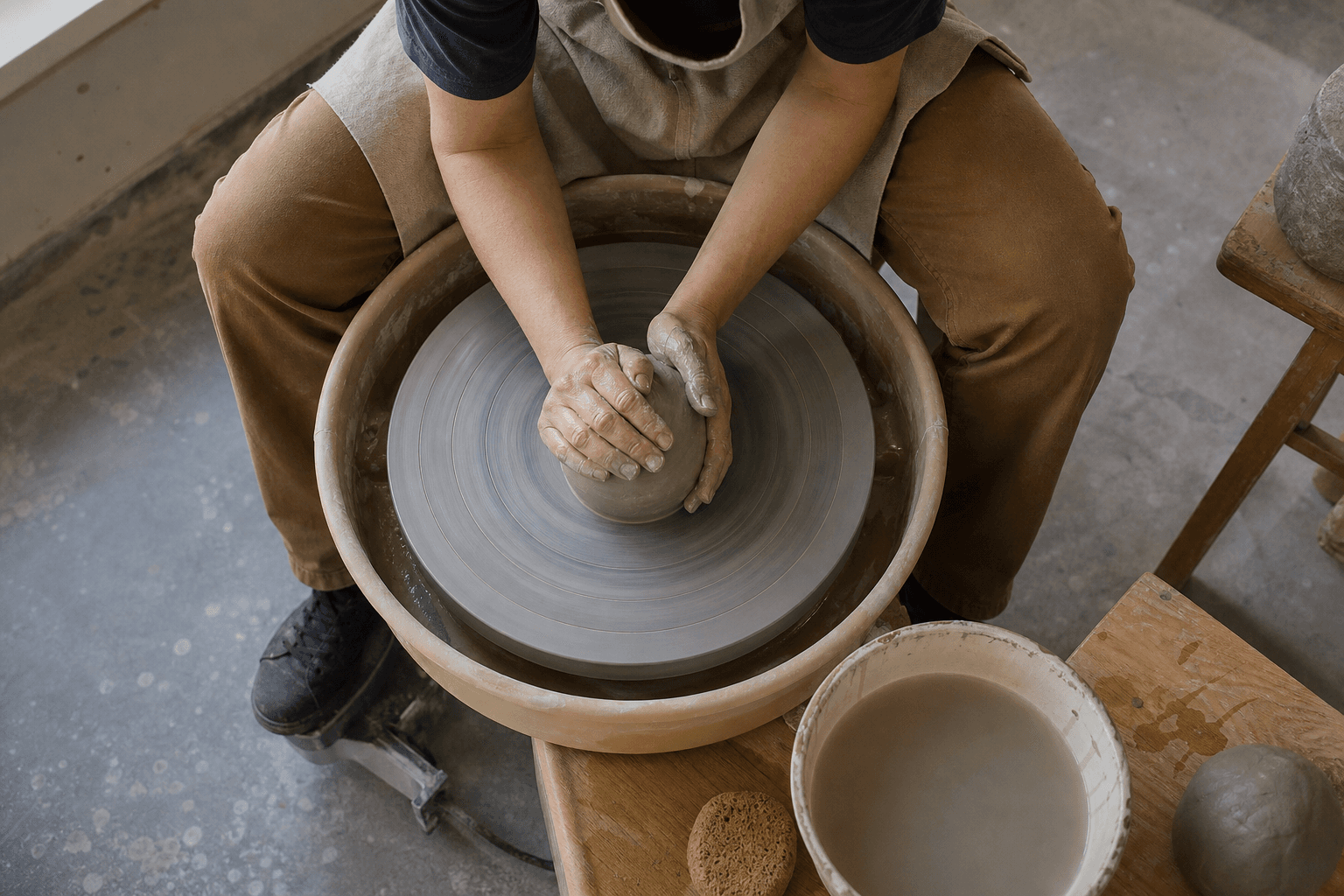
Speckle density may also vary from one area of the same piece to another. During wheel throwing, the particles stretch with the clay, so the speckles may become elongated. With slab building, pinching, or hand building, the original random distribution is generally easier to preserve. Changes in thickness affect what you see as well: speckles may be clearer in thin-walled areas and appear more concentrated in heavier sections.
What Firing Range Is It Suited For?
Speckled stoneware clay is generally used across the mid- to high-temperature stoneware range, but the recommended range varies by brand and formula. Follow the packaging, product technical information, and kiln-program instructions. Do not exceed the clay body’s upper limit in pursuit of darker speckles. If the temperature is too low, the body may not reach the intended degree of sintering. If it is too high, the piece may deform, over-vitrify, or develop surface abnormalities.
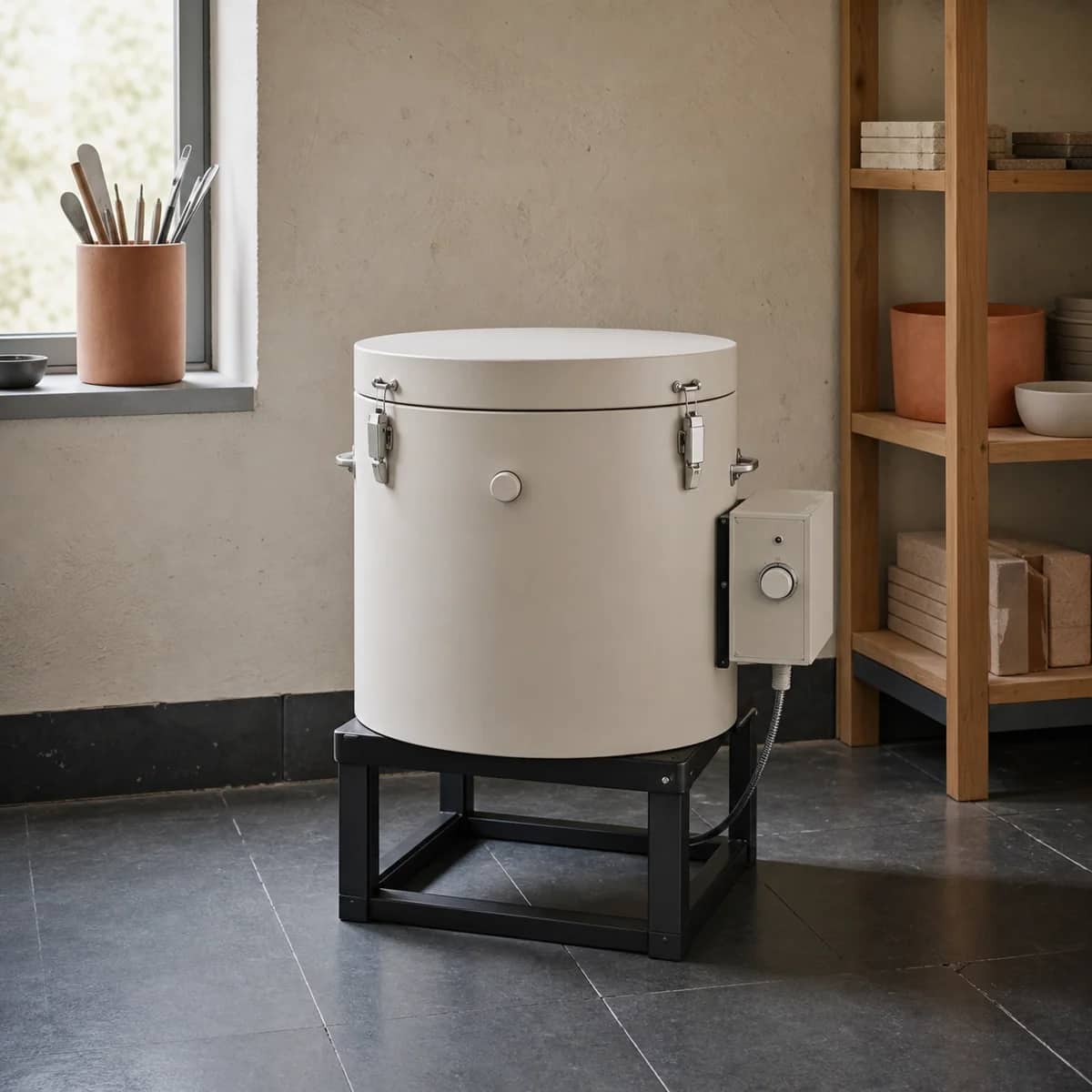
Running a small set of test tiles is safer than firing an entire batch of work right away. Your tests can record the speckle color after the bisque firing, the contrast under glaze, whether the edges deform, whether the base develops abnormalities, and whether the fired clay body still meets your intended use. Kiln selection should also account for capacity, ventilation, power supply, and installation location. For general preparation ideas involving circuits, installation, and local requirements, see planning a home or small-studio electric kiln, and defer to the equipment manual, local electrical requirements, and a qualified electrician.
What Are Its Working Characteristics?
The feel of speckled stoneware clay can range from fine and smooth to distinctly granular. Bodies with more noticeable particles are often better for building substantial profiles and handmade surfaces, but they may create resistance under your fingers when throwing and require more patience when refining rims, spouts, or thin edges. Fine-particle formulas are easier to use for details on small vessels, though their fired speckles may be smaller, denser, and lower in contrast.
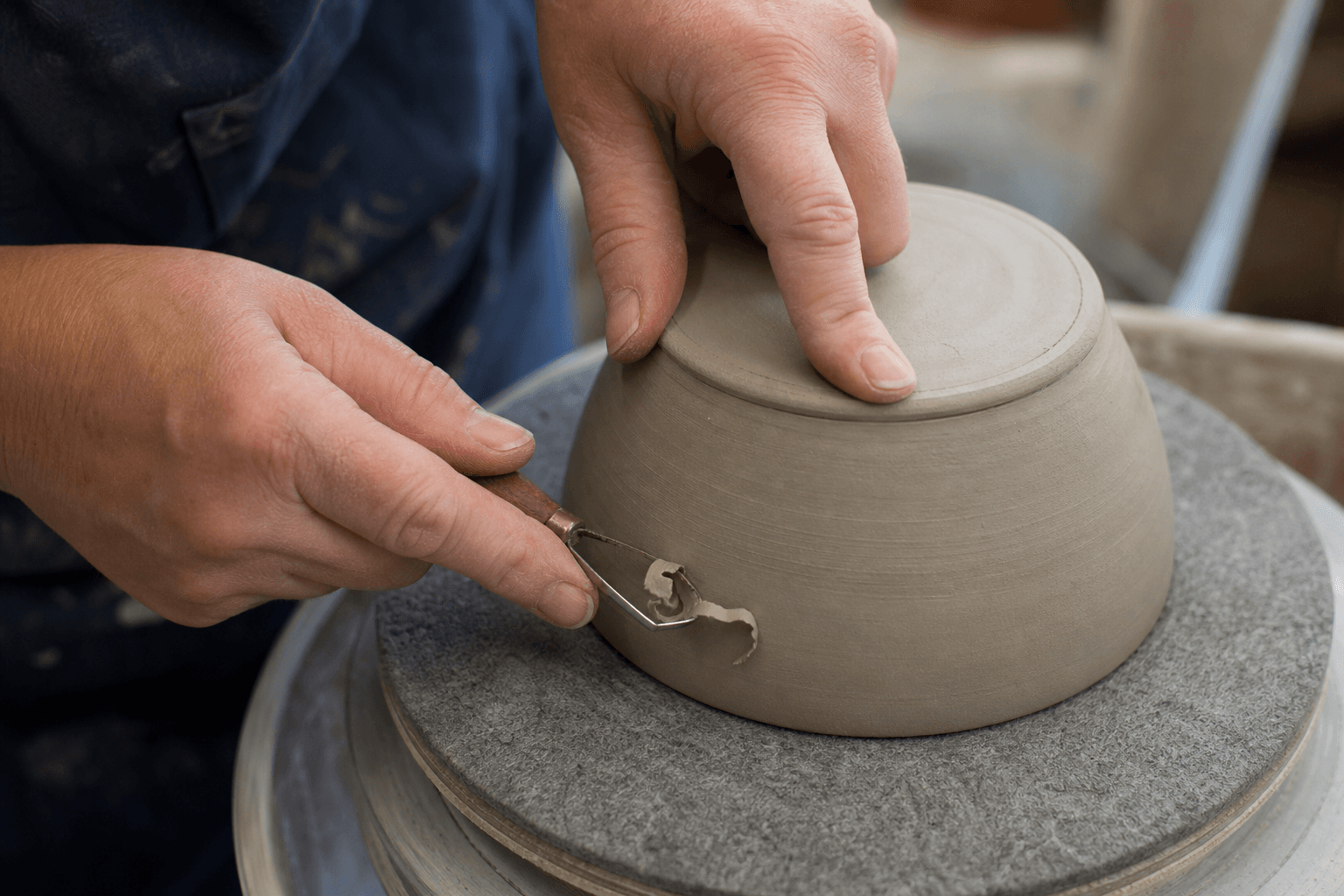
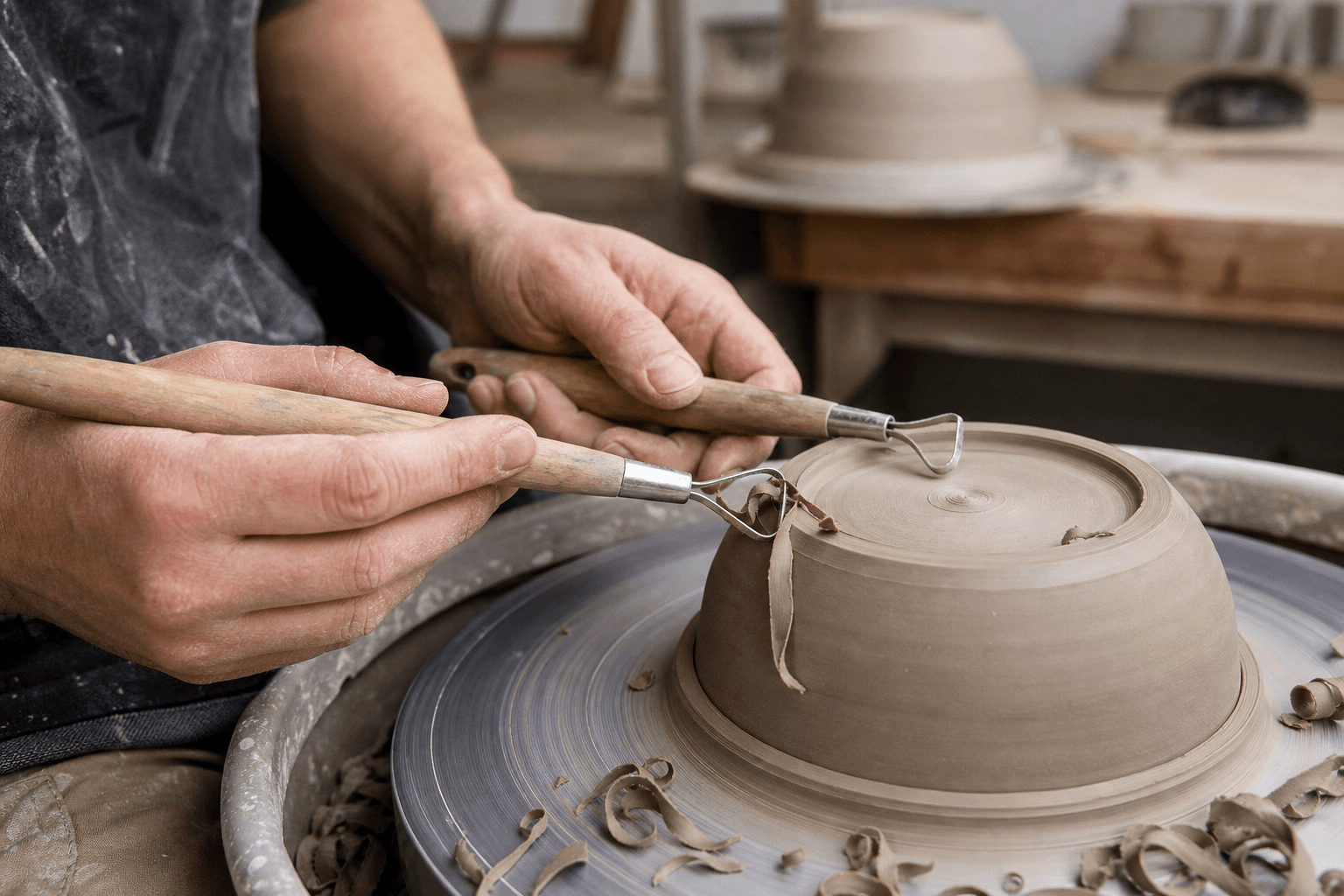
During forming, watch for three things: whether a coil or slab cracks easily at bends, whether thin walls lose support on the wheel, and whether a trimming tool pulls or skips across the surface. If the body feels notably granular, make your work slightly thicker at first. Once you understand its shrinkage and trimming response, you can try thinner proportions. Rims, lids, and interlocking components especially need fit testing with the same clay body and the same firing process.
Which Projects Are Best Suited to Speckled Stoneware Clay?
It is a strong choice for functional ware that benefits from a natural surface, including mugs, rice bowls, dinner plates, vases, and small storage jars. It also suits hand-built sculptures, rustic decorative pieces, and series that aim to preserve the texture of the clay. Speckles can add visual depth to a simple form, reducing the need to rely entirely on complex decoration.
If a project calls for a very clean, even white surface with almost no visible granularity, speckled stoneware clay may not be the first choice. For precisely fitting lids, thin and sharp edges, or an extremely simple monochrome surface, use test tiles first to confirm that the particles and firing deformation are acceptable. For food-contact ware, the clay body is only one variable. You must also confirm the glaze, firing process, and requirements for the finished item’s intended use; do not determine suitability for a specific use from the labels “stoneware” or “speckled” alone.
Decide Whether to Buy It With One Round of Small Tests
Break the decision into a set of comparable samples instead of buying once and immediately making an entire collection.
- Record the clay name, batch, forming method, and work thickness.
- Make three similarly sized test tiles: one unglazed, one with a clear glaze, and one with the colored glaze you use most often.
- Put the tiles through the same drying, bisque-firing, and glaze-firing process you plan to use for your work.
- After firing, compare the speckle size, density, color, and clarity under the glaze.
- Tap the tiles or inspect their edges, and record any obvious deformation, cracks, or glaze problems.
- Test throwing, trimming, edge treatment, and the sense of cleanliness on one small piece in the actual form.
If you mainly hand build, prioritize the feel of the particles and the slab surface after rolling. If you mainly throw, prioritize thin-wall support, rim refinement, and the clay’s consistency as it moves on the wheel. If your studio has limited space, include the number of test tiles, kiln capacity, and cleanup process in your plan. This approach gives you a more reliable basis for judgment than looking at finished-product photos alone.
FAQ: Common Questions About Speckled Stoneware Clay
Will the speckles look exactly the same every time?
Not necessarily. Particle distribution, work thickness, firing position, glaze layer, and kiln program all affect the final result. To make a series more consistent, standardize the clay body, wall thickness, glaze, and firing schedule, and keep records of your test tiles.
Can Speckled Stoneware Clay Be Mixed With Regular Stoneware Clay?
Do not assume that it can. Different clay bodies may have different shrinkage rates, firing ranges, and particle structures. Mixing them can cause cracking, deformation, or inconsistent color. If you need to combine them, make a small joined test tile first and check the information according to the stricter firing requirements of the two clay bodies.
Will a Clear Glaze Always Make the Speckles More Visible?
Not necessarily. Transparency, glaze thickness, flow, and the color of the clay body all change the visual effect. A clear glaze can often preserve the clay’s texture, but a layer that is too thick, cloudy, or tinted may reduce speckle contrast. Make test tiles with several glaze thicknesses on the same clay body before choosing how to glaze the full batch.
Keep this nearby while you make, then let the next piece be your own.