TL;DR
A bisque firing schedule removes water and organic material without cracking your work. Start with a slow ramp to 200°F, hold for an hour or two, then climb at 150–200°F per hour to your target cone. Adjust timing for thick walls, dense loading, or sensitive clay bodies.
Why Bisque Schedules Differ by Clay and Kiln
Bisque firing transforms greenware into porous ceramic that can accept glaze without dissolving. The schedule depends on how much water remains in the clay, how thick your walls are, and whether your kiln vents internally or uses a downdraft system. A cone 04 earthenware bisque and a cone 06 stoneware bisque follow the same principles but may need different hold times or ramp rates.
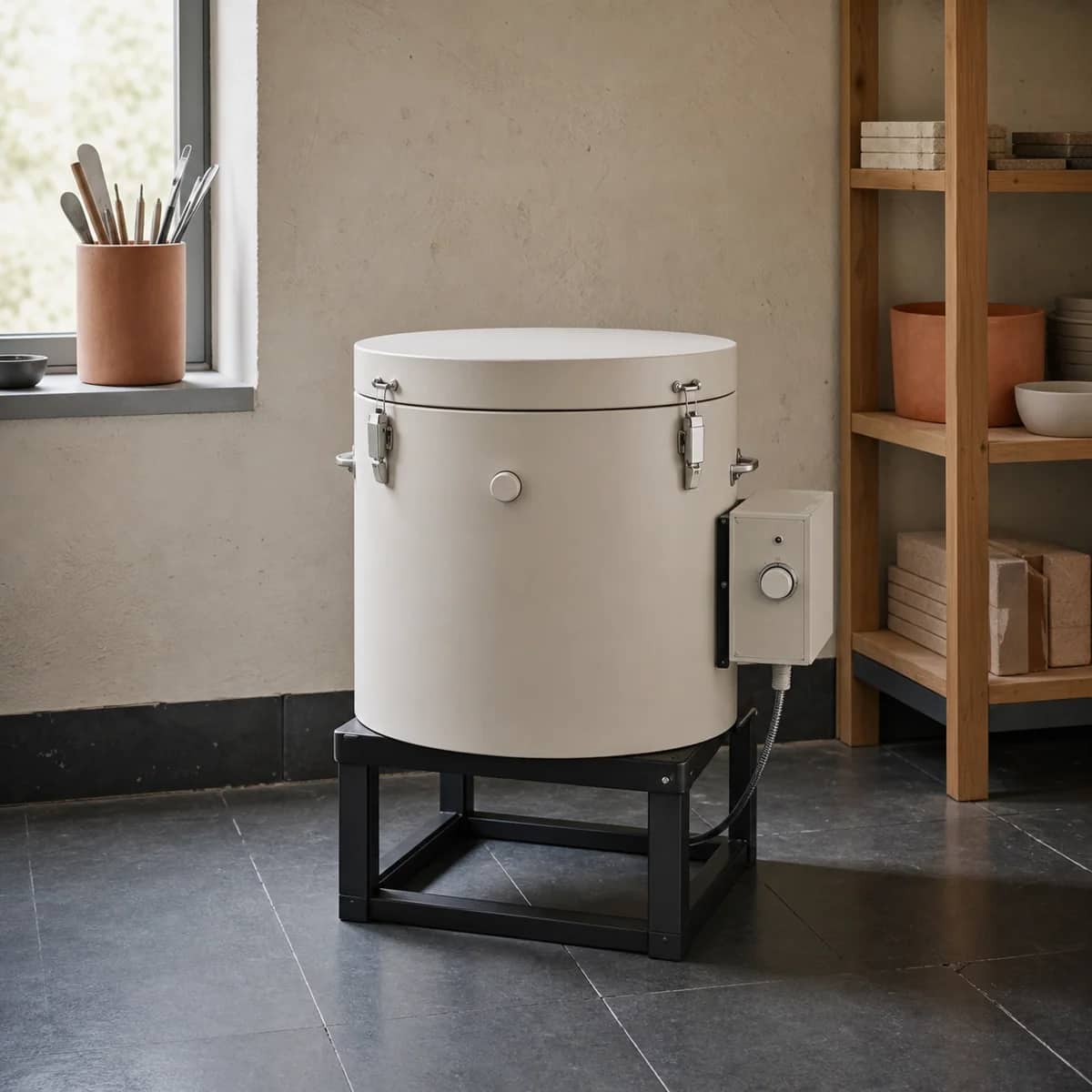
Your kiln's controller sets the pace. Manual kilns with infinite switches require you to adjust heat by hand at each stage. Digital controllers with programmable segments let you set ramps and holds in advance. Either way, the goal is to drive out moisture and carbon without trapping steam or organic gases inside thick walls.
Loading for Even Heat and Airflow
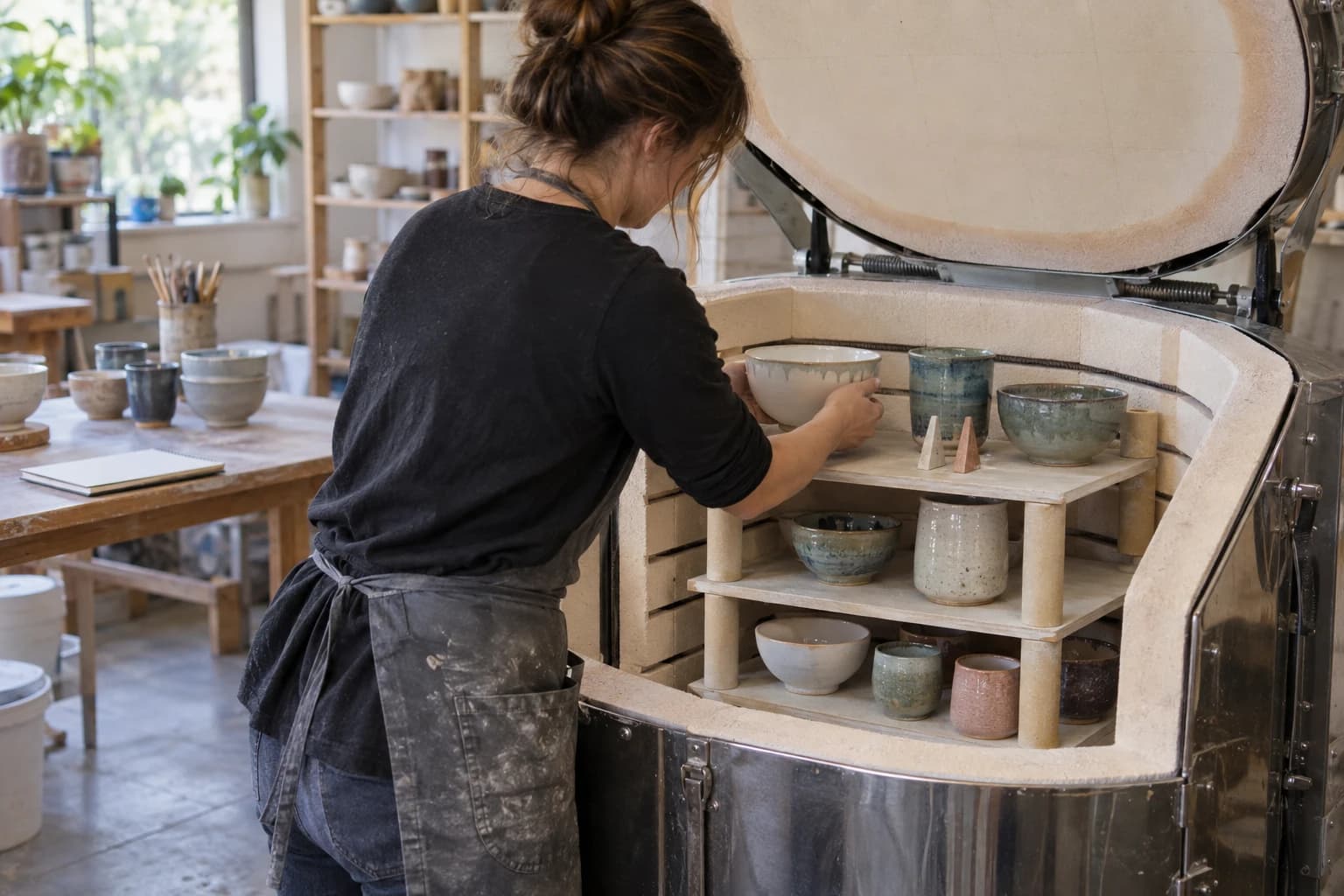
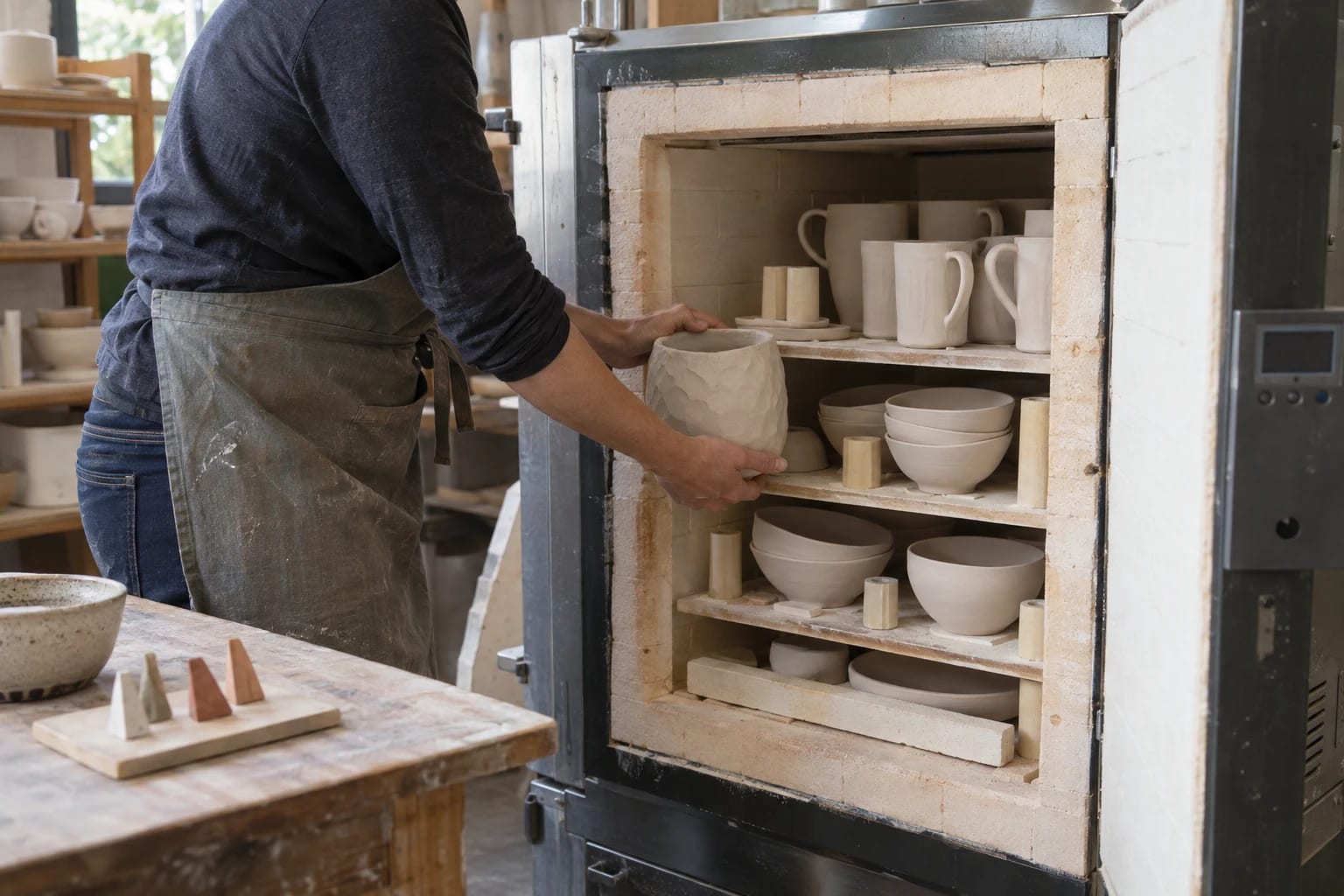
Pack greenware closer than you would for glaze firing, but leave enough space for air to circulate. Pieces can touch lightly because bisque clay will not stick together. Stack small bowls rim to rim or foot to foot. Stand mugs upright with handles facing the same direction. Avoid nesting heavy items inside delicate forms, because trapped moisture has nowhere to escape.
Check that shelves are level and props are stable. A leaning stack can collapse mid-firing when clay softens slightly. If your kiln uses electric kiln ventilation, position the downdraft intake or hood so that air moves through the chamber rather than around it.
Standard Bisque Schedule for Cone 04–06
This schedule suits most stoneware and earthenware bodies at moderate wall thickness. Adjust holds and ramps based on what you observe after each firing.
Segment 1: Water Smoking (Room Temperature to 200°F)
Ramp at 100–150°F per hour. Hold at 200°F for one to two hours with the lid propped or peephole open. This stage removes physically bound water. Thicker work or humid conditions may need a longer hold.
Segment 2: Organic Burnout (200°F to 1000°F)
Ramp at 150–200°F per hour. Organic binders, paper inclusions, and any remaining moisture burn off between 400°F and 800°F. If your clay contains significant organic material or if pieces are thick, slow the ramp to 100°F per hour through this range.
Segment 3: Quartz Inversion (1000°F to 1100°F)
Ramp at 100–150°F per hour. Quartz crystals in clay expand abruptly near 1063°F. A slower climb reduces stress. Some potters extend this caution from 950°F to 1150°F.
Segment 4: Final Climb to Cone (1100°F to Cone 04–06)
Ramp at 150–200°F per hour to your target cone. Cone 06 is roughly 1828°F, cone 05 is 1888°F, and cone 04 is 1945°F. Use witness cones to confirm when the kiln reaches temperature, because kiln thermocouples can drift over time. Learn more about reading witness cones in the kiln firing schedule guide.
Segment 5: Cooling
Let the kiln cool naturally with all peepholes closed. Most potters wait until the kiln drops below 200°F before opening the lid. Forced cooling can crack bisqueware.
Adjusting for Thick Walls and Sculptural Work
Sculptures, hand-built tiles, and thick-walled vessels need longer water-smoking holds and slower ramps. Add 30 minutes to an hour at 200°F. Slow the ramp to 100°F per hour from room temperature to 1000°F. Record wall thickness and firing time so you can compare results across firings.
If a thick piece cracks during bisque, the moisture gradient was too steep. Next time, extend the low-temperature hold or slow the early ramp. A crack that appears after cooling suggests the quartz inversion was too fast.
Ventilation During Bisque Firing
Propping the lid or leaving a peephole open during the water-smoking stage helps steam escape. Once the hold ends and the kiln climbs past 200°F, close all openings unless your kiln uses a downdraft ventilation system. Downdraft vents pull gases out continuously and can reduce firing time by improving combustion efficiency and evening out chamber temperature.
Ventilation also affects studio air quality. Organic burnout releases smoke and fumes. A vented kiln keeps your workspace clearer and protects elements from corrosive gases. For more on ventilation options, see electric kiln ventilation.
Common Adjustments by Clay Body
Earthenwares with high talc or ball clay content may need a slower ramp through organic burnout. Porcelains and white stonewares are often less sensitive but still benefit from a cautious water-smoking hold. If you work with speckled stoneware clay, the iron and manganese particles do not require special bisque treatment, but thick walls still do.
Test a conservative schedule first, then shorten holds or increase ramps one segment at a time. Write down every change and compare the bisqueware for cracks, bloating, or carbon coring.
FAQ
Can I bisque fire to cone 06 and glaze fire to cone 6? Yes. A low bisque makes glazing easier because the clay stays porous. The glaze firing brings the clay to full maturity.
What happens if I skip the water-smoking hold? Trapped steam can crack greenware or cause explosive failures. A hold at 200°F is a low-risk precaution.
How do I know if my bisque schedule is too fast? Cracks, S-cracks at the base, or a sooty smell during cooling suggest steam or gases could not escape. Slow the early ramp and extend the hold.
Should I use witness cones for bisque firing? Yes. Thermocouples drift, and a witness cone confirms that the kiln reached the intended heat-work. Place one cone where you can see it through a peephole.
Can I bisque fire bone-dry and leather-hard pieces together? No. Leather-hard clay still holds moisture and needs a longer water-smoking stage. Fire each batch at the same dryness level.
Keep this nearby while you make, then let the next piece be your own.