TL;DR
A downdraft kiln ventilation system draws air downward through or around the kiln, then sends the exhaust outside through a duct. It can suit a small pottery studio when you can create a practical outdoor exhaust route, provide replacement air, and follow the kiln and vent manufacturer's instructions. Confirm placement, ducting, clearances, and electrical requirements before buying or installing equipment.
How does a downdraft kiln ventilation system work?
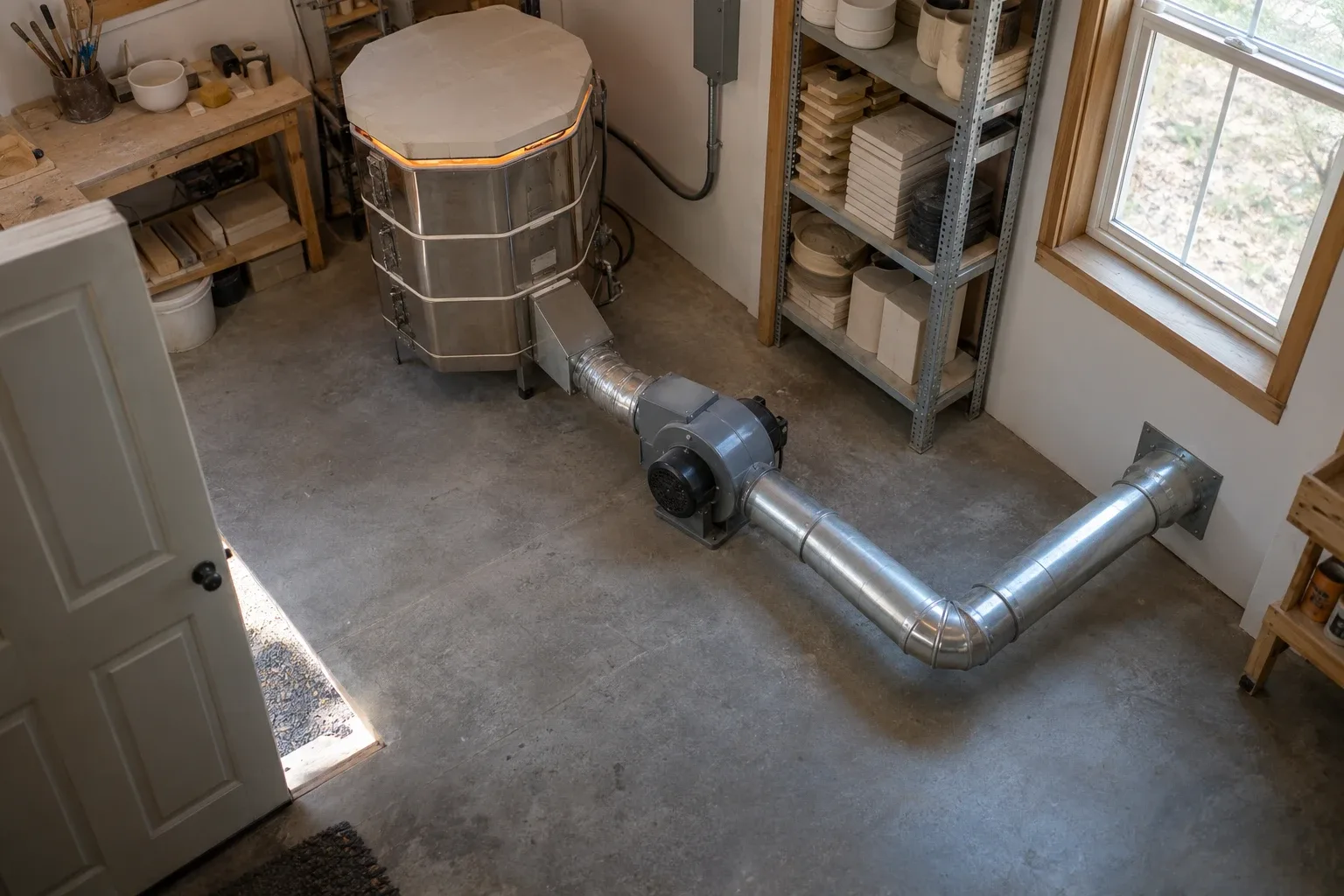
A downdraft system creates a controlled path for fumes released during firing. Instead of relying only on room air movement or a ceiling hood, the system pulls air from the lower part of the kiln area. A fan then moves that air through ductwork and discharges it outdoors.
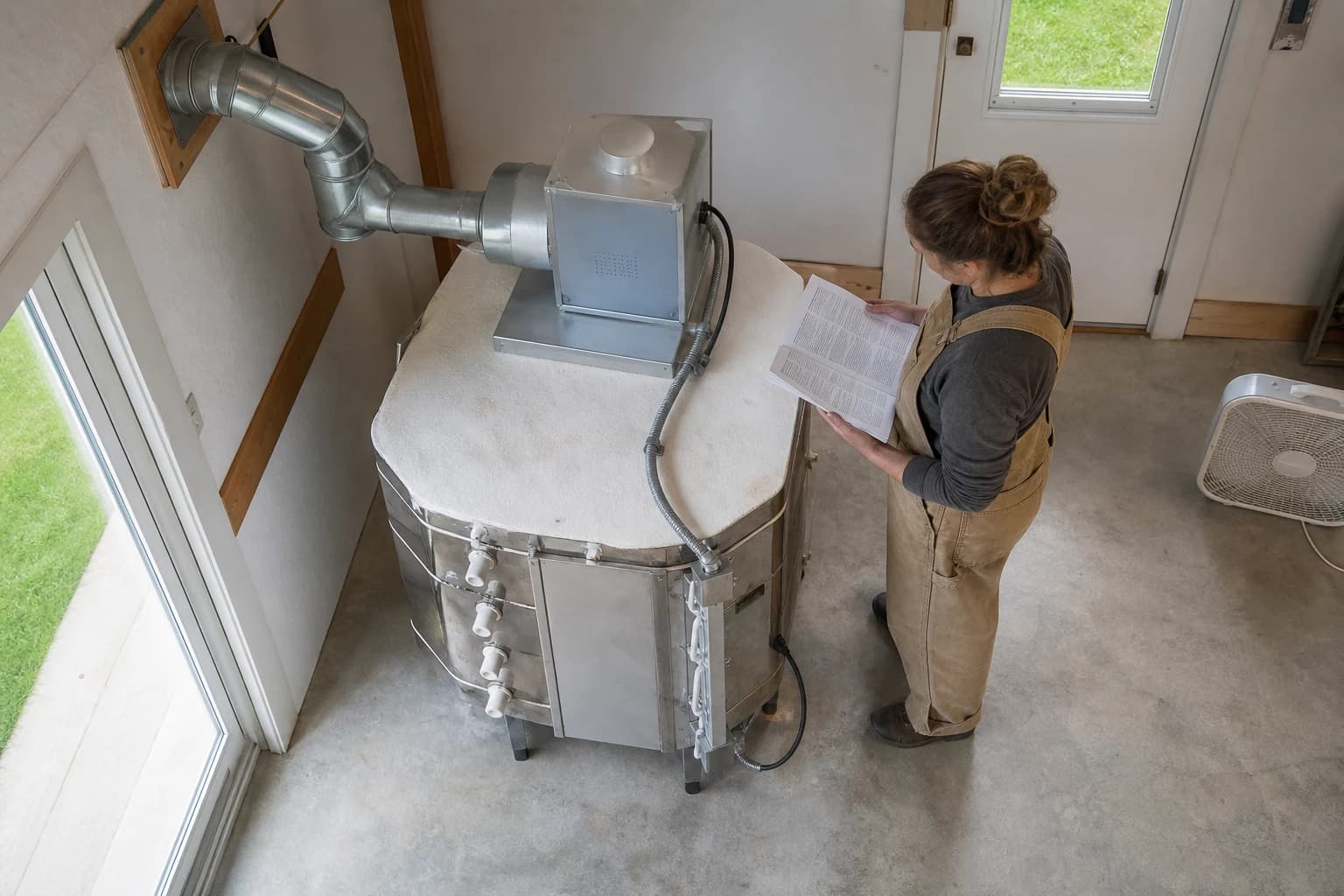
The exact intake arrangement varies. Some systems connect to a port or opening in the kiln base. Others use a collection area beneath the kiln. The important point is that the vent must match the kiln's design. Do not drill, modify, or connect to a kiln unless the manual or manufacturer identifies that arrangement as suitable.
The system also needs replacement air. If exhausted air has no practical way to leave the room, the fan may pull air through unwanted gaps, doors, or other openings. Plan the whole path: where air enters, where it passes the kiln, and where it exits the building. The existing kiln ventilation system planning guide can help you map that room-level airflow before choosing components.
Is a downdraft system right for a small pottery studio?
It is worth considering when the kiln sits in a dedicated or semi-dedicated room and you can route exhaust directly outdoors without a long, awkward duct run. It is also useful when you want the ventilation approach to focus on the kiln rather than attempting to exchange all the air in the room through a general-purpose fan.
It may be a poor fit when:
- The kiln is in a room with no reasonable outdoor exhaust route.
- The proposed duct would pass through areas where it could be damaged or obstructed.
- You cannot provide replacement air without disrupting the room's normal use.
- The kiln manual does not support the proposed vent connection.
- The installation would require electrical changes that have not been reviewed locally.
A compact kiln does not automatically make installation simple. Compare the kiln's usable chamber with your forms, then assess the room and utilities separately. This small electric kiln for pottery guide is useful for the equipment side of that decision, while the vent plan should be checked against the actual kiln manual.
What should you check before installation?
Make a one-page installation checklist before ordering a vent. Record:
- The kiln model and the manufacturer's approved vent connection.
- The proposed kiln position and the required clearances from the manual.
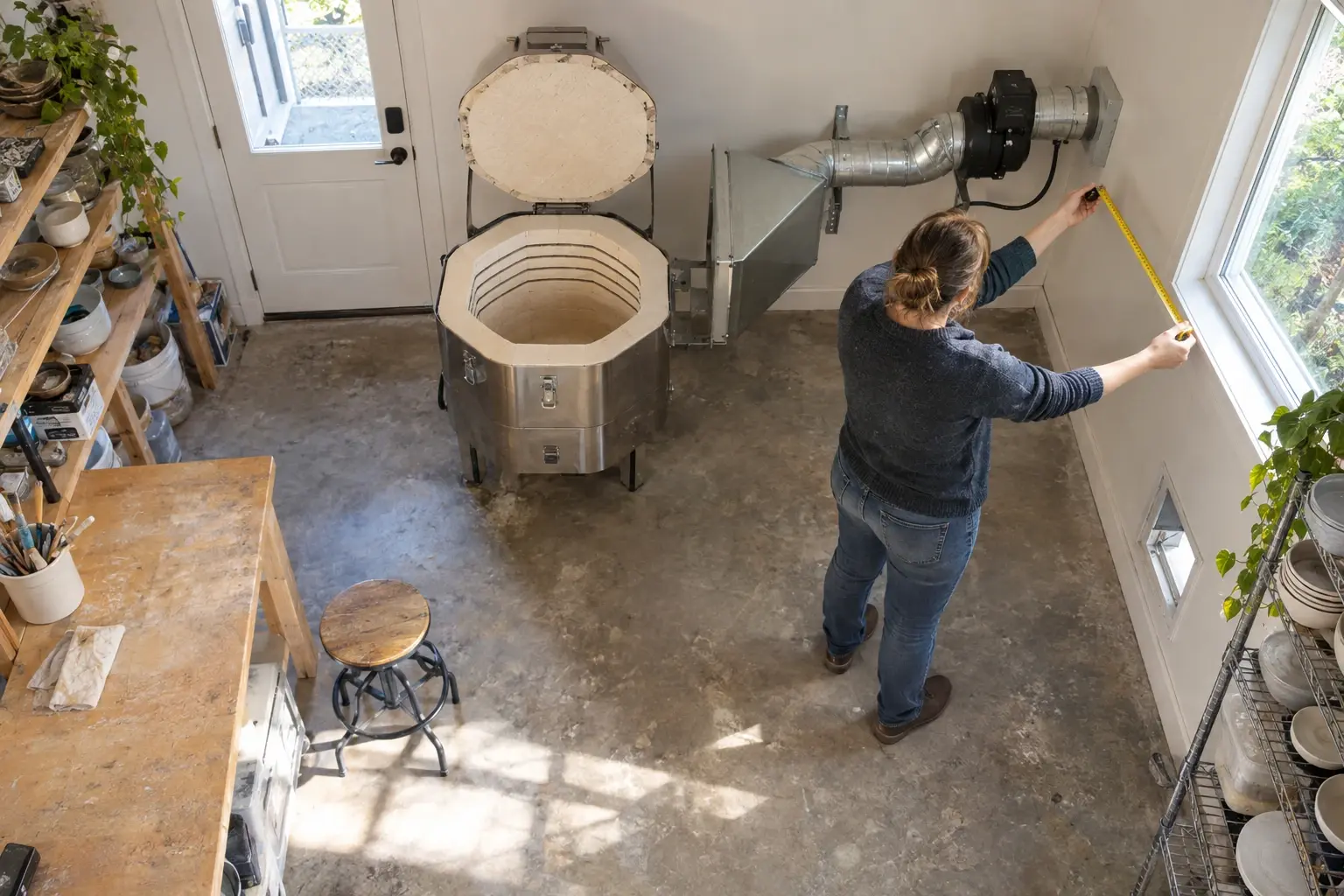
- The shortest practical duct route to the exterior.
- The location of the exterior termination and how it avoids blocked or enclosed spaces.
- The path for replacement air into the kiln room.
- Access for cleaning, inspection, and future service.
- The fan's location, noise, and control arrangement.
- Local building, rental, fire, and electrical requirements.
Do not treat duct length, bends, fan selection, or termination details as interchangeable between systems. Use the vent manufacturer's instructions for those decisions. If the installation involves a new circuit, outlet, disconnect, or other electrical work, ask a qualified electrician to determine what is required under local rules. Never use an extension cord as a substitute for a proper electrical plan.
A practical installation planning sequence
1. Draw the room. Mark the kiln, doors, windows, work surfaces, storage, and the proposed outdoor wall or roof exit. 2. Mark the airflow path. Show where replacement air enters and where exhaust leaves. Avoid placing the intake path directly through dusty clay storage or across your main work position. 3. Check the kiln manual. Confirm the approved vent location, operating limits, clearances, and any restrictions on modifications. 4. Compare the duct route with the vent instructions. Note bends, vertical sections, access points, and the proposed termination. The manufacturer's instructions decide what is acceptable. 5. Review utilities before installation. Have a qualified electrician and the relevant local authority address electrical and code questions that apply to your space. 6. Test the workflow after installation. During an ordinary firing, observe whether the duct, fan, controls, and room airflow behave as expected. Record unusual noise, vibration, poor fit, or changes in room comfort, then stop and consult the manual or installer before changing the setup.
Keep the kiln area uncluttered so you can see the vent connection and inspect accessible parts. Do not store clay, cardboard, fabric, or tools where they can obstruct the equipment or airflow path. For a broader room plan, use this home pottery studio setup guide alongside the kiln and vent manuals.
Downdraft vent versus a general room exhaust approach
A downdraft system concentrates extraction at the kiln. That can make it easier to plan a defined path from the equipment to the outdoors, but it depends heavily on a compatible kiln connection and correct installation.
A general room exhaust approach moves air from the room as a whole. It may be easier to position in some spaces, but its performance depends on where the fan sits, how replacement air enters, and whether the airflow actually passes the kiln before leaving. Neither approach removes the need to follow the kiln manual, provide suitable replacement air, and comply with local requirements.
Choose based on the room you have, not just the name of the vent type. Sketch both options, compare their duct routes, and reject any plan that creates an obstructed or improvised exhaust path.
FAQ
Does a downdraft vent replace room ventilation?
Not necessarily. It provides a kiln-focused exhaust path, but the room may still need suitable general ventilation and replacement air. Follow the kiln and vent manuals and local requirements.
Can I install the duct wherever it is convenient?
No. The duct route, materials, bends, termination, and clearances must match the vent manufacturer's instructions and the building's requirements.
Can I modify my kiln to add a downdraft connection?
Only if the kiln manufacturer specifically allows the connection and describes the method. Otherwise, ask the manufacturer or a qualified service professional before changing the kiln.
Keep this nearby while you make, then let the next piece be your own.