
TL;DR
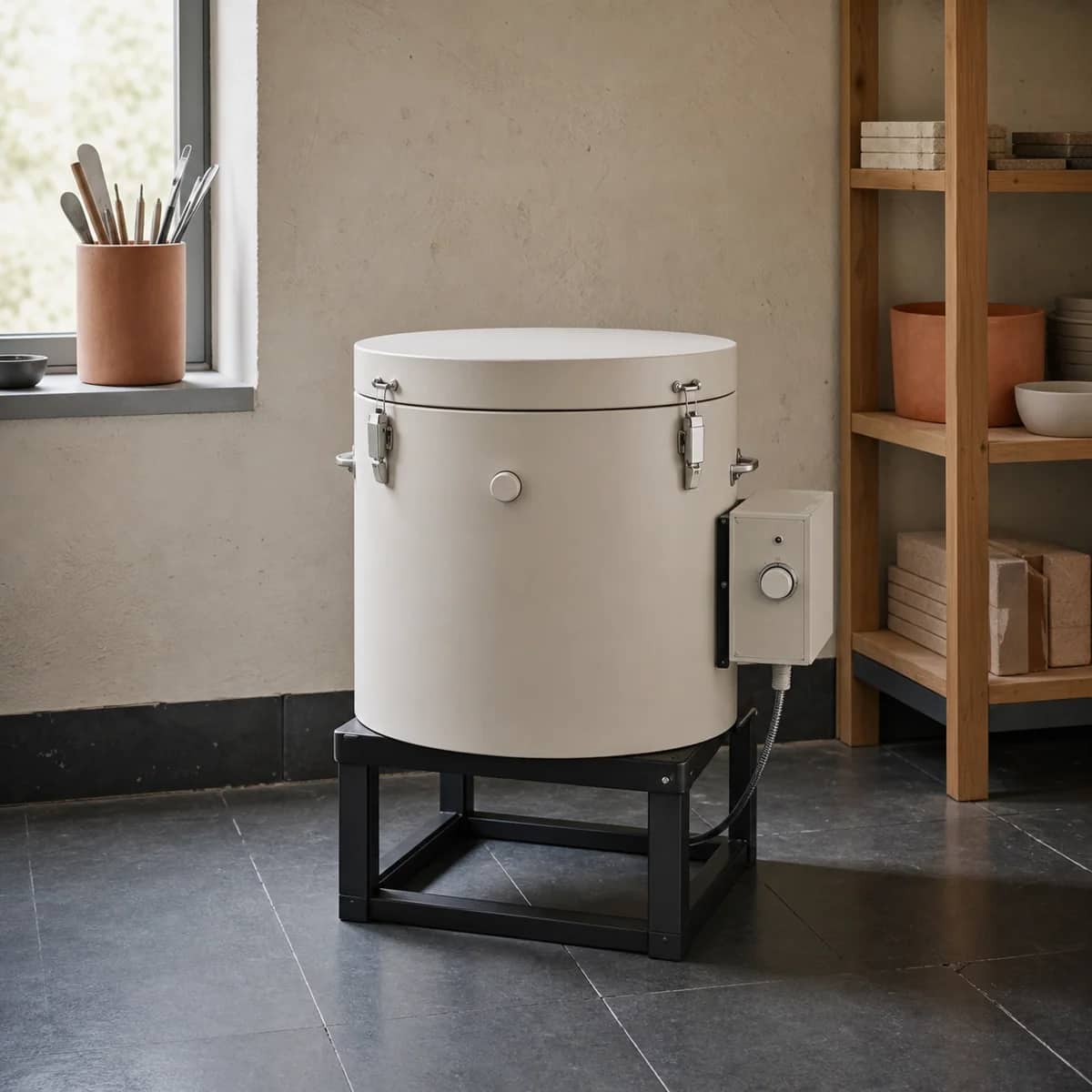
A small electric kiln for pottery is a sensible home-studio choice when you can support its electrical requirements, place it according to the manual and local rules, and fill the chamber often enough to make each firing useful. Choose capacity from the largest batch you regularly make, then confirm power, ventilation, clearance, and firing temperature before comparing controls or price.
Is a small electric kiln enough for your pottery?
Start with the work you actually make, not the kiln’s outside dimensions. A compact chamber may be enough for mugs, small bowls, test tiles, ornaments, and short production runs. It becomes limiting when your work is tall, wide, unusually thick, or made in batches that need multiple shelves.
Write down three things before shopping:
- The largest piece you expect to fire, including room for shelves and clearance.
- The number of pieces you typically want to fire together.
- The clay and glaze firing ranges you expect to use.
A small kiln can reduce wasted space and make loading easier, but it may require more frequent firings. That means more loading, unloading, cooling time, and record keeping. A larger kiln may reduce the number of firings while taking more floor space and demanding a more substantial installation. Neither size is automatically better.
For a broader equipment and room-planning checklist, see How to Set Up a Home Pottery Studio.
What capacity should you choose?
Compare usable chamber space with the forms you make, rather than treating the advertised volume as your only measure. Shelf diameter or width, interior height, shelf support positions, and the shape of the chamber all affect what can be loaded.
Use this simple test:
1. Measure the footprint and height of three representative pieces. 2. Add the space needed for kiln shelves and clearance recommended by the manual. 3. Sketch one or two possible shelf layouts. 4. Decide whether that layout gives you a useful batch or only fits one showcase piece.
Leave flexibility for pieces that are still being refined. A bowl that fits before glazing may need more room around its rim or foot, and a tall vessel may use the chamber differently from a group of cups. Also check whether the kiln’s shelves and posts are included, compatible, or separate purchases. The complete loading system matters more than the empty chamber alone.
Can your home studio support the kiln?
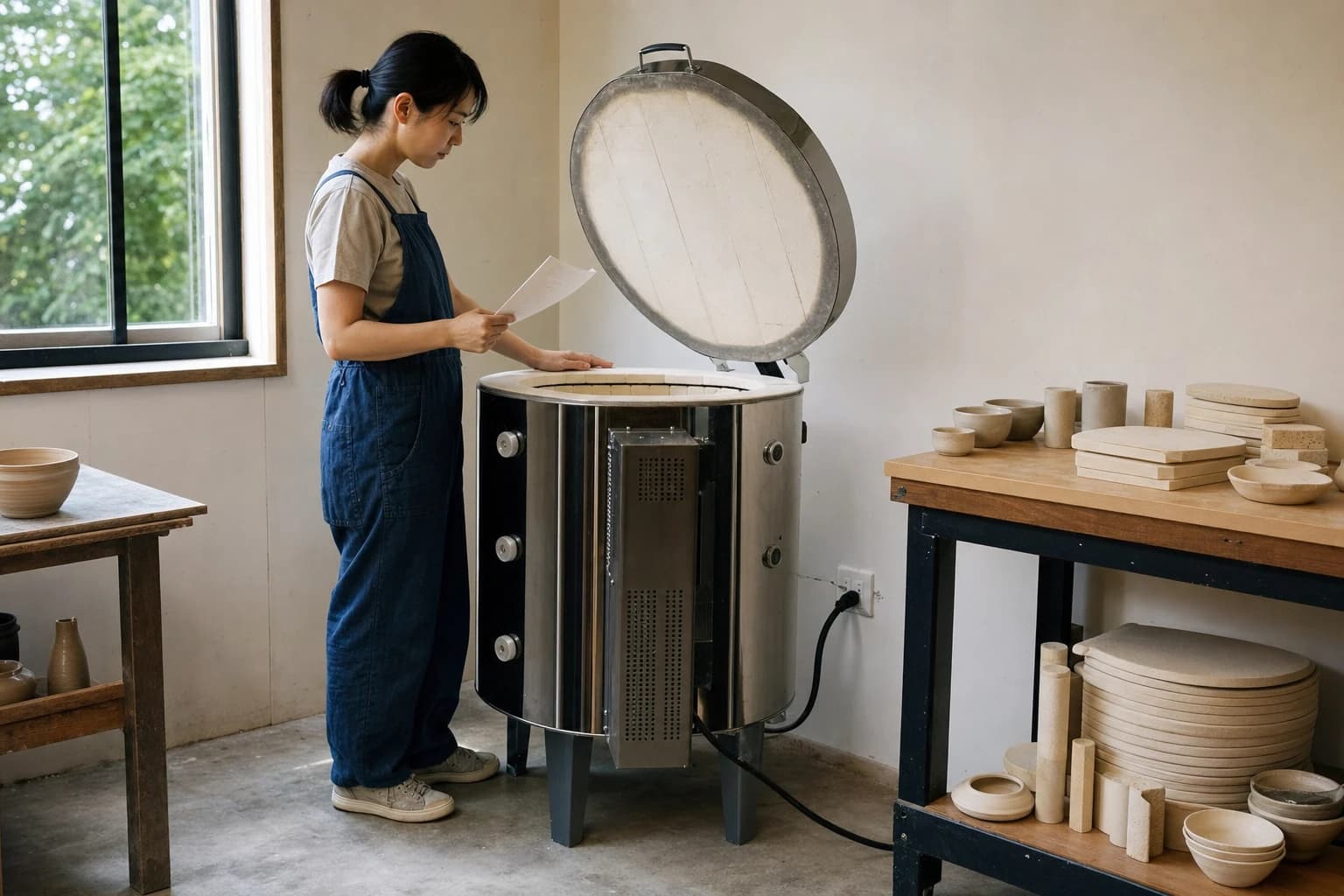
Before ordering, identify the electrical supply available at the intended location. The kiln manual should state the required voltage, current, plug or connection arrangement, and circuit conditions. A qualified electrician must decide whether your existing installation can support the equipment and whether changes are allowed under local electrical requirements. Do not select a kiln based only on a familiar household outlet.
Also confirm the practical route from delivery to final placement. Measure doorways, stairs, work areas, and the location where the kiln will be set. Account for the space needed to load shelves, inspect the controller, and keep combustible materials away as required by the manual and local rules.
Keep the kiln away from clay reclaim, glaze mixing, cardboard, fabric, and clutter. A clean, stable area makes loading and inspection easier. Do not assume that a garage, basement, shed, or spare room is suitable without checking the manual, building requirements, and local rules.
How important is ventilation?
Electric kilns still release fumes and heat during firing. The room and ventilation arrangement need to match the kiln manual, the building, and local requirements. A window opened occasionally is not automatically an adequate ventilation plan.
Review Electric Kiln Ventilation for a Home Studio while deciding where the kiln will go. Compare the available options by duct route, outdoor termination, make-up air, installation constraints, and how the system will affect the rest of the room. A qualified installer or other appropriate professional should resolve installation questions that the manual or local rules leave to site conditions.
Plan ventilation before buying the kiln. A model that fits the floor may still be impractical if there is no workable route for the required system. Keep the surrounding area clear during firing, and follow the manual for operating, monitoring, and cooling procedures.
What firing needs should you match?
Choose a kiln that suits the clay bodies and glazes you intend to use. Check the manufacturer’s stated firing range and control features against the materials’ instructions. A kiln that reaches a temperature you do not need may add cost or installation demands without improving your work, while one that cannot support your intended firing range will restrict your studio from the start.
Controls also affect workflow. Consider whether you need programmable schedules, adjustable segments, holds, delayed starts, or simple manual control. More features can help when you are repeating tested programs, but they do not replace correct clay, glaze, loading, and witness-cone decisions. Use the kiln manual and material manufacturers’ instructions when setting a firing schedule.
If you are new to firing, Electric Pottery Kiln for Beginners: Buy by Workflow can help you connect kiln choice with the work you plan to make.
A repeatable buying checklist
Before comparing final prices, answer these questions in writing:
- Does the chamber fit your largest regular piece and a useful batch?
- Does the kiln support every clay and glaze firing range you plan to use?
- Has a qualified electrician confirmed that the intended electrical setup can support it?
- Does the planned location meet the manual, local rules, and clearance requirements?
- Is there a workable ventilation approach for the room?
- Can you move, load, inspect, and clean around the kiln comfortably?
- Have you budgeted for shelves, posts, ventilation, electrical work, and future maintenance?
Treat any unanswered question as a reason to pause the purchase. A small electric kiln for pottery works best when it fits the entire studio system, not just the shelf space available on the day you order it.
Keep this nearby while you make, then let the next piece be your own.