TL;DR
Choose a microwave kiln repair paste only when its label and the kiln manual support use on the damaged refractory surface. Small, shallow chips or non-structural cracks may be suitable for repair, but loose lining, major gaps, lid problems, or repeated damage are signs that replacement is the better choice.
What should microwave kiln repair paste fix?
Repair paste is most useful for limited surface damage that does not change the kiln’s shape, lid fit, or ability to contain the firing chamber. Look for a paste or cement specifically labeled for kiln, refractory, or high-temperature repair use. A general household filler, construction adhesive, grout, or craft paste is not an appropriate substitute unless the kiln manufacturer explicitly allows it.
Before buying, identify the damaged material. Small microwave kilns may use a refractory fiber, ceramic lining, brick-like insert, or another heat-resistant interior. The repair product must be compatible with that surface. If the product description does not clearly state the intended substrate and use, pause and check the kiln manual or contact the manufacturer.
For broader kiln repair decisions, compare the limits described in kiln cement repair for small cracks and joints before you order a product.
How do you choose a compatible repair paste?
Use this short buying checklist:
- Intended use: The label should name kiln or refractory repair rather than general patching.
- Surface compatibility: Confirm that it suits the kiln’s lining material.
- Application method: Check whether it is spread, pressed, brushed, or packed into a defect.
- Curing instructions: Look for clear drying or firing directions, including whether the repair must dry before heating.
- Repair limits: Avoid products that give no guidance about crack size, depth, or structural use.
- Container size: Buy enough for the repair without storing an old, partly dried product for years.
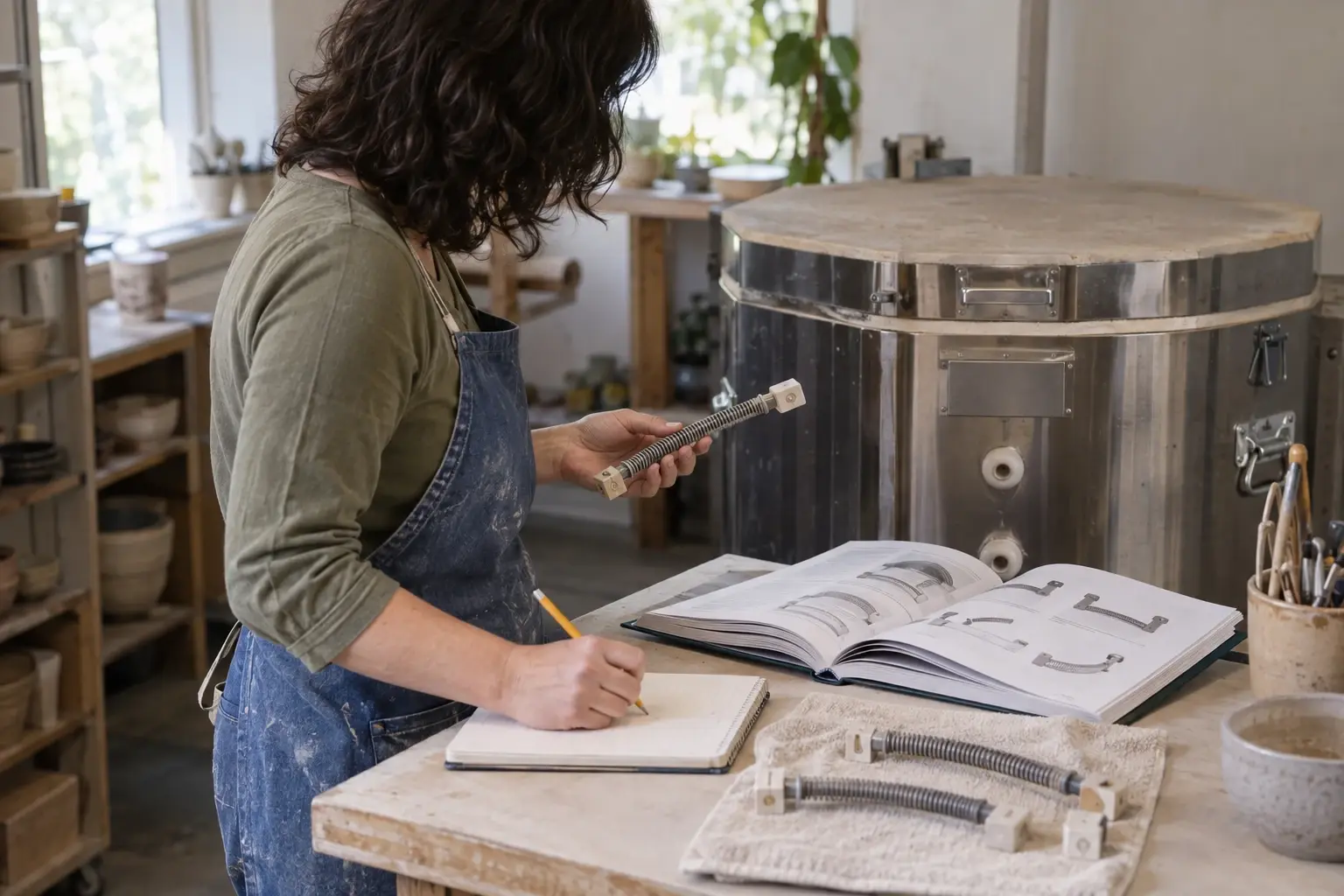
The lowest-priced paste is not automatically the best value. A product with clear instructions and a known match for your kiln can reduce the risk of repeating the repair. If you are unsure which part of the lining is damaged, take a clear photo and compare the kiln’s exact model with the repair product details. Appearance alone is not enough to confirm compatibility, as explained in how to check kiln repair parts.
How should you apply microwave kiln repair paste?
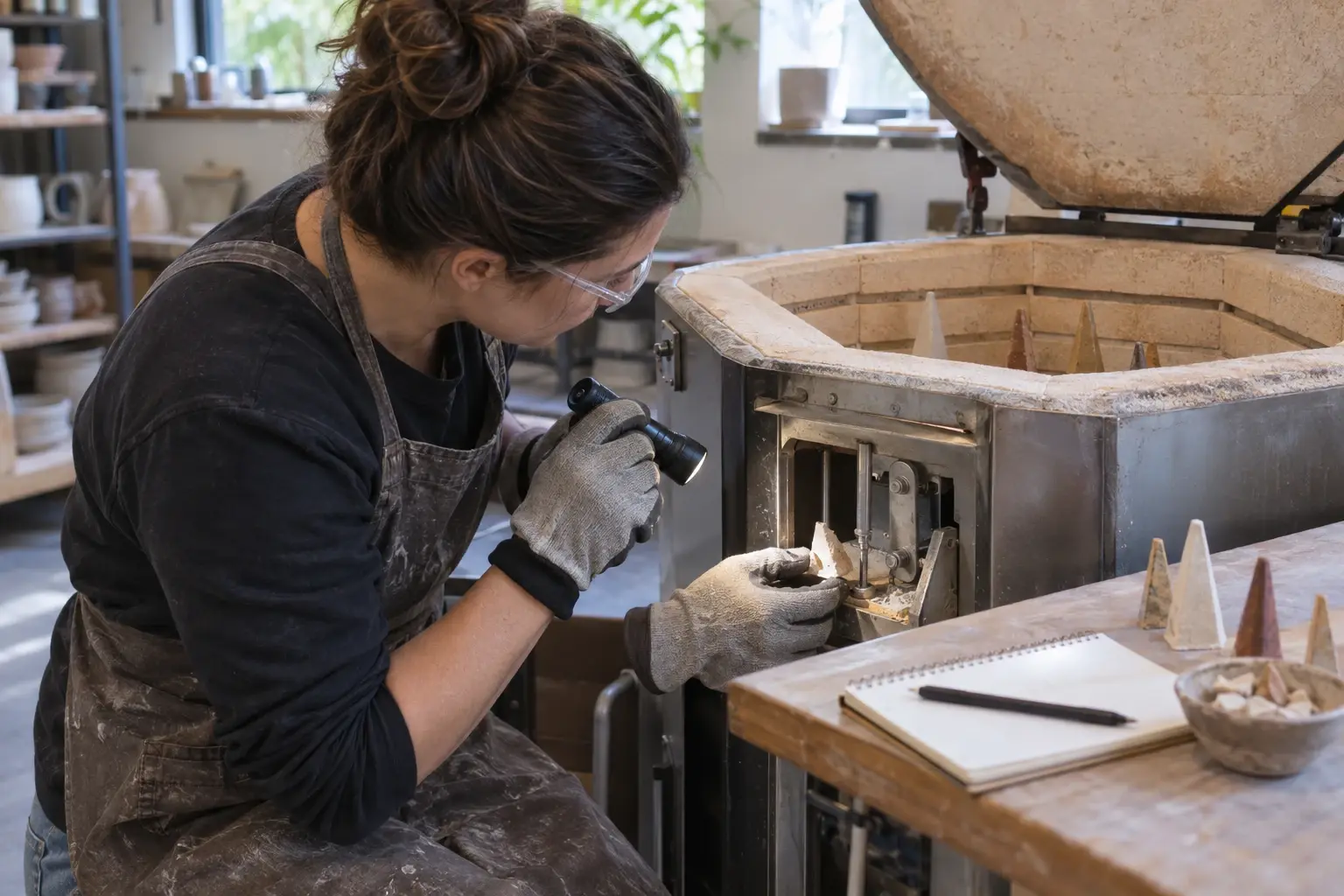
Start with the kiln completely cool and disconnected from use. Follow the equipment manual before removing any inserts or handling the lining. Work in a clean, well-ventilated area and avoid creating loose dust from the refractory material.
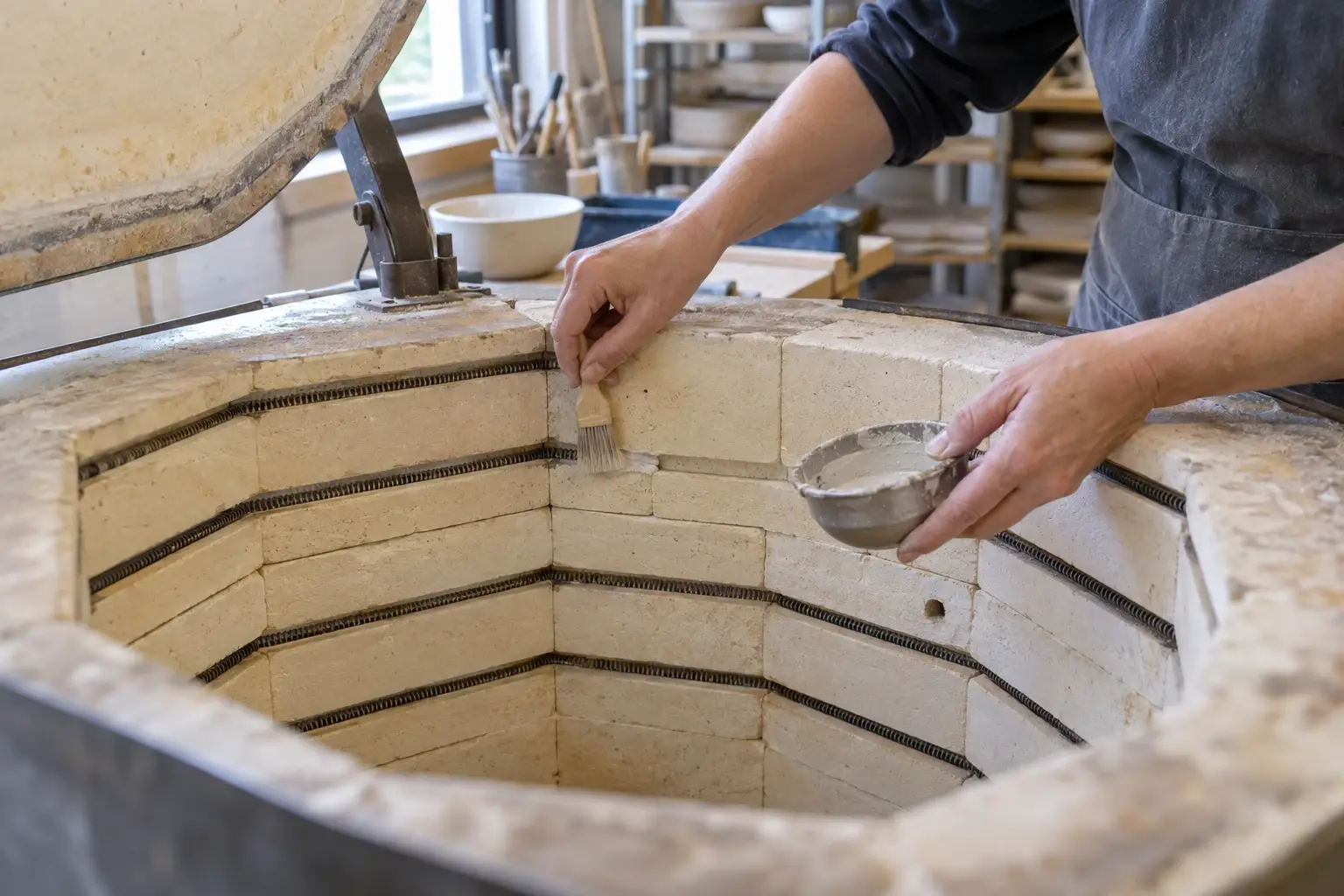
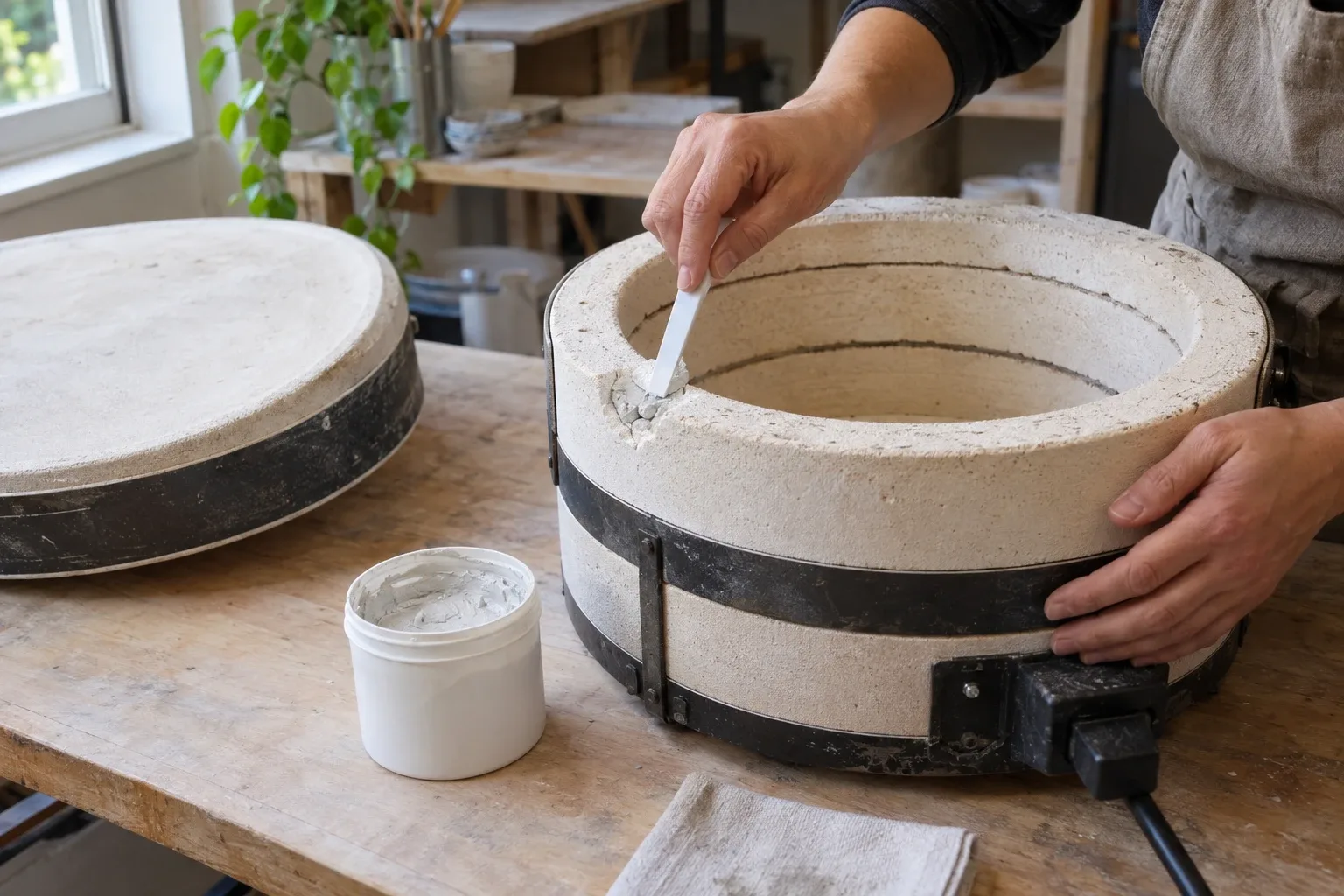
1. Inspect the damage. Decide whether it is a small surface defect or a displaced, crumbling, or missing section. 2. Remove loose material. Gently clear only material that is already detached. Do not widen a stable crack just to make it easier to fill. 3. Clean the area. Use the method allowed by the kiln and paste instructions. Avoid soaking the lining unless the product specifically calls for it. 4. Apply a controlled amount. Press or smooth the paste into the defect without creating a raised lump that could interfere with the lid or chamber space. 5. Check the fit. Before curing, confirm that the lid, insert, or cover still seats as the manual shows. Do not force a component into position. 6. Cure and dry fully. Follow the paste label and kiln manual for the waiting period and first heating cycle. Do not improvise a faster cure by applying extra heat.
Use a disposable tool that lets you place the paste accurately. Keep the repair as small and even as possible. A neat patch is easier to inspect during the next few uses than a thick layer spread over an entire surface.
When is replacement better than repair?
Replace the damaged insert, lining, lid, or kiln when the defect affects the chamber’s shape, the lid no longer fits correctly, pieces are falling away, or the same area continues to fail. Repair paste is not a universal fix for structural damage, impact damage, severe erosion, or a component that has changed size or position.
Stop using the kiln and consult the manufacturer when you see damage near controls, electrical components, hinges, a power connection, or any area the manual does not identify as user-serviceable. For repair parts, match the exact kiln model and part description rather than ordering by a similar photograph.
The right replacement may cost more than a small tub of paste, but it can be the more practical choice when a patch would need repeated inspection or when the repair could interfere with loading and closing the kiln.
A simple repair decision test
Before you buy, write down three observations:
- Is the damage shallow and limited to the surface?
- Does every lid, insert, and cover still fit without pressure?
- Does the manual allow this type of repair?
If the answer is yes to all three, a compatible kiln repair paste may be worth considering. If any answer is no, look for the correct replacement part or ask the manufacturer for a repair path. After the repair, record what you changed and inspect the patch before the next firing. If the surface changes again, stop patching and reassess the kiln rather than adding another layer.
Keep this nearby while you make, then let the next piece be your own.