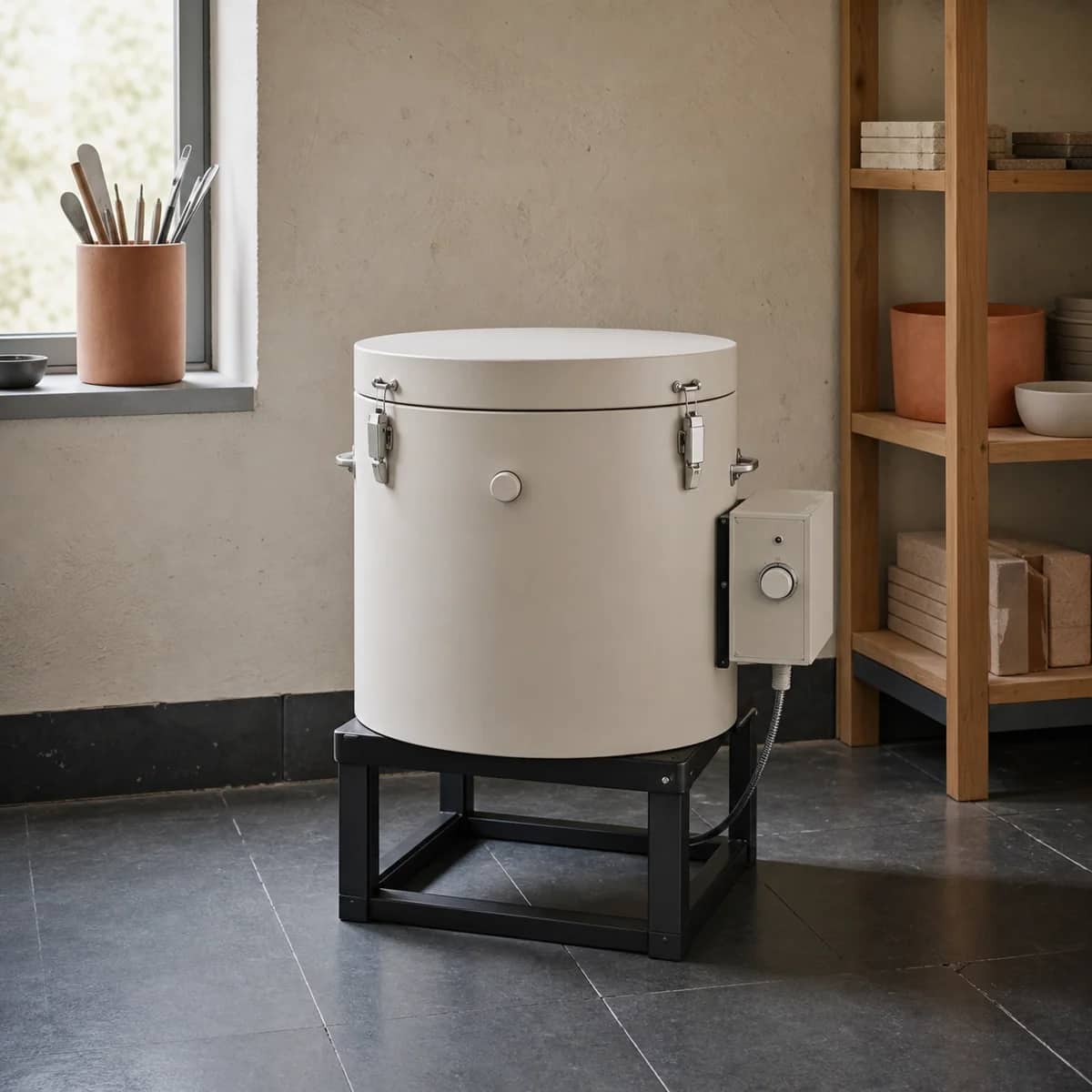

TL;DR
An electric pottery kiln for beginners should be sized for the work you realistically expect to fire, not the largest kiln that fits the room or budget. Confirm the kiln’s electrical requirements with its manual and a qualified electrician before buying, then inspect any used kiln closely enough to identify unknown repair costs.
Start with a modest chamber if you make small batches and have limited space. Choose more capacity only when your usual work can fill it without forcing you to wait too long between firings.
What chamber size fits the work you make?
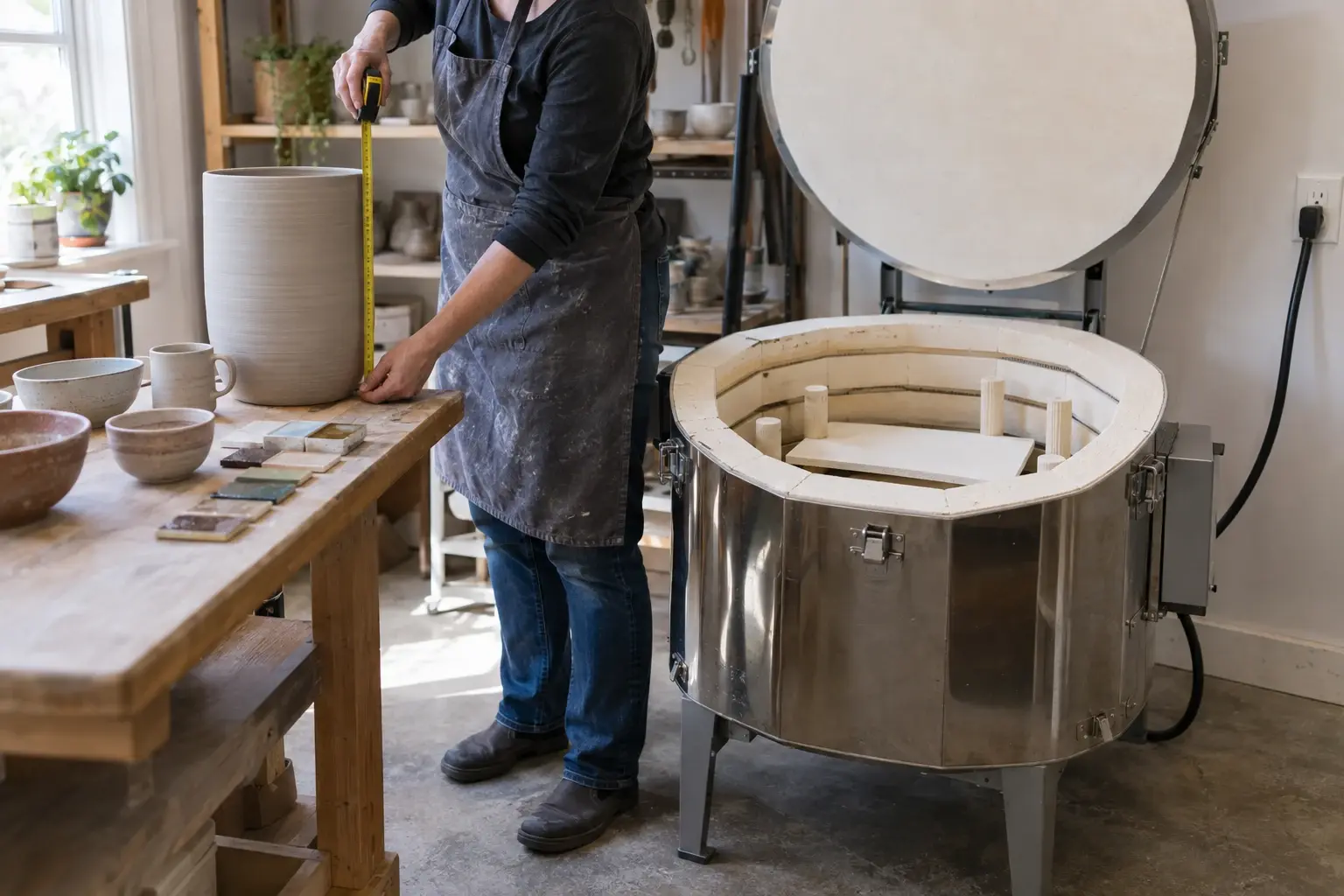
List the pieces you expect to make over the next few months: cups, bowls, plates, test tiles, sculptures, or larger vessels. The useful chamber is the one that handles a normal firing load with sensible stacking space, rather than one that only fits your largest imagined piece.
Try this simple capacity check before comparing models:
1. Gather the three forms you make most often, or use boxes with similar diameters and heights. 2. Arrange them on the floor as you would load kiln shelves, leaving room between pieces. 3. Repeat the arrangement for a typical batch, including test tiles and small work. 4. Measure the footprint and height of that arrangement.
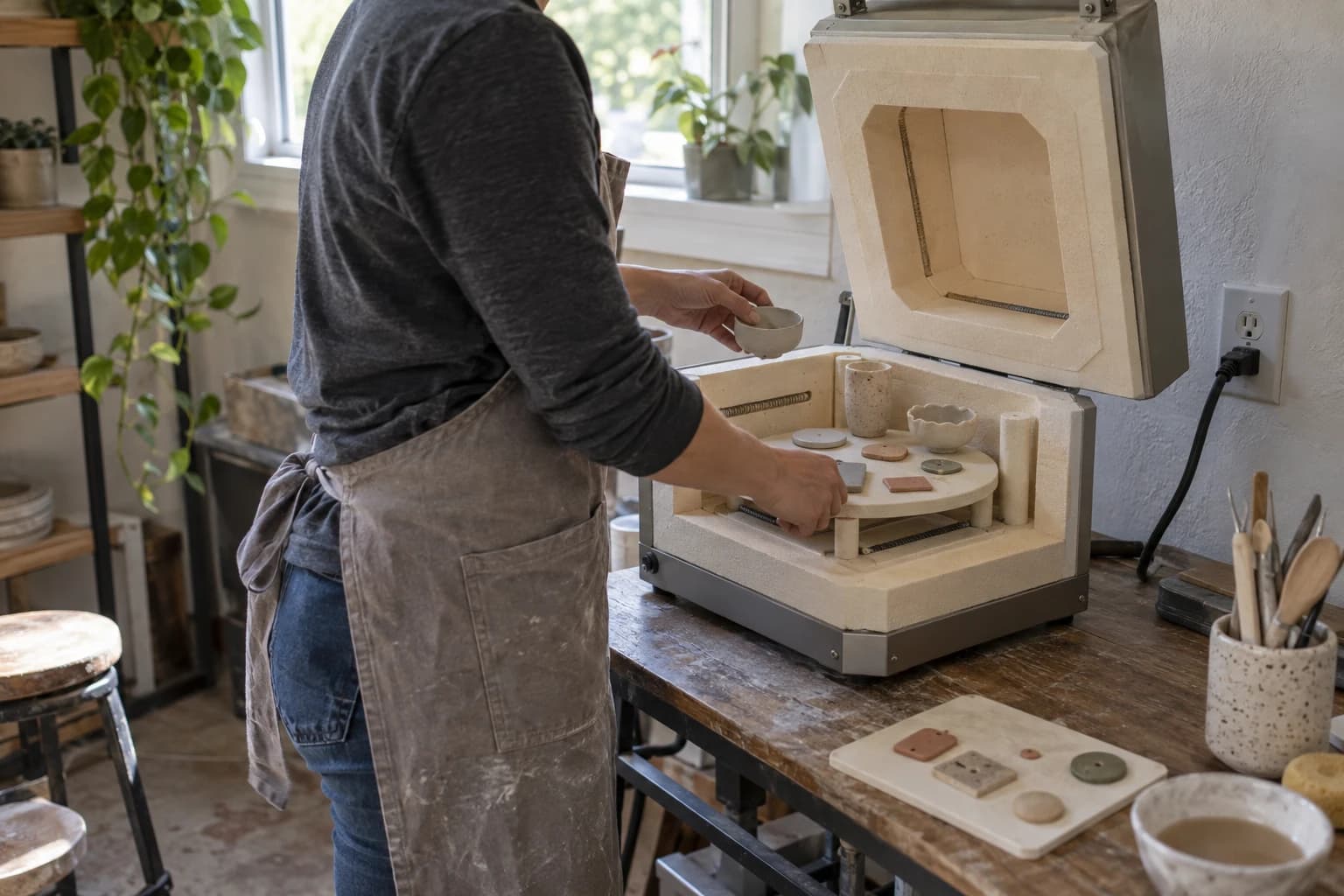
A small kiln can suit a beginner making cups and bowls in low volume, especially when test firings matter more than production speed. A larger chamber can be more practical if you make wide plates, taller work, or enough pieces that repeated small loads interrupt your making rhythm.
Also account for shelf configuration. A chamber may look generous when empty but become less flexible when shelves, posts, and uneven forms are inside. For a broader comparison of home and small-studio constraints, see how to choose a pottery electric kiln.
Does your electrical supply decide the kiln choice?
Usually, yes. A kiln is only a practical purchase if your space can support the electrical requirements listed in the manufacturer’s manual. Do not choose a kiln based on an outlet that merely looks similar, and do not plan electrical changes around assumptions from another kiln model.
Before ordering, collect these details:
- The kiln model’s electrical requirements from its manual
- The location where the kiln would sit
- The distance and route to the electrical panel
- Whether the space is a home, rental, garage, shared studio, or commercial unit
- Any landlord, building, or local electrical requirements
Share that information with a qualified electrician and follow local requirements. The electrician and the kiln manual must determine whether the existing supply is suitable and what changes, if any, are needed. Keep the electrical decision ahead of the purchase, not as a problem to solve after delivery.
Make the kiln location work before it arrives
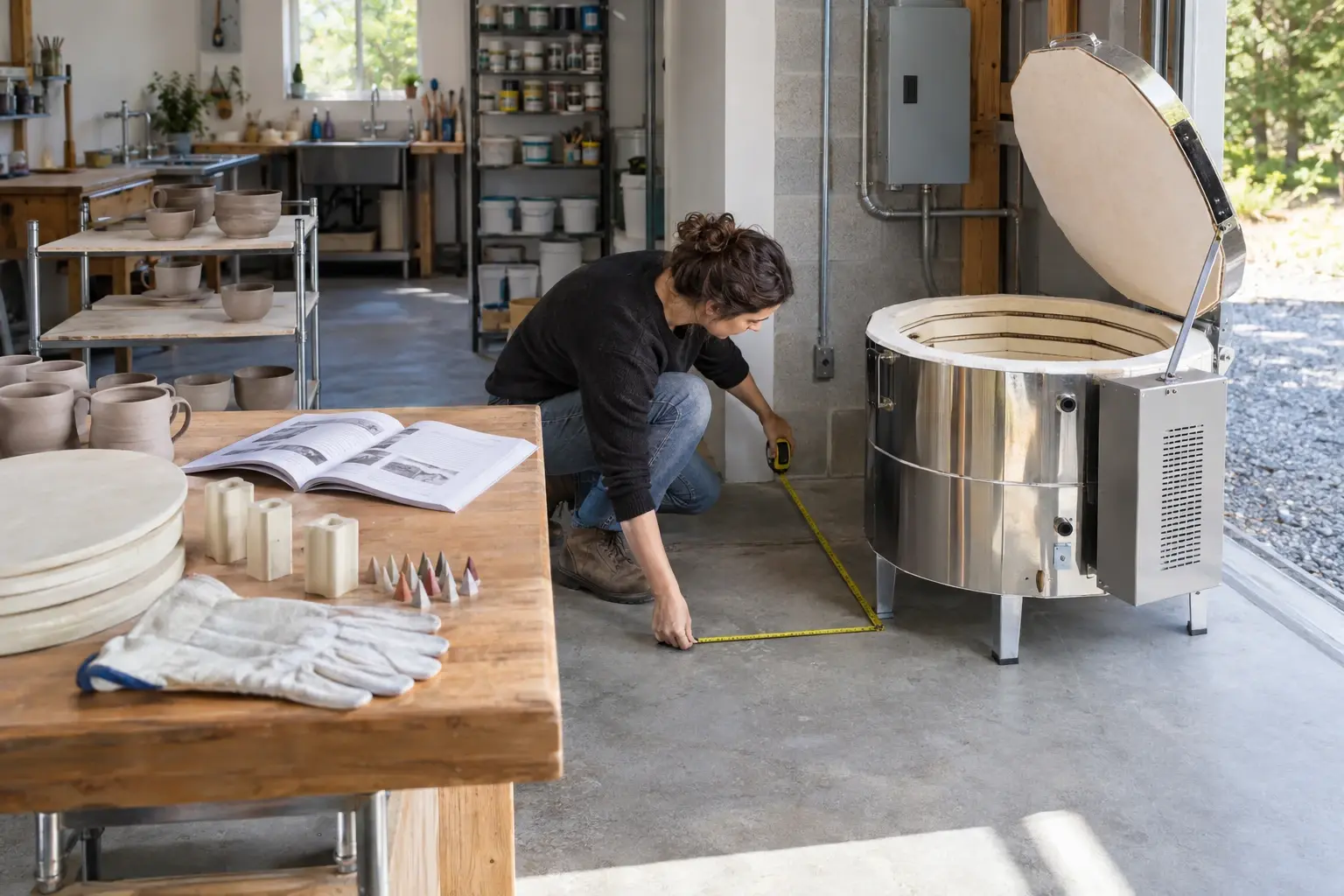
Mark the kiln footprint and door swing on the floor with tape. Then walk through your normal studio tasks: carrying greenware, loading shelves, moving glazed work, and cleaning nearby surfaces. A kiln that blocks storage, wheel access, or the main path through the room can make every firing harder.
Leave the final placement, clearances, ventilation approach, and installation conditions to the kiln manual and applicable local rules. Your practical job is to reserve a clear working zone and avoid treating the kiln as an object that can be squeezed into leftover space. Your home pottery studio setup should support loading and unloading without moving unrelated equipment first.
What should you check on a used kiln?
A used kiln can make sense when its condition, history, and installation needs are clear. It becomes a poor bargain when essential information is missing or visible wear points to substantial unknown work.
Inspect the kiln in person when possible. Check that the model label is readable, the lid and body close as intended, and the brick lining has no obvious major damage or loose sections. Look for condition issues around the lid, hinges, latches, peepholes, shelves, posts, elements, wiring areas, controller, and power connection.
Ask the seller for the manual, age if known, repair history, firing history, and the reason for selling. Confirm whether shelves, posts, furniture, and any accessories are included instead of assuming they are part of the sale.
Do not rely on a seller’s statement that a kiln “works” as a full condition assessment. If electrical components, wiring, controls, or unexplained damage raise questions, pause the purchase and seek guidance from a qualified electrician or an appropriately qualified kiln service professional. Kiln repair decisions are easier to make when you separate ordinary wear from issues that need professional assessment.
Buy for the next repeatable firing
Your first kiln does not need to cover every future project. It needs to support a repeatable cycle: make work, dry it fully, load it comfortably, fire it according to the clay and glaze instructions, and evaluate the result before changing one variable.
If you are also choosing a wheel, match both purchases to the forms and batch sizes you can manage in your available space. A beginner electric pottery wheel buying guide can help keep the rest of the setup proportionate to the kiln you choose.
Keep this nearby while you make, then let the next piece be your own.