
TL;DR
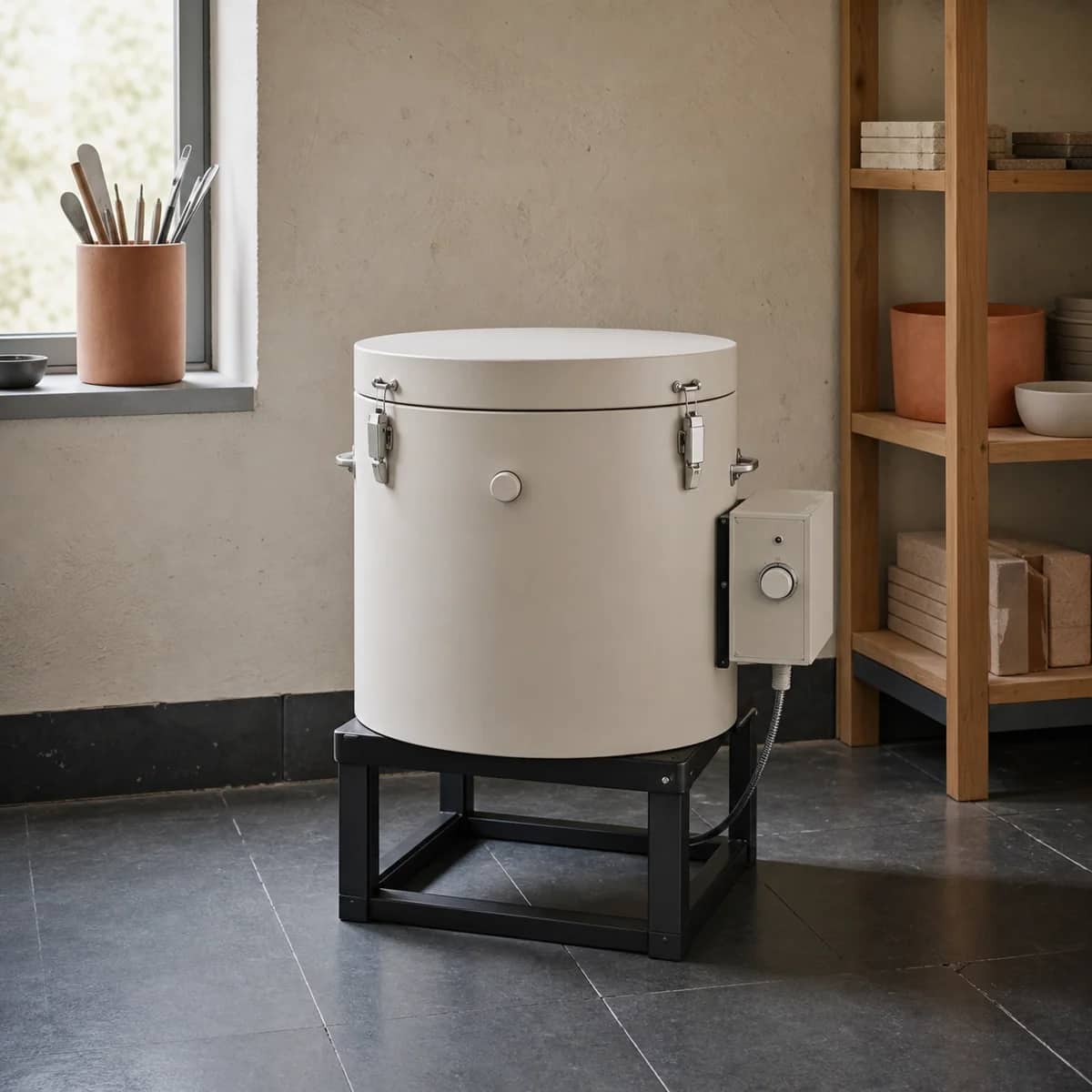
The best electric pottery kiln for home use is not automatically the largest or cheapest model. Choose one whose usable chamber fits your typical pieces, whose power requirements suit the location, and whose placement, ventilation, clearance, and controls can be handled according to the manual and local requirements.
Before shopping, sketch one realistic kiln load, confirm the available electrical service with a qualified electrician, and measure the proposed setup area. If any of those checks fail, change the plan before buying.
What size kiln fits your workflow?
Start with the work you actually make, not the chamber dimensions in a product listing. Measure the height, width, and depth of your largest regular pieces, then allow room for shelves, posts, and loading space. The interior is not fully available for pottery because shelves and clearance affect how efficiently you can pack a firing.
Ask three practical questions:
- Do you mostly make test tiles, small vessels, or full-size functional ware?
- How many pieces do you want to fire in one batch?
- Would a smaller kiln let you fire more often, or would it force you to split every useful load?
A small chamber can be easier to fit into a compact studio, but it may increase the number of firings for a productive batch. A larger chamber can handle more work, yet it needs more floor space, may require a different electrical arrangement, and can be wasteful when you regularly fire only a few pieces.
For a second view of chamber planning, compare the workflow questions in small electric kiln for pottery with your own forms and batch size.
Can your home support the kiln?
Treat electrical capacity as a purchase decision, not an installation detail to solve later. Product information may list voltage, amperage, phase, or connection requirements. Write those requirements down and ask a qualified electrician to determine whether the proposed location and service can support them.
Do not assume a convenient outlet is suitable because another appliance uses it. The manual, the equipment nameplate, local electrical requirements, and the electrician’s assessment must decide what is acceptable. Do not improvise wiring, adapters, or extensions for a kiln.
Also check whether the kiln can be delivered through doors, hallways, stairs, or gates. Measure the route, not just the final corner. Leave enough working room for loading, inspection, cleaning, and access to controls without forcing the kiln against storage or furniture.
Where should a home kiln go?
Choose the location before choosing the model. A workable area should support stable placement, practical loading, clean access, and the ventilation approach specified by the equipment manual. Keep combustible materials, clutter, and clay dust away from the kiln area, and follow the manufacturer’s clearance instructions rather than copying a distance from another model.
Ventilation is part of the studio plan. Electric kilns can release fumes during firing, depending on the clay, glaze, kiln condition, and firing process. Review the manual and local rules before selecting a hood, downdraft system, or other approach. Electric kiln ventilation for a home studio explains the planning factors without replacing the equipment instructions or qualified installation advice.
A useful test is to stand in the proposed loading position and imagine handling a hot firing schedule, shelves, kiln furniture, and finished work. If the route crosses your main wedging or throwing area, the kiln may disrupt the studio even when it technically fits.
Which controls and capacity choices matter?
Compare controls by the decisions you want to make repeatedly. Useful considerations include programmable firing stages, ramp and hold options, readable displays, temperature monitoring, and how easily you can review or adjust a firing according to the manual. More control is not automatically better if the interface is difficult for you to understand.
Capacity should also match your firing rhythm. If you make mostly one-off pieces, a smaller usable chamber may reduce empty space. If you produce coordinated sets, a larger chamber may reduce split firings. Compare the cost and inconvenience of extra firings with the space and installation demands of a larger kiln.
Do not judge a kiln by maximum temperature alone. Your clay and glaze choices, firing schedules, witness cones, shelf dimensions, and piece thickness all matter. Check that the intended kiln range is compatible with the materials you plan to use, then confirm the details in the manual and material documentation.
Use this pre-purchase kiln worksheet
Complete these checks before requesting a quote or placing an order:
1. Measure your largest regular piece and sketch one typical load. 2. Add shelf and post space to estimate usable, rather than advertised, capacity. 3. Measure the delivery route and the proposed operating area. 4. Record the model’s electrical requirements from its current documentation. 5. Ask a qualified electrician to assess the proposed supply and location. 6. Identify the manual’s clearance, ventilation, operating, and maintenance requirements. 7. List the clay and glaze firing ranges you intend to use. 8. Estimate how often you would run a small, medium, or large batch. 9. Add kiln furniture, ventilation, electrical work, delivery, and future maintenance to the purchase budget.
Keep this worksheet beside each model comparison. Eliminate any option that fails a space, electrical, material, or workflow check before comparing price.
What should you confirm before ordering?
Ask the seller for the current manual and complete installation information. Confirm what is included, which kiln furniture is supplied, how delivery is handled, and what support exists for replacement parts or service. Product pages can change, so make the manual and the local electrical assessment your decision authorities.
For a broader equipment checklist, see how to choose a pottery electric kiln for a home or small studio. The final choice should fit your actual forms, available space, electrical service, ventilation plan, and willingness to run the firing schedule consistently.
Keep this nearby while you make, then let the next piece be your own.