The Short Version
Storing clay properly doesn't require any special container. What matters is consistent moisture, as little air exchange as possible, and keeping different clay types and conditions separated. Divide your clay into sturdy, airtight bags or boxes with a gasket seal, label each one with the clay body and date, and wipe down the bag opening or sealing surface after every time you take some out, then close everything up again right away. If the surface looks dry, start by testing a small piece instead of adding lots of water to the whole batch.
Where Should You Keep Ceramic Clay at Home?
Start by picking a cool, dry spot with as little temperature fluctuation as possible. Keep clay away from heaters, direct sunlight, drafty windows, and anywhere it's likely to get splashed with water. Your storage spot doesn't have to be right next to your work surface, but it should be easy to reach before you wedge, throw, or trim, so the clay spends less time exposed to room air.
Near the floor, dust tends to settle on materials, and moisture from mopping can also be an issue. On high shelves, factor in the weight of full clay bags and how safely you can pull them down. Set your clay on a sturdy shelf and leave enough room to read labels and grab containers comfortably. Don't store fresh clay, reclaimed clay, and noticeably dried-out clay in the same bag.
How Do You Store Clay Airtight So It Doesn't Gradually Dry Out?
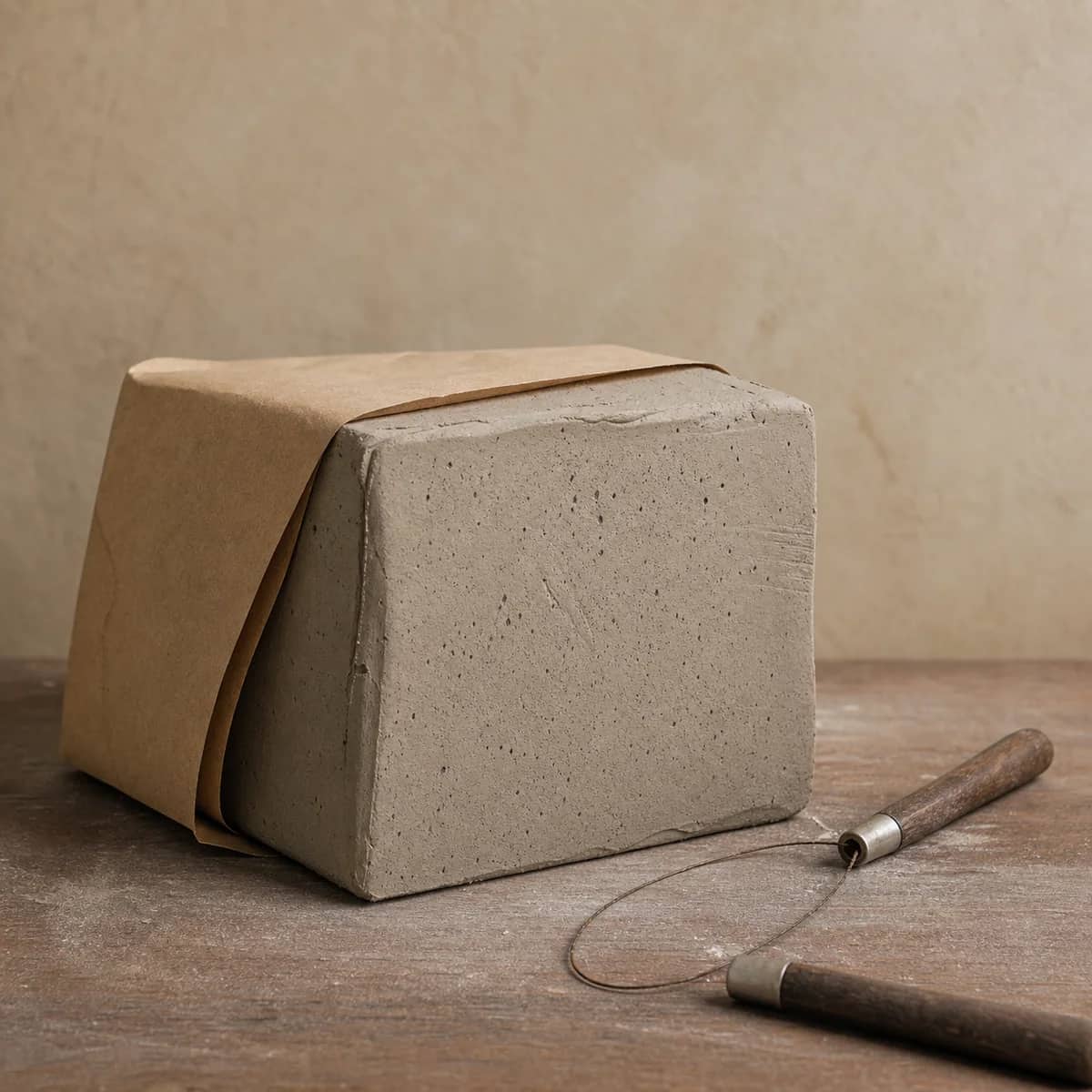
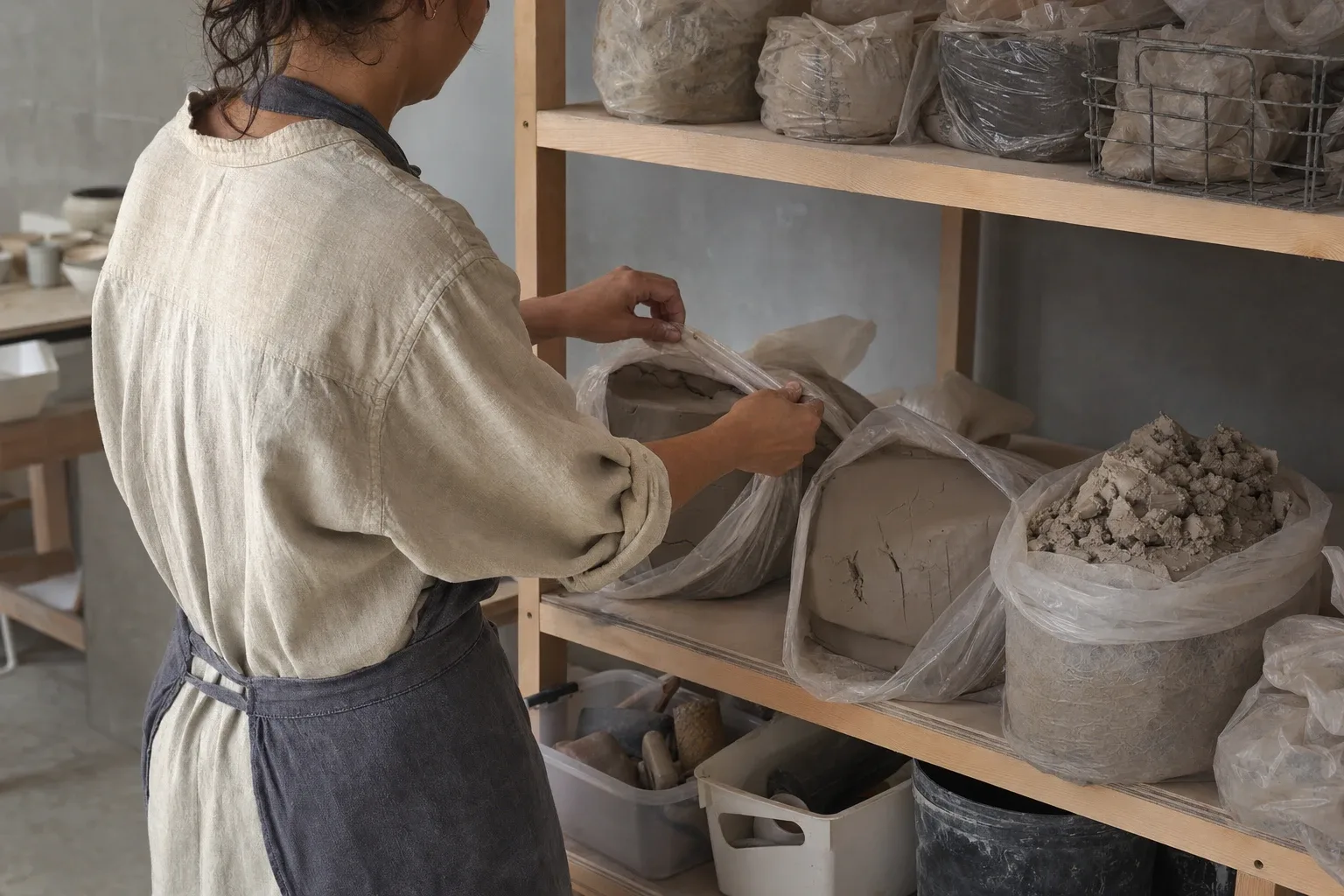
Break larger clay blocks down into amounts you can realistically use up, and put each portion in a sturdy, airtight bag or a box with a reliable closure. This has two advantages: when you open one portion, the rest barely come into contact with air. And if one portion goes bad, it doesn't take your whole supply down with it. Press out as much excess air as you can without compressing the clay too hard.
After each time you take clay out, wipe any crumbs off the bag opening or the sealing surface of the lid, then close the container. Crumbs can create small gaps and end up falling into clean clay the next time you open it. For bags, an extra outer bag can reduce the risk of damage, and therefore of air getting in. But it's no substitute for a tight seal on the inner packaging.
Write the clay body, color, purchase or opening date, and condition on every portion: "fresh," "reclaimed," or "for rehydrating." If you want to compare shrinkage, color, or firing results across different bodies, you'll find useful pointers in the articles on ceramic materials and studio practice. For any specific clay body, though, the manufacturer's packaging and specs are always the final word.
Should You Store Different Clay Bodies Separately?
Yes. Sort your supply at minimum by clay body, color, and stage of use. Earthenware, porcelain, stoneware, and clay with special grog or additives can all behave differently during working and firing. Even if they all feel like moist clay in your hand, don't mix them just to save space. Once different colors get blended together, it's hard to tell later whether a color change came from the body or from the surface material.
A Simple, Practical Sorting System
Organize your storage into three groups:
- Ready to use: even consistency, legible label, no extra treatment needed.
- To check or rehydrate: dry edges, uneven surface, or previously stored open.
- Reclaimed clay: collected from trimming, cutting, or failed pieces, and already separated by clay body.
Reclaimed clay from different bodies doesn't belong in the same bucket. Clay contaminated with plaster, wood splinters, sand, glaze, or other foreign material should also stay separate. Don't mix it straight into clean clay just to throw away as little as possible.
How Do You Deal with Dried-Out Clay with the Least Risk?
Start by testing a small piece. Look at the surface, the edges, and the inside, and figure out whether it's just lost some moisture or whether there's already a hard core, cracks, or obvious contamination. For lightly dried clay, you can cut the small piece into thinner slices or smaller portions and put them in a sealable container so the moisture redistributes gradually. Add water only in small amounts, in several steps. Seal the container and let it sit for a while after each step, then check the clay again. Never pour water all at once over a whole block.
After rehydrating, wedge the material thoroughly or otherwise work it for even moisture distribution, then do a small hands-on test. If the clay is still soggy in one spot and hard in another, or if it smells off, shows contamination, or contains hard lumps that won't break down, don't mix it with clay that's ready to use. Keep that portion labeled as still needing work, or dispose of it according to your local waste rules.
Don't put clay on a radiator, in a drying appliance, or in strong sunlight to "speed up" the process. That only makes the outside and inside even more uneven, raising the risk of cracks and soft-to-hard inconsistencies when you work with it.
How Do You Set Up a Weekly Clay Storage Check?
Establish a short, fixed check-in routine in your studio:
1. Check that labels are still legible and that fresh clay, reclaimed clay, and clay for rehydrating stay separated. 2. Press into a small corner and note whether the clay is generally consistent, or has hard edges, dry crumbs, or unusual foreign material. 3. Inspect bag openings, lids, and outer bags for crumbs, holes, or incomplete seals. 4. Return recently opened materials to an easy-to-reach spot, and re-check the seal on anything that's sat unused for a long time. 5. Note which portions should be used up first or need rework, don't rely on memory alone.
This check doesn't mean opening every container each time. Start with anything already opened, stored near a heat source, previously dried out, or incompletely labeled. If the same portion keeps drying out, change where you store it rather than repeatedly adding water.
Adapting Storage to Your Workflow at Home
In a small home studio, the amount you need for the day can live near your work surface, while your reserve stock stays in a closable shelf unit and reclaimed clay sits in a separate area awaiting processing. At the end of every work session, portion out the clay you'll keep using, then clean your tools and work surface. Don't put it off until your next ceramics session. If you're buying storage supplies, jot down container dimensions, stackability, label space, and how easy things are to clean first. Then browse Claylune's studio supply page and make your final call based on the space you actually have and your clay's packaging requirements.
A simple decision table can help you choose:
| What you notice | What to do next | |---|---| | Clay is even, label readable, seal intact | Keep storing it where it is | | Only the surface or edges are dry | Portion off a small amount and rehydrate step by step | | Fresh clay and reclaimed clay got mixed | Sort and relabel first | | Container damaged or sealing surface full of crumbs | Replace or clean the closure | | Foreign material, lots of hard pieces, or unclear condition | Isolate it, don't mix into clean clay |
FAQ: Common Questions About Storing Clay
Can clay stay in its original packaging for a long time?
You can keep it in the original packaging at first. Just check that it's undamaged, the closure holds reliably, and it can be resealed tightly after opening. If the packaging is damaged or gets opened often, it's better to transfer the clay into a suitable container for individual portions while keeping the information from the original label.
Can reclaimed clay be stored together with fresh clay?
It's not recommended. Even if the two look similar, their moisture levels, contaminants, and origins can differ. Separate them by clay body first. Only once the reclaimed clay is consistent again and a small test piece works out should you decide whether it's still suitable for similar work.
Do you need to remove all the air when storing clay?
No, a full vacuum isn't necessary. What matters more is minimizing air exchange, keeping sealing surfaces clean, and opening the same large bag as rarely as possible. Small portions are usually easier to keep stable than one big block that keeps getting reopened.
When should you stop trying to rehydrate clay?
As soon as there's a hard core that won't break down, obvious contamination or an off smell, or the condition stays uneven even after treating a small amount, the clay shouldn't go back into your regular supply. Isolate it, and follow the material specs or your local disposal rules for what to do next.
Keep this nearby while you make, then let the next piece be your own.