TL;DR
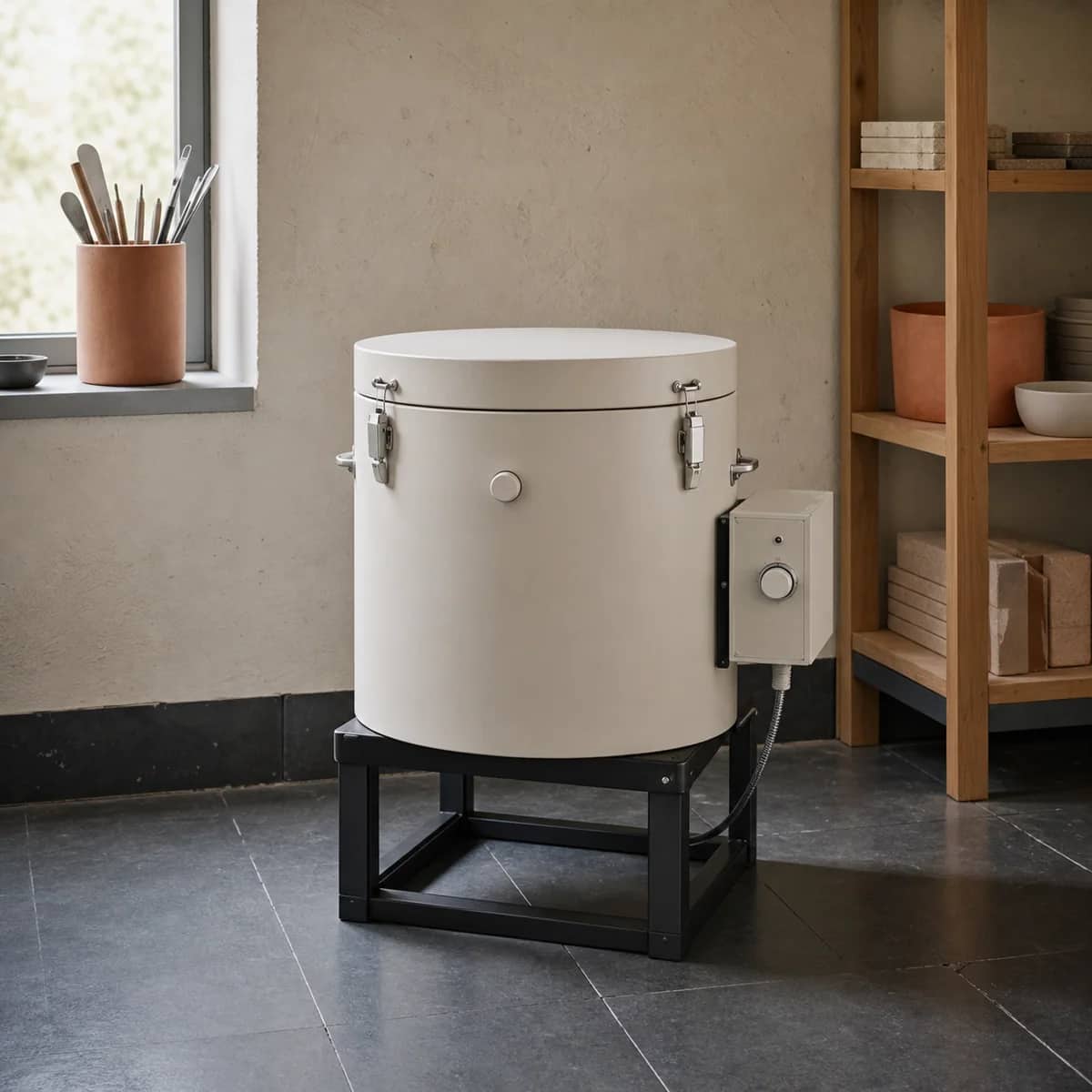
Kiln room ventilation pulls firing fumes outside and replaces the exhausted air with fresh makeup air from another part of the room or building. Place the kiln so exhaust routing is short and direct, confirm that makeup air can reach the room without starving the ventilation system, and check the kiln manual for any downdraft or hood requirements before installation.
Where Fresh Air Enters the Room
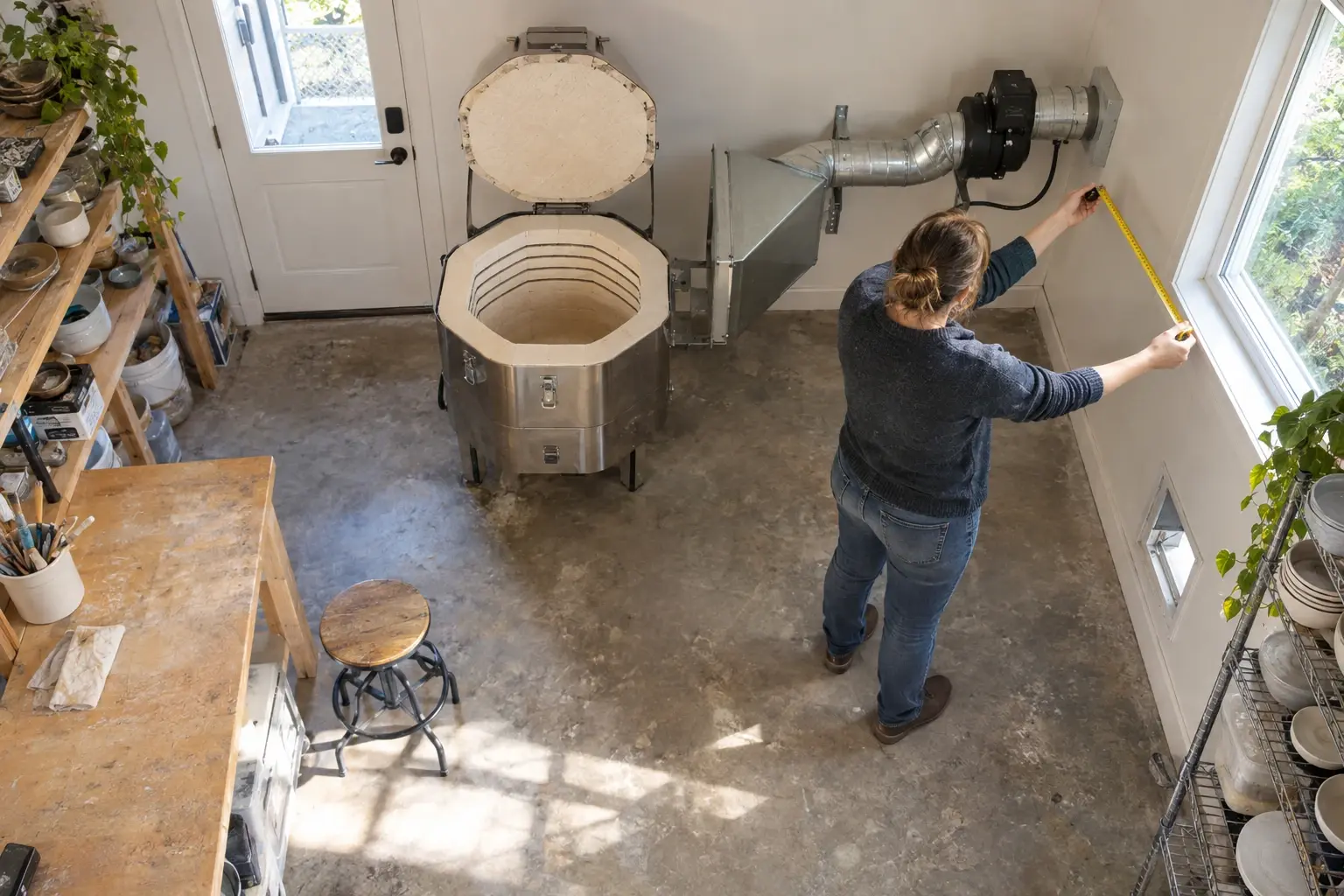
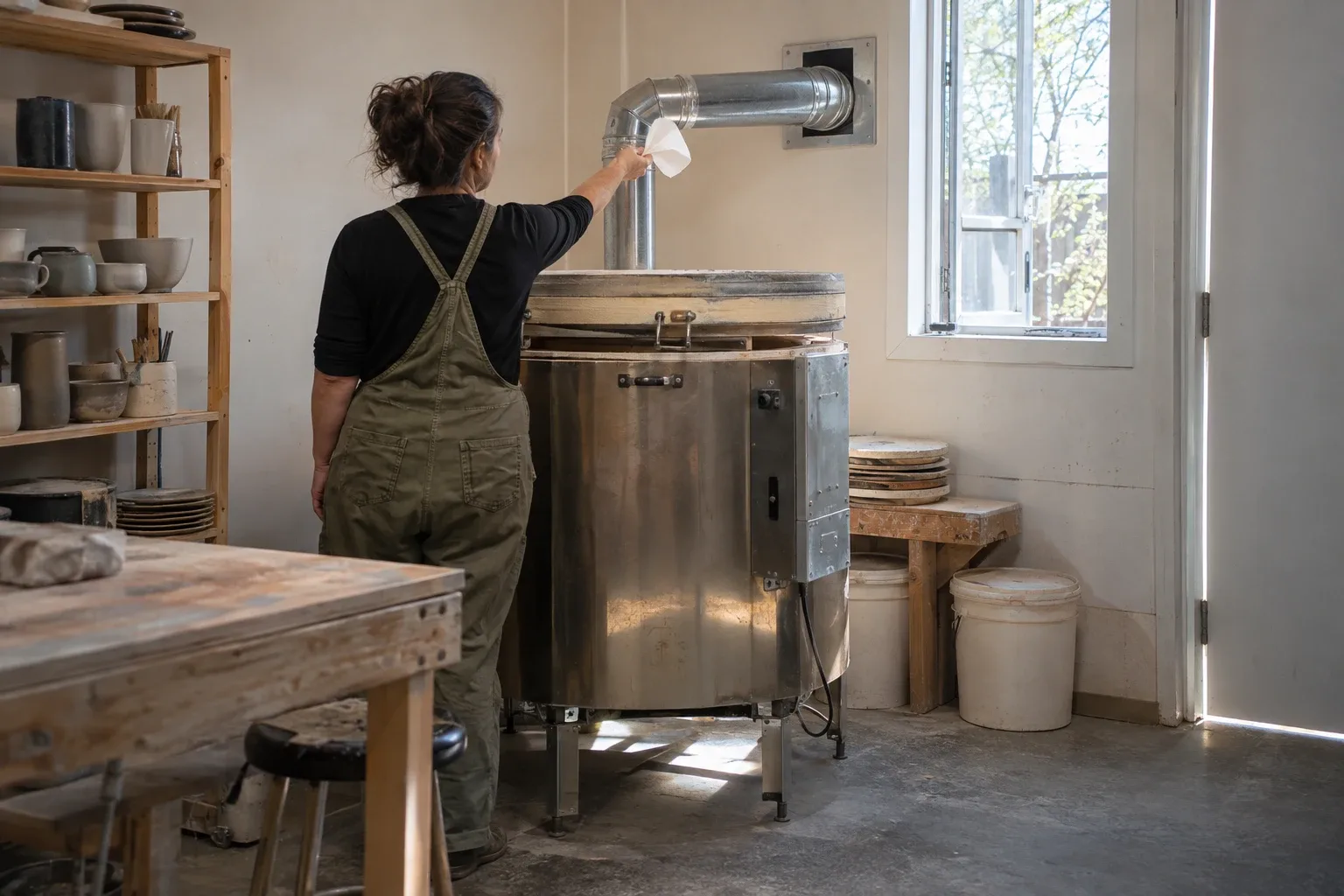
Makeup air is the replacement air that flows into a room after your ventilation system exhausts kiln fumes. Without it, the room goes negative and airflow slows or stops. In a home studio, makeup air usually enters through a gap under a door, a window cracked open, or a passive vent installed in an exterior wall. Test airflow by running the system and checking whether a tissue held near the kiln moves toward the exhaust inlet. If it barely moves, the room needs a larger makeup-air path.
Place the makeup-air inlet across the room from the kiln so incoming fresh air sweeps past your work zone before reaching the exhaust. Avoid placing the inlet directly beside the kiln, which creates a short circuit where fresh air goes straight to the vent without clearing the room.
Exhaust Routing and Duct Runs
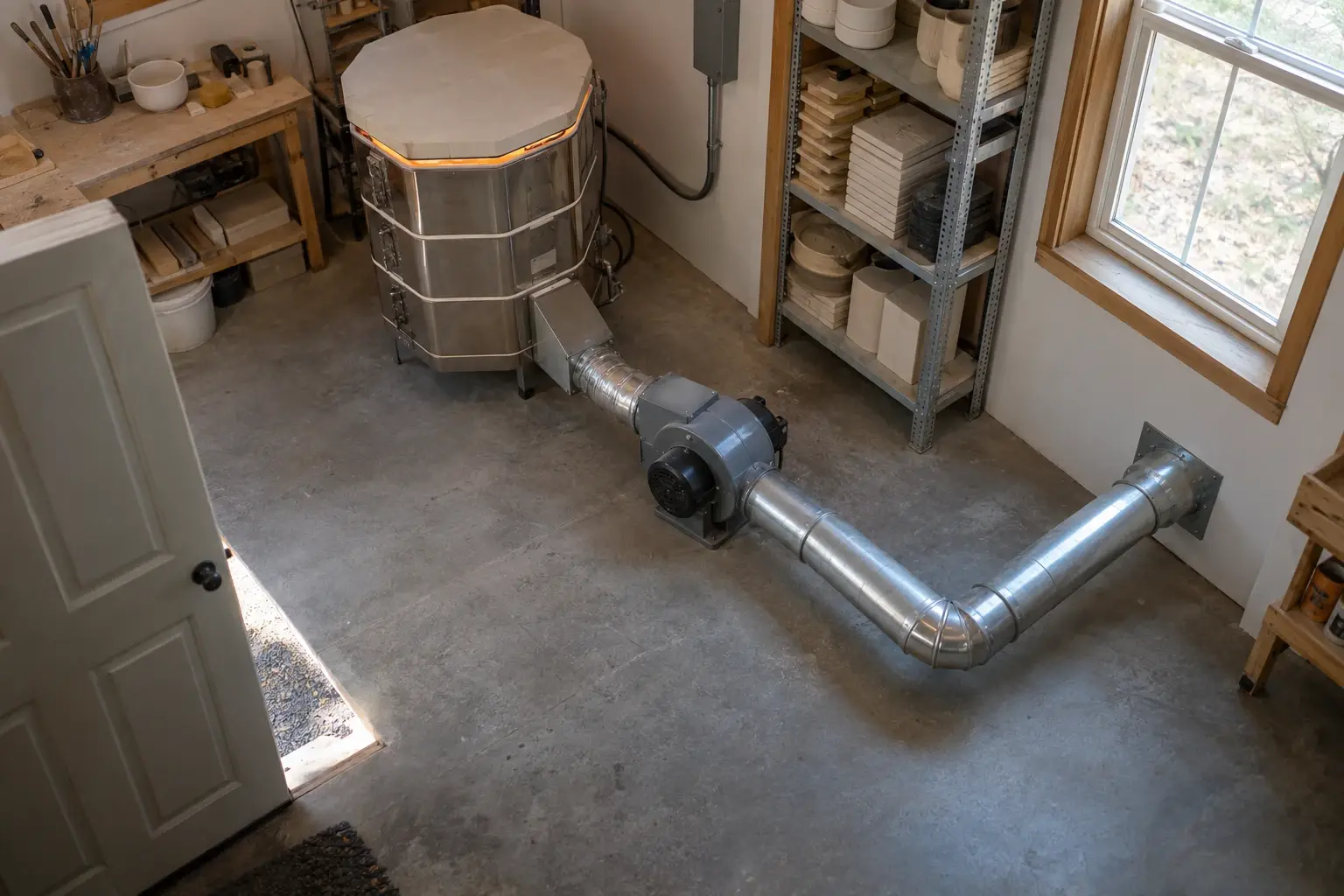
Shorter duct runs move more air with less resistance. Plan the kiln location so the exhaust path to an exterior wall is as direct as possible, with minimal bends. Each elbow and each additional meter of duct reduces airflow. If the room layout forces a long run, check whether the ventilation system's blower can handle the added resistance, or consider a different kiln placement.
Route ducts away from combustible materials and follow the clearances in the kiln and ventilation system manuals. Seal all joints with foil tape, not fabric duct tape, so fumes cannot leak into living spaces. Terminate the duct outside, not into an attic or crawl space.
Downdraft vs. Hood Ventilation
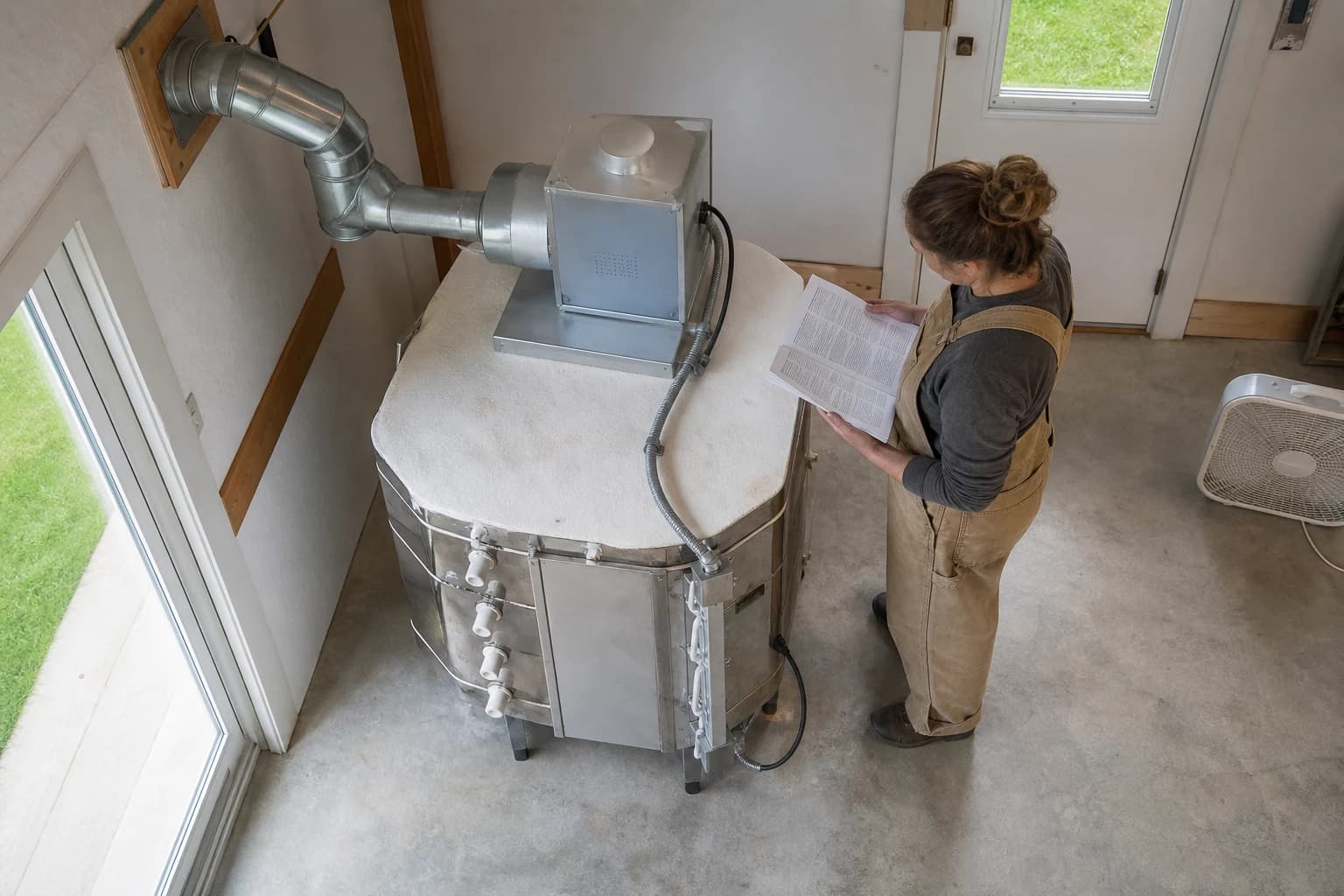
A downdraft system draws air through slots or openings in the kiln floor and exhausts it below. A hood or canopy system captures rising fumes above the kiln. Both work when sized and installed correctly. Downdraft systems often require less vertical clearance and keep fumes closer to the source. Hoods need enough capture area to prevent fumes from spilling past the edges, and they work best when the kiln sits under the center of the canopy.
Check your kiln ventilation system manual for the manufacturer's recommended type. Some kilns include a built-in downdraft option; others require an external hood. Do not assume one approach is universally better. The decision depends on the kiln design, room height, and how you load and unload.
Confirming Airflow During a Firing
Run a test firing with the ventilation system on and check that air moves from the makeup inlet toward the kiln and then to the exhaust. Hold a tissue or lightweight ribbon near the kiln to see whether airflow is consistent. If fumes linger or drift toward your work area, adjust the makeup-air opening or reposition the exhaust inlet.
Respirable crystalline silica was measured in eleven high school ceramics classrooms, with a geometric mean of 0.008 mg/m³ near the kilns. Peephole closure during firing and the use of exhaust ventilation in spray booths notably reduced emissions. Your home studio will not match a classroom exactly, but the principle holds: controlled ventilation and closed peepholes limit what escapes into the room.
Installation and Electrical Considerations
Ventilation blowers and kilns both require dedicated electrical circuits. Confirm that your panel has capacity for both loads and that the wiring meets local code before installation. Hire a qualified electrician to run new circuits or verify existing ones. Do not assume a standard outlet will support a kiln and blower together.
Some downdraft systems interlock with the kiln so the blower runs only when the kiln is on. Others use a separate switch or timer. Check the electric kiln for pottery at home installation requirements and coordinate electrical work for both systems at once.
When to Adjust the Plan
If the first test firing shows poor airflow, check the makeup-air path before adding blower capacity. A restricted inlet causes more problems than an undersized blower. If fumes still escape after adjusting the inlet, verify that all duct joints are sealed and that the exhaust termination is not blocked by wind or nearby structures. Persistent problems may mean the duct run is too long or the blower is undersized for the resistance. Consult the ventilation system manufacturer or a qualified HVAC technician rather than guessing at modifications.
Keep this nearby while you make, then let the next piece be your own.