TL;DR
The best pottery wheel for beginners is usually the one that stays controlled when clay pushes back at low speed, fits the forms you want to make, and is simple to clean after each session. Treat horsepower, top speed, and claimed centering capacity as starting points for comparison, not proof that one wheel will suit your work better than another.
Before ordering, make a short list of your likely projects, available floor space, and cleanup routine. Then compare each wheel against the same practical checklist.
Start with the work you want to make
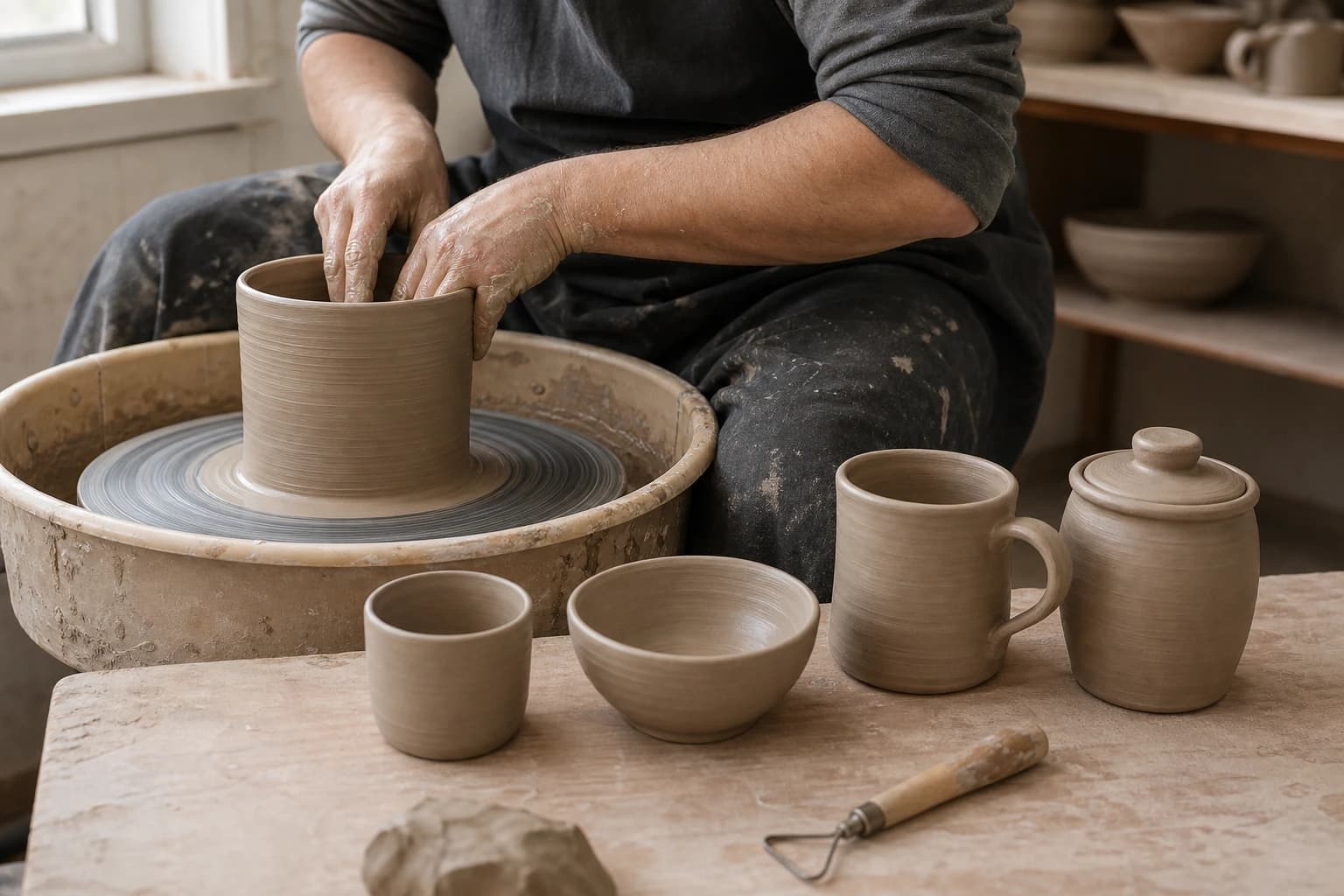
A beginner making small cups, bowls, and cylinders does not need to choose the same wheel as someone planning to throw wide serving bowls or repeated batches of larger forms. The useful question is not simply, “What is the strongest wheel?” It is, “Will this wheel give me room and control for the work I will practice most?”
Write down three forms you expect to make during your first months. Include their approximate width, whether you will use bats, and whether you want to trim pieces on the wheelhead. This list gives purpose to the specifications on a product page.
For project ideas that build skill without demanding very large amounts of clay, use this sequence of pottery wheel projects for beginners. A wheel that helps you repeat basic cylinders comfortably is more useful than one bought mainly for an ambitious future project.
Which motor specification matters most?
For beginners, low-speed torque and controllable pedal response matter more than a high maximum speed. Torque is the motor's ability to keep turning when you apply pressure to the clay. At low speeds, weak or poorly controlled drive systems can feel less steady when you center or open a lump of clay.
Product listings do not always publish torque data, and motor ratings are not always measured or presented in the same way. A horsepower figure alone cannot tell you how a wheel will behave under your hands. It may be useful as a broad comparison within a single manufacturer's lineup, but it should not decide the purchase by itself.
Look for evidence that addresses control rather than just output:
- A smooth speed range that includes a genuinely slow working pace
- A foot pedal that can hold a steady speed without abrupt jumps
- Clear information about the drive system and warranty support
- A retailer demonstration, video, or in-person trial showing the wheel turning slowly with clay on it
If possible, press gradually into centered clay during a supervised demo. Watch whether the wheel slows sharply, surges, or remains predictable. This is an ordinary workflow test, not a measurement of motor performance, but it reveals more than a headline power number.
Wheelhead size sets the usable workspace
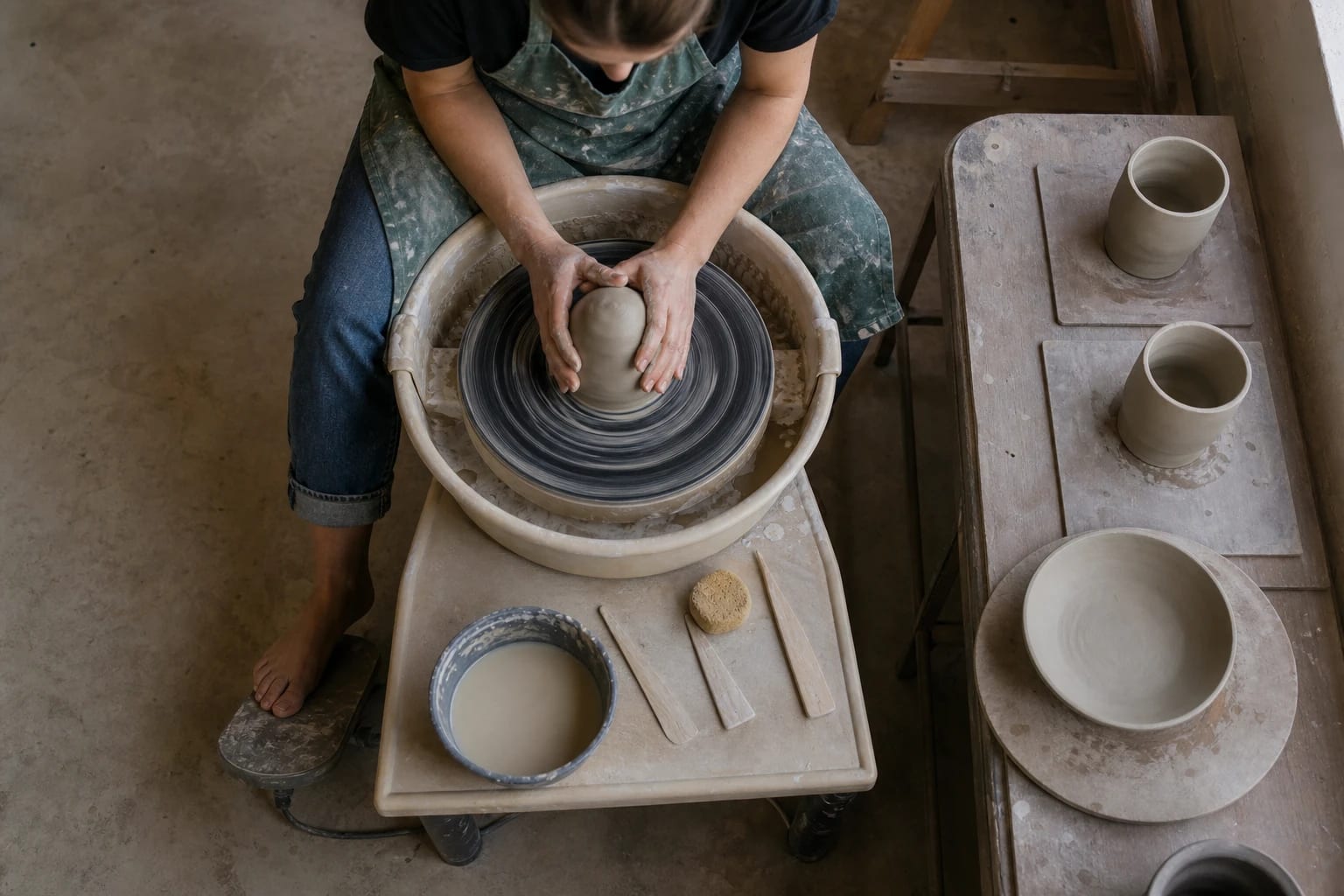
A larger wheelhead gives more room for wider forms, bats, and hand placement while trimming. It can be especially helpful if you expect to make plates or bowls with broad rims. A smaller wheelhead can still be a sensible choice for compact workspaces and smaller pots, provided compatible bats are available when you need them.
Check the wheelhead diameter alongside the space around it. A wide wheelhead is less useful if the splash pan, frame, or nearby shelving makes it awkward to move your elbows while centering. Also confirm how bats attach. A common bat system can make it easier to add bats later rather than being limited to one proprietary option.
If trimming will become part of your routine, consider whether you need the wheel for that task or would prefer a separate pottery trimming chuck for supporting narrow or uneven forms.
Does the splash pan make cleanup easier?
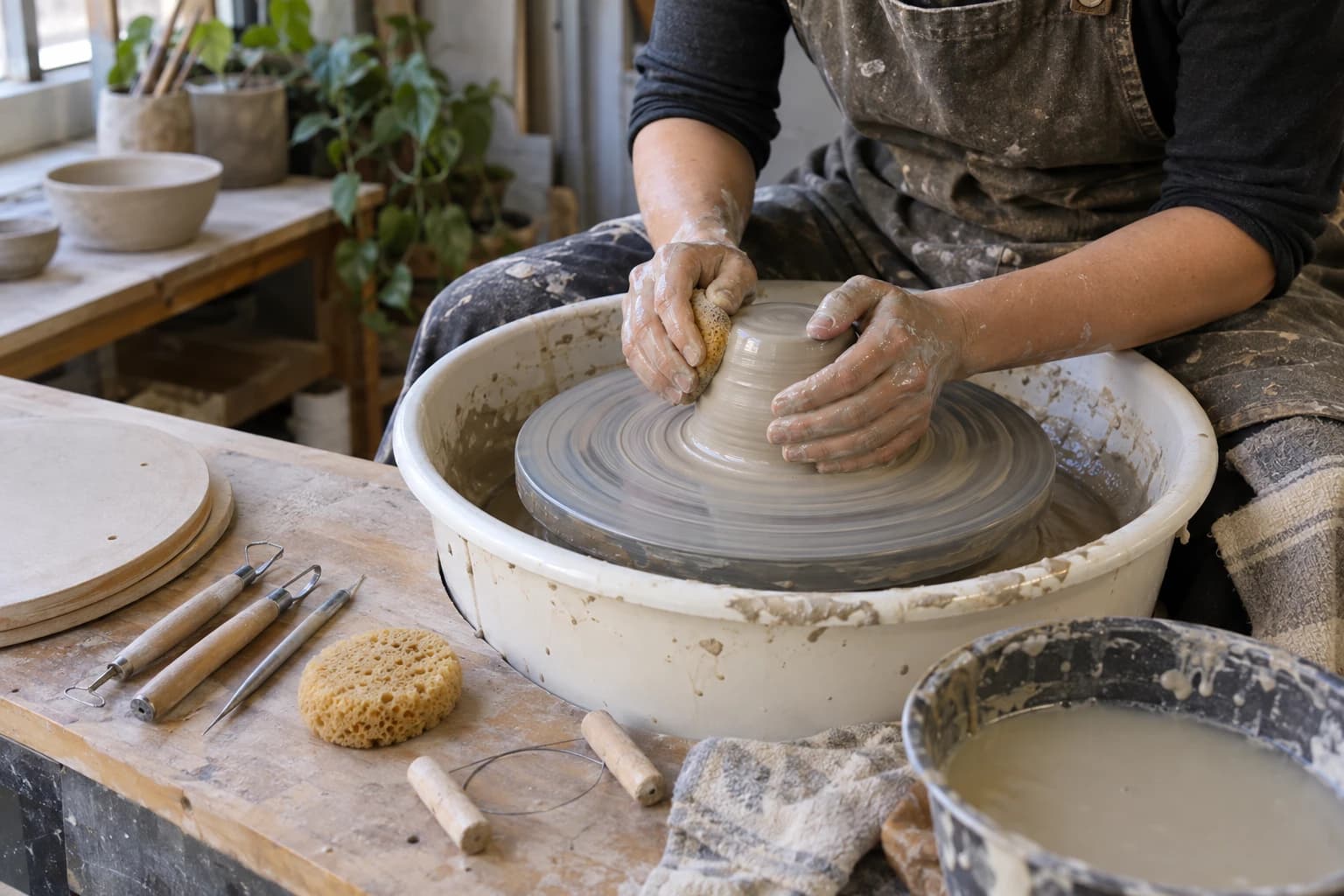
Splash-pan design affects whether you will actually want to clean the wheel after a short session. Look for a pan that removes without wrestling around the wheelhead, separates into manageable sections if needed, and has no inaccessible channels where slurry can collect.
A deep pan can catch more throwing water, but the best shape depends on how you work. If you throw with a sponge and limited water, easy removal may matter more than maximum depth. If you make wetter, wider forms, check whether the pan gives enough coverage around the wheelhead.
Use this quick inspection list when comparing photos or seeing a wheel in person:
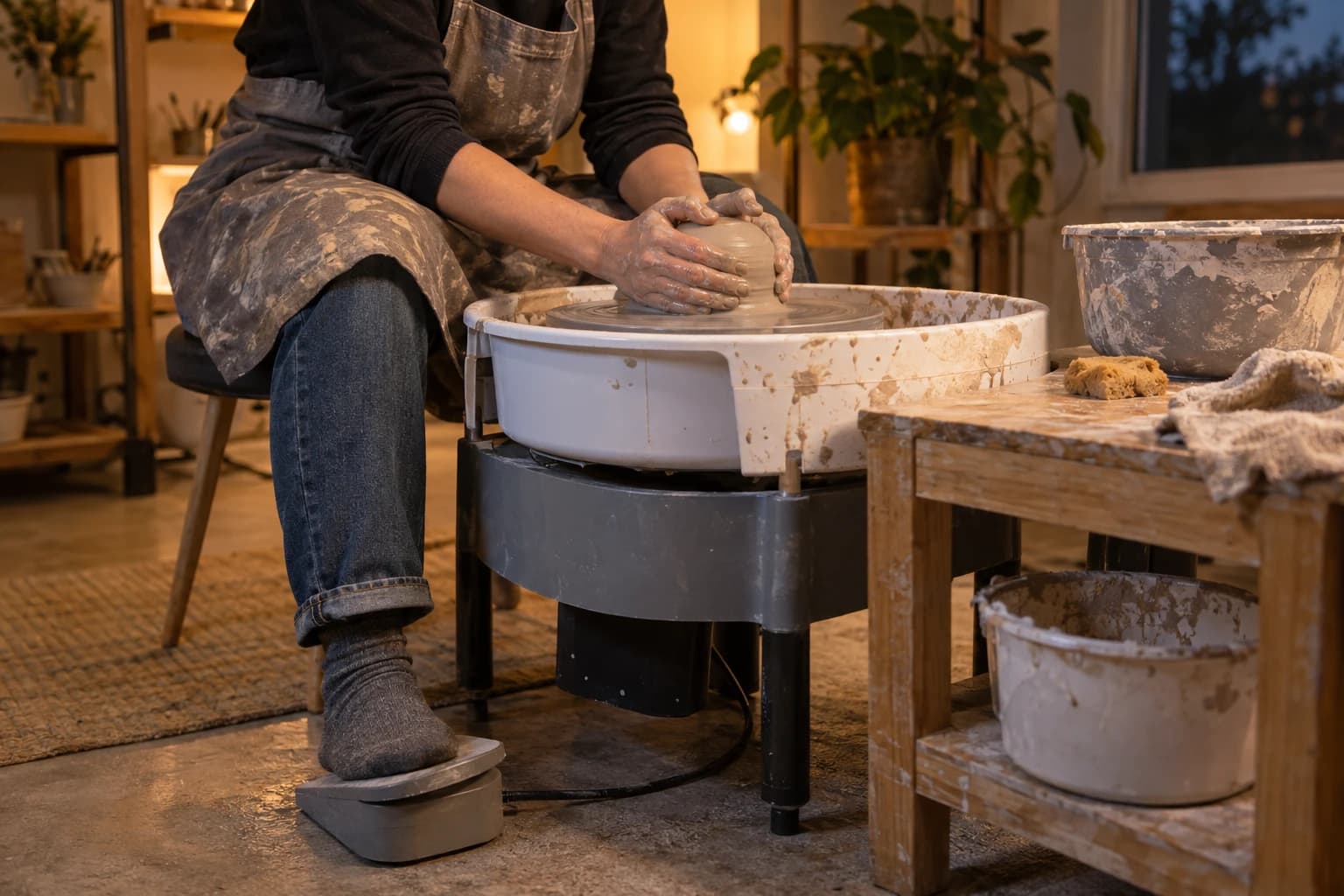
1. Can the splash pan come off without tools? 2. Can you reach the area beneath the wheelhead for wiping? 3. Is the pedal positioned where your foot can find it without hitting the pan or frame? 4. Can the pan be carried to your clay-reclaim area without flexing or spilling easily?
Build cleanup into your studio plan. Wipe clay from the wheel and splash pan while it is still damp, then handle slurry and reclaim according to your usual clay-management process. Avoid treating dry clay residue as ordinary household dust.
Marketing specs need context
Some specifications are useful but easy to overread. Claimed centering capacity, maximum wheel speed, and motor horsepower can help narrow a large field, yet they do not replace an assessment of pedal control, stability, cleaning access, and service support.
Be particularly cautious with a large centering-capacity claim if you mainly plan to make modest forms. That number does not tell you whether the pedal feels gradual, whether the wheelhead accepts the bats you want, or whether the wheel fits beneath your worktable when not in use.
Noise descriptions deserve similar caution. A listing may call a wheel quiet, but your room, floor surface, and the vibration transmitted through nearby furniture can change what you hear. If sound matters in a shared home or apartment, ask about return terms and try to hear a comparable wheel in person when possible.
For a broader comparison of workspace, pedal control, and accessories, see the beginner electric pottery wheel buying guide.
A repeatable comparison sheet prevents impulse buying
Choose two or three candidate wheels and give each one the same notes under these headings: low-speed control, wheelhead and bat compatibility, splash-pan removal, pedal position, footprint, storage needs, service options, and total accessories needed to start.
Then rank each category as suitable, uncertain, or unsuitable for your setup. Do not let a single impressive number outweigh several uncertainties. A wheel with a slightly less dramatic specification sheet may be the better beginner choice if it fits your space, keeps cleanup straightforward, and supports the forms you will actually practice.
FAQ
Is a more powerful pottery wheel always better for beginners?
No. A wheel needs enough usable power and steady control for the clay and forms you plan to throw, but a large headline power rating does not guarantee better low-speed feel or easier learning. Prioritize predictable pedal response, stable operation, and a size that suits your work.
Should I buy a wheel with a large wheelhead?
Choose a larger wheelhead if you expect to make wide forms, use bats often, or want more trimming workspace. For a compact studio focused on cups and small bowls, a smaller wheelhead may save space while still supporting steady skill development.
Are claimed centering-capacity numbers reliable?
They are useful as a manufacturer comparison point, but they do not show how comfortably you can center clay, how the wheel responds at low speed, or whether the rest of the setup fits your workflow. Compare the full wheel design before deciding.
Keep this nearby while you make, then let the next piece be your own.