TL;DR
The best pottery wheel for beginners adults is one that fits your body, available workspace, cleanup routine, and practice schedule, not simply the one with the most advertised power. Before buying, test the seated working position, measure the storage and cleanup area, and choose only the accessories that support your first forms.
Start with the adult learner’s real constraint
An adult beginner may be fitting pottery around work, family, shared walls, or a small multipurpose room. That makes setup friction as important as the wheel itself. A wheel that takes too long to uncover, clean, or put away can reduce practice time even when its basic controls suit a beginner.
Write down three decisions before comparing models:
- Where will you sit while throwing?
- Where will clay, tools, bats, and water be stored?
- Can you leave the wheel assembled, or must it be moved after each session?
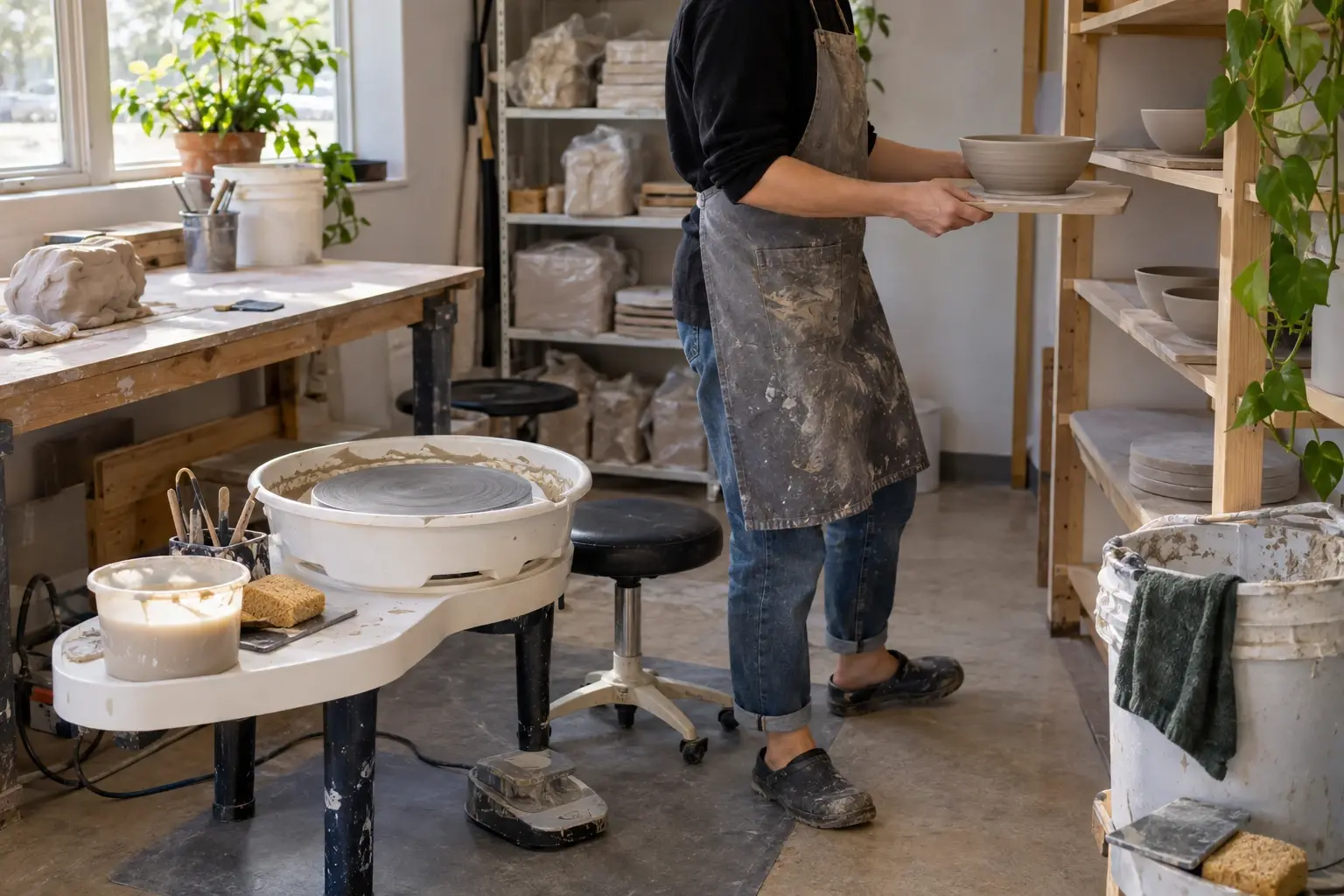
If the wheel will share space with other activities, plan a washable work surface and a clear route for carrying wet pieces. The home pottery studio setup guide can help you map clean and dirty zones before equipment arrives.
How should a beginner wheel fit your body?
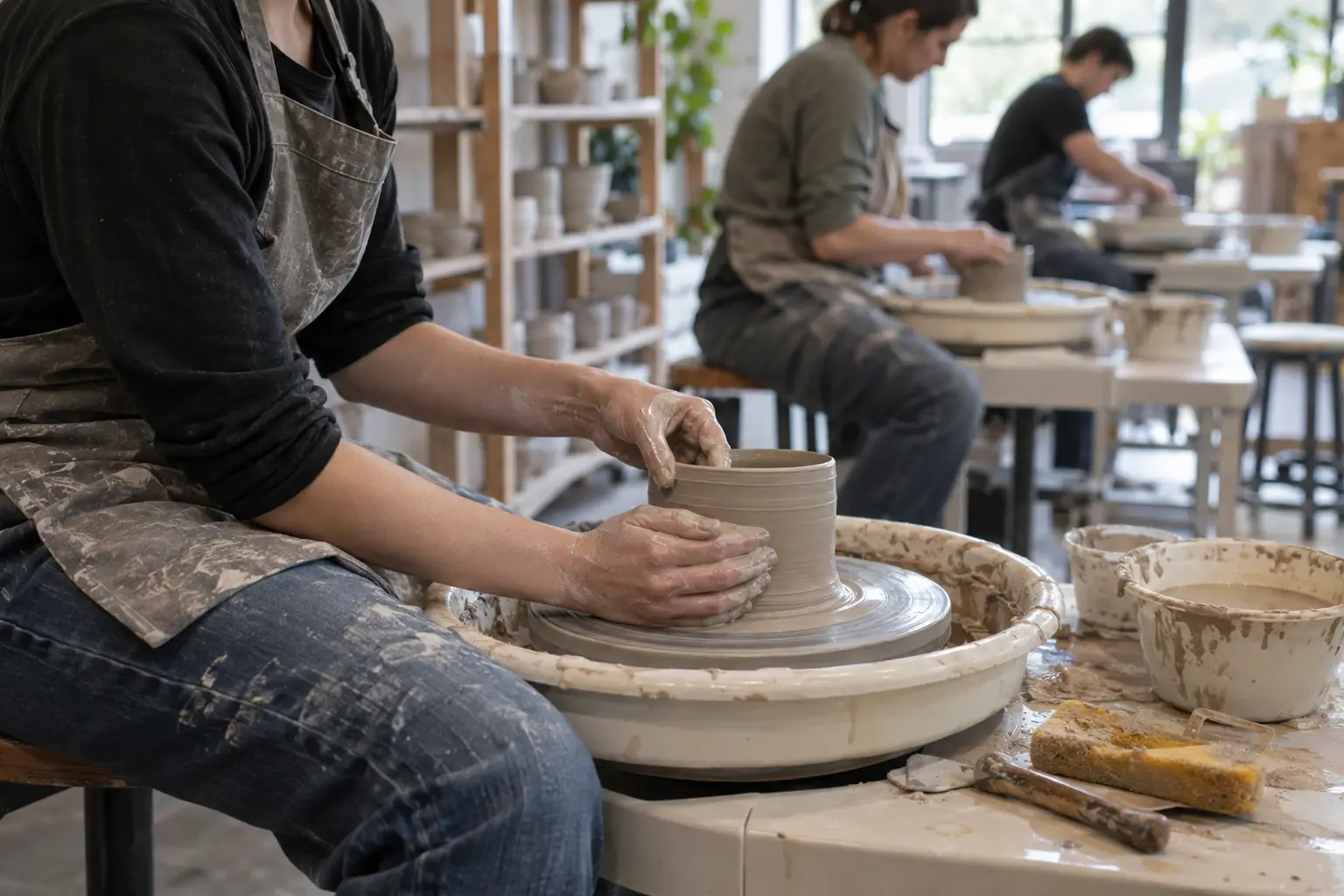
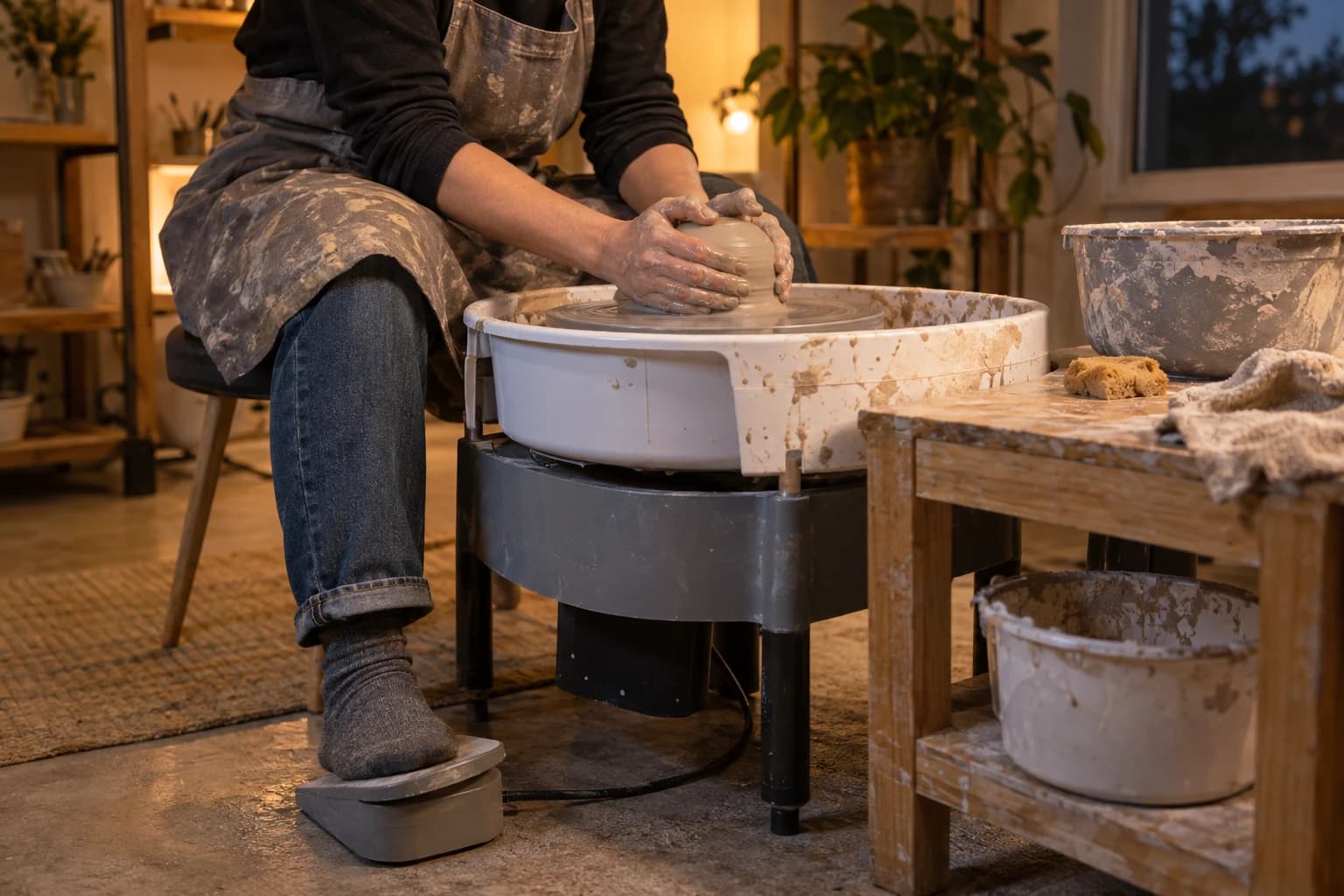
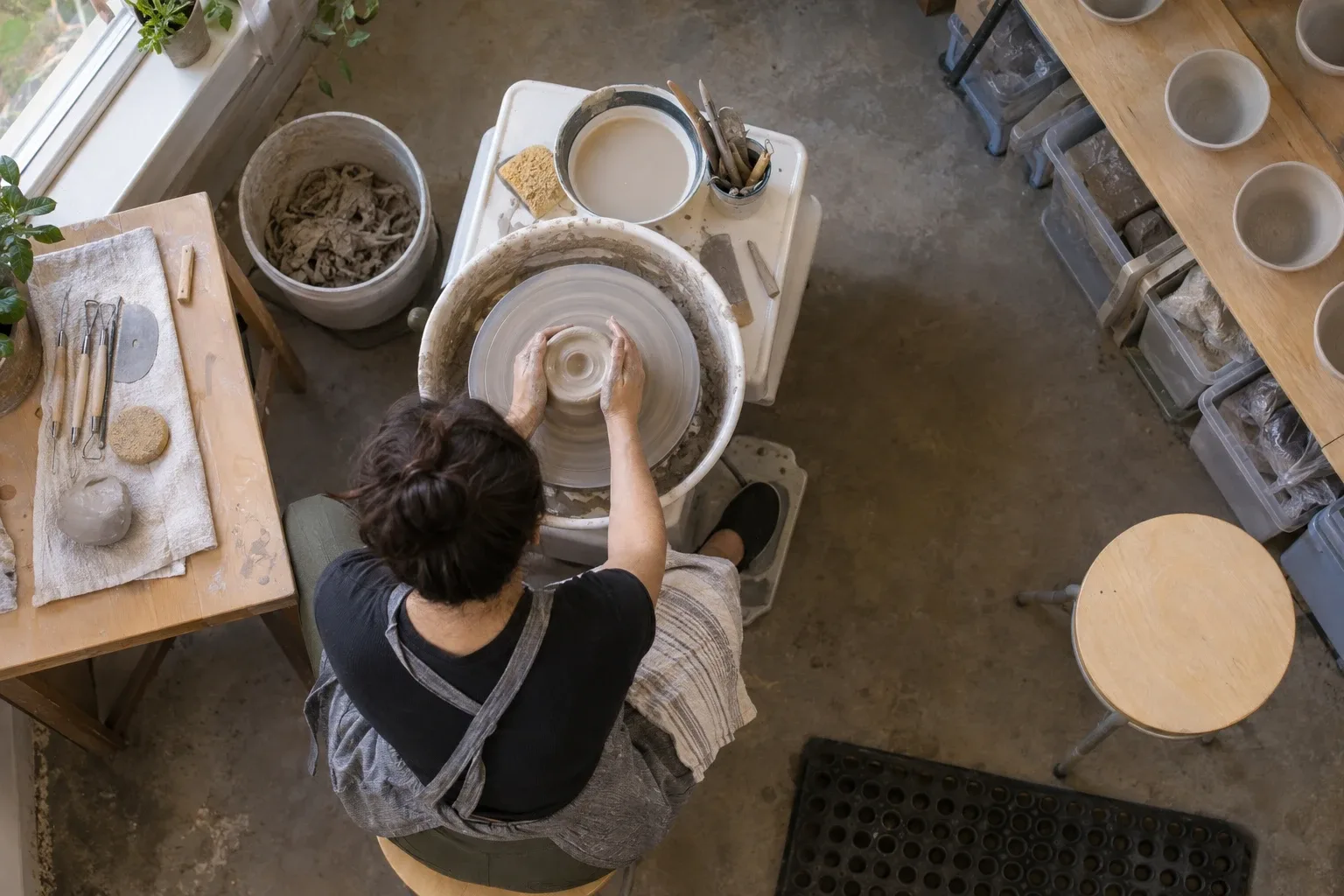
Ergonomics starts with the relationship between the seat, wheelhead, foot pedal, and splash pan. Sit at the wheel for several minutes before committing to a setup. Your shoulders should be relaxed, your working arm should reach the clay without leaning heavily across the wheel, and your foot should operate the pedal without twisting your leg.
Use this simple fit test:
1. Sit in your usual throwing position with the pedal where you would actually place it. 2. Pretend to center clay and open a cylinder for two minutes. 3. Notice whether you are rounding your back, lifting a shoulder, or reaching too far for the controls. 4. Repeat with a different chair height or pedal position.
The wheel does not need to match a single “correct” posture. It needs to allow a stable, repeatable position that you can maintain during a practice session. A separate stool may be more useful than an elaborate accessory if the supplied seat does not suit your height.
What workspace does a beginner pottery wheel need?
Measure more than the wheel’s footprint. Include room for your knees, a bucket or reclaim container, tools, bats, a ware board, and the space needed to clean without splashing onto nearby items. If you must store the wheel, measure doorways, shelves, and the route between storage and your work area.
A practical beginner layout usually has four nearby zones:
- Throwing: wheel, seat, pedal, water, and essential tools
- Wet storage: boards or covered shelves for pieces that need to dry gradually
- Cleanup: a designated area for wiping and collecting clay residue
- Dry storage: tools, bats, towels, and unopened clay
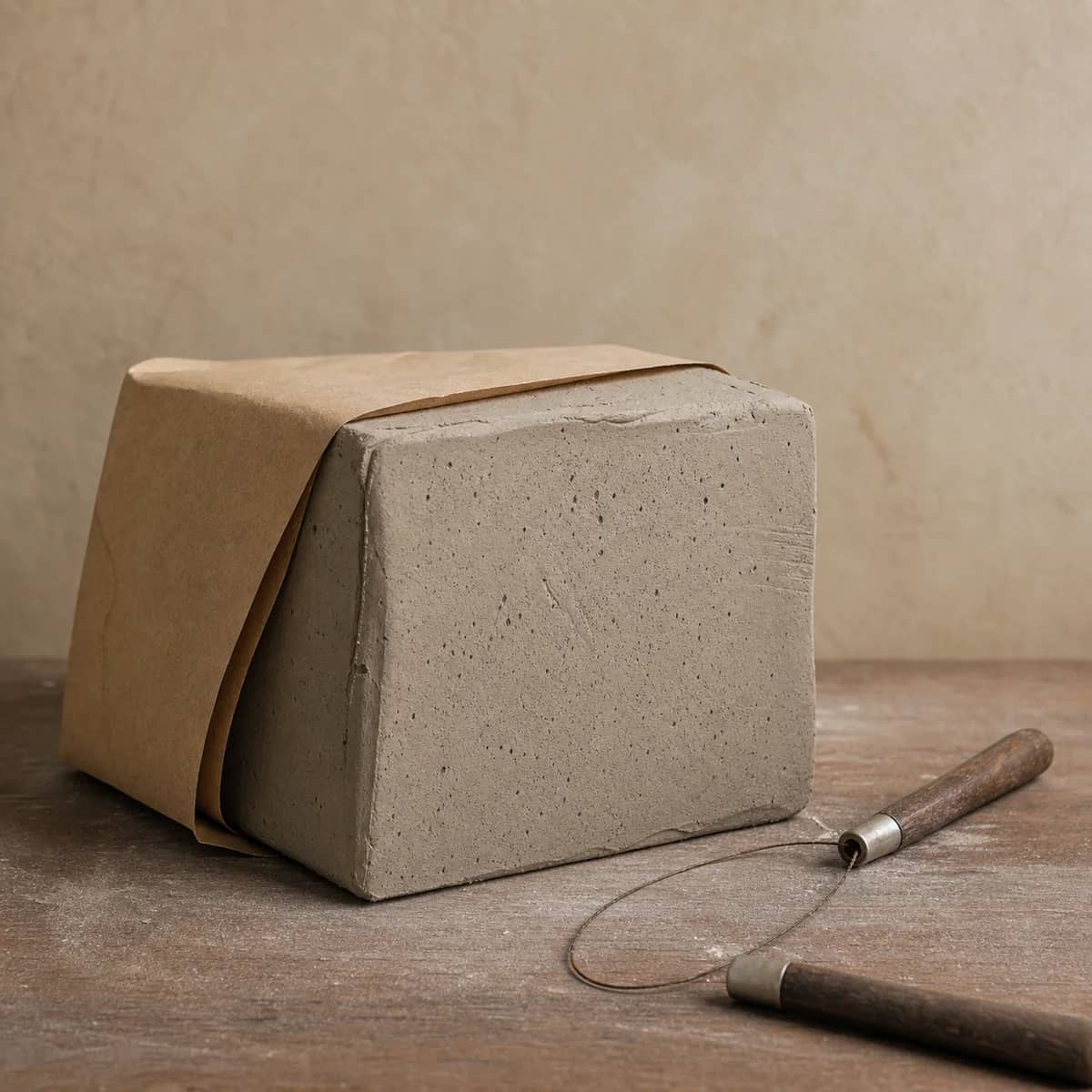
Keep food preparation and household surfaces separate from clay work. For clay storage, how to store clay at home offers a simple approach to keeping different bodies organized and workable.
How much noise matters in a home studio
Noise is a practical buying factor when you work near bedrooms, neighbors, or shared living areas. Product descriptions may not tell you how a wheel sounds in your room, so treat noise as something to check rather than assume.
If you can see or borrow a candidate wheel, listen at low and moderate speeds, with and without clay. Stand where another household member might be sitting, and listen from the doorway or adjacent room. Pay attention to the motor sound, pedal response, vibration through the floor, and any rattling from removable parts.
For an online purchase, look for a return policy that gives you a realistic way to resolve a poor fit. Do not place the wheel directly against a wall or on an unstable surface simply to save space. The manual should decide any requirements for setup, cleaning, or electrical connection.
Which accessories should adults buy first?
A beginner usually needs fewer accessories than a kit listing suggests. Start with tools that support centering, opening, shaping, cutting, and cleanup:
- a wire cutter
- a sponge
- a needle tool
- a small rib
- a wooden or metal shaping tool
- a bucket for water and cleanup
- boards or bats for moving finished pieces
A pottery wheel kit for beginners can be convenient, but compare each included tool with your actual first projects. Extra decorative tools are easy to postpone. Spend more attention on a responsive foot pedal, stable seating, accessible cleanup supplies, and storage for wet work.
If you are buying a wheel separately, compare the points in the beginner electric pottery wheel buying guide: low-speed control, performance under load, wheelhead workspace, centering capacity, cleanup, and accessory compatibility.
Choose a learning pace you can repeat
Adults often make faster progress with short, regular sessions than with occasional exhausting ones. Set a modest practice target that fits your week, then repeat the same form several times before adding complexity. A series of small cylinders can reveal more about pressure, water use, and wall thickness than jumping between unrelated projects.
Track three observations after each session: what felt stable, where the form failed, and one change for next time. Change only one variable, such as clay amount, wheel speed, or wall height. This keeps the learning process clear and makes a disappointing piece useful information rather than a reason to replace the wheel.
When choosing classes or guided practice, compare equipment access, session length, and whether you can repeat the same skills between lessons. The guide to pottery wheel classes for beginners can help you weigh those options alongside a home setup.
Keep this nearby while you make, then let the next piece be your own.