TL;DR
If you are choosing pottery wheel classes for beginners, prioritize a class that gives you regular wheel time, clear instruction, usable practice between sessions, and a straightforward plan for clay and firing. Start with the format that fits your schedule, then confirm equipment access, class size, cleanup duties, and what happens to your finished work before paying.
Which class format fits your schedule?
Choose the format you can attend consistently, not simply the one with the lowest advertised price.
- Short workshop: Good for trying the wheel once or twice. Expect an introduction rather than a complete skill sequence.
- Weekly multi-session class: Usually the better starting point for learning centering, opening, pulling, shaping, trimming, and basic finishing in order.
- Open studio membership: Useful after you have learned the basic controls and studio rules. It may provide practice time, but it is not always a substitute for instruction.
- Private lessons: Helpful when you need targeted feedback or have a specific schedule. Compare the lesson length, included materials, and whether studio practice is included.
Ask how many minutes of actual wheel time each session includes. A long class with demonstrations, setup, and cleanup may provide less practice than its advertised duration suggests.
What equipment access should a beginner expect?
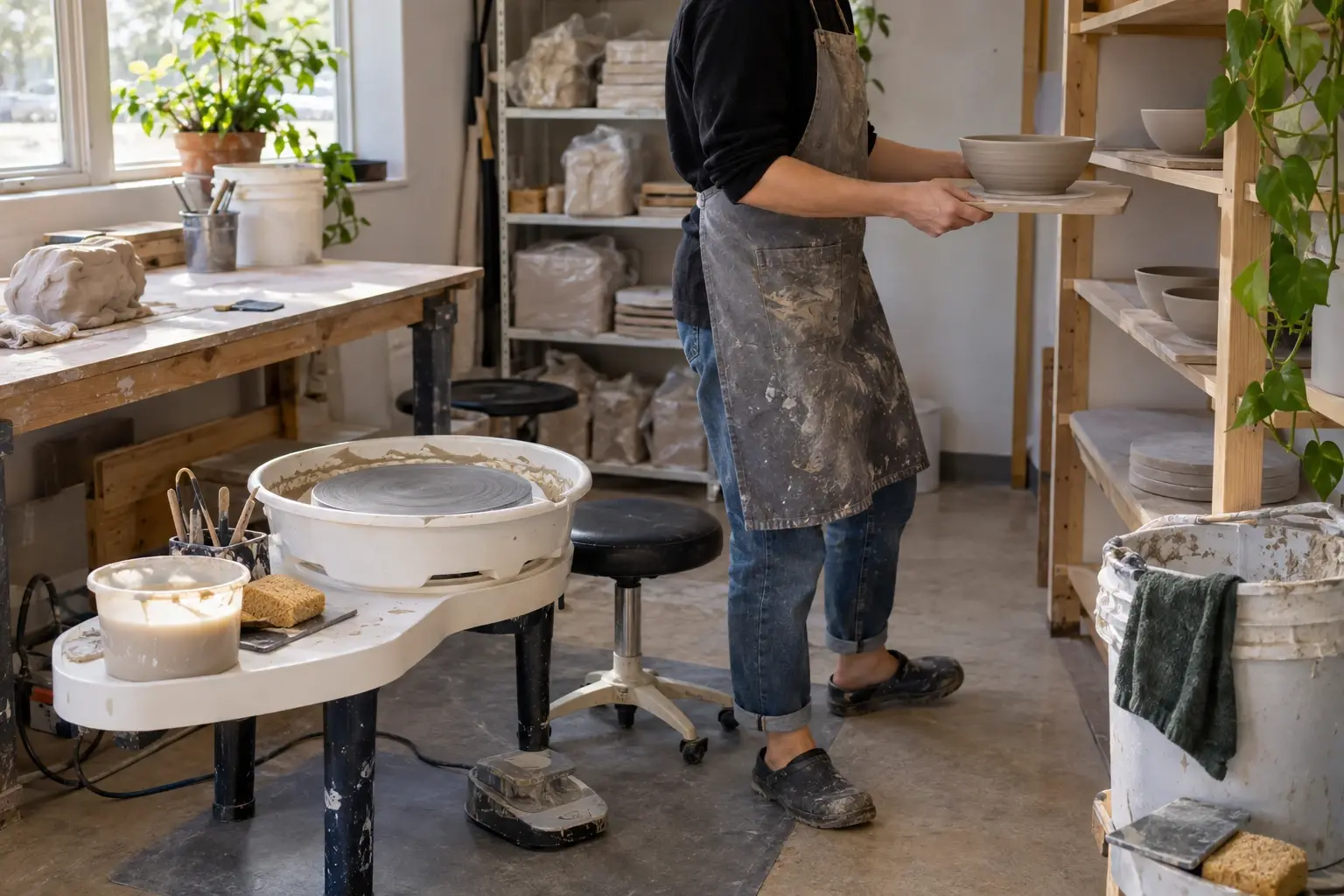
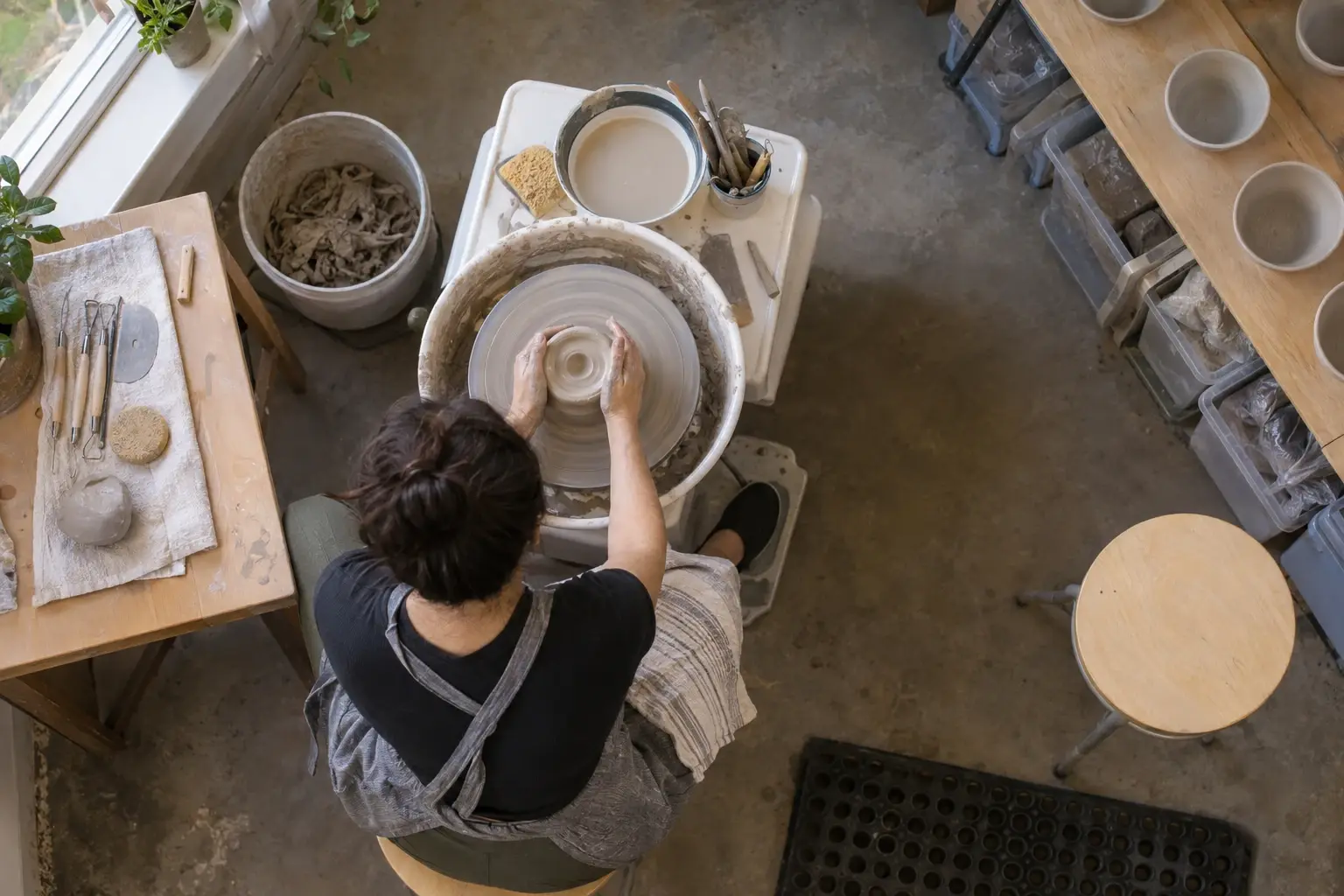
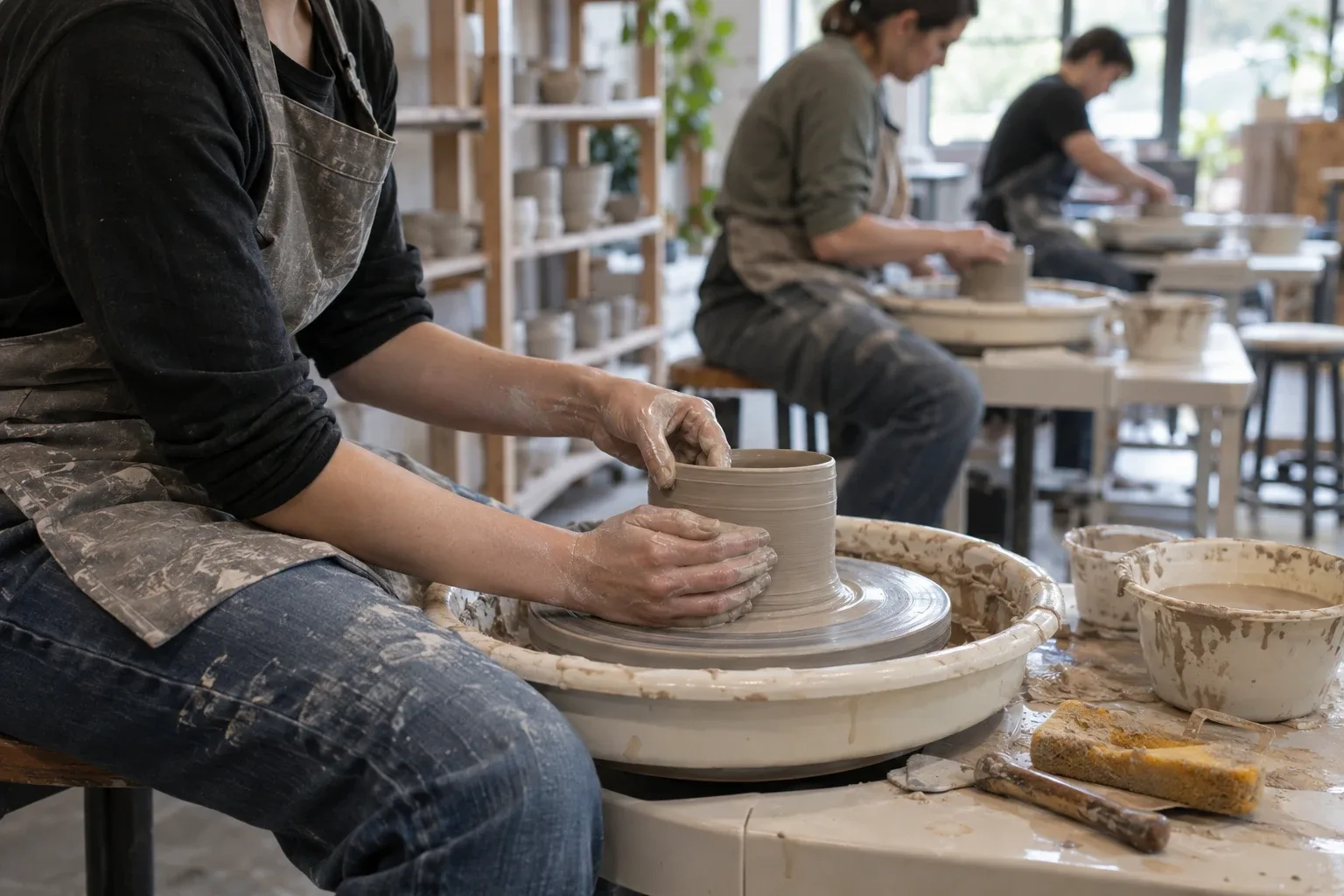
Confirm what you can use during class and what you must bring. A suitable beginner setup normally includes a wheel, splash pan, water container, basic hand tools, bats or another method for removing work, clay, and a place to store pieces while they dry. The studio should explain its cleaning routine and where tools are kept.
Ask these questions before enrolling:
1. Is one wheel assigned to each student, or do students share? 2. Can I practice outside scheduled class time? 3. Are clay, glazes, firing, and failed pieces included in the fee? 4. Are tools supplied, or should I bring a starter set? 5. How are unfinished pieces labeled and stored?
If you are considering buying a wheel later, compare the class equipment with the features that affect your own workflow in this beginner electric pottery wheel buying guide. A class is also a low-pressure way to notice whether you prefer a particular pedal response, workspace, or cleanup arrangement before purchasing.
How should skills progress during the class?
Look for a sequence that builds control instead of jumping from centering straight to complex forms. A practical progression is:
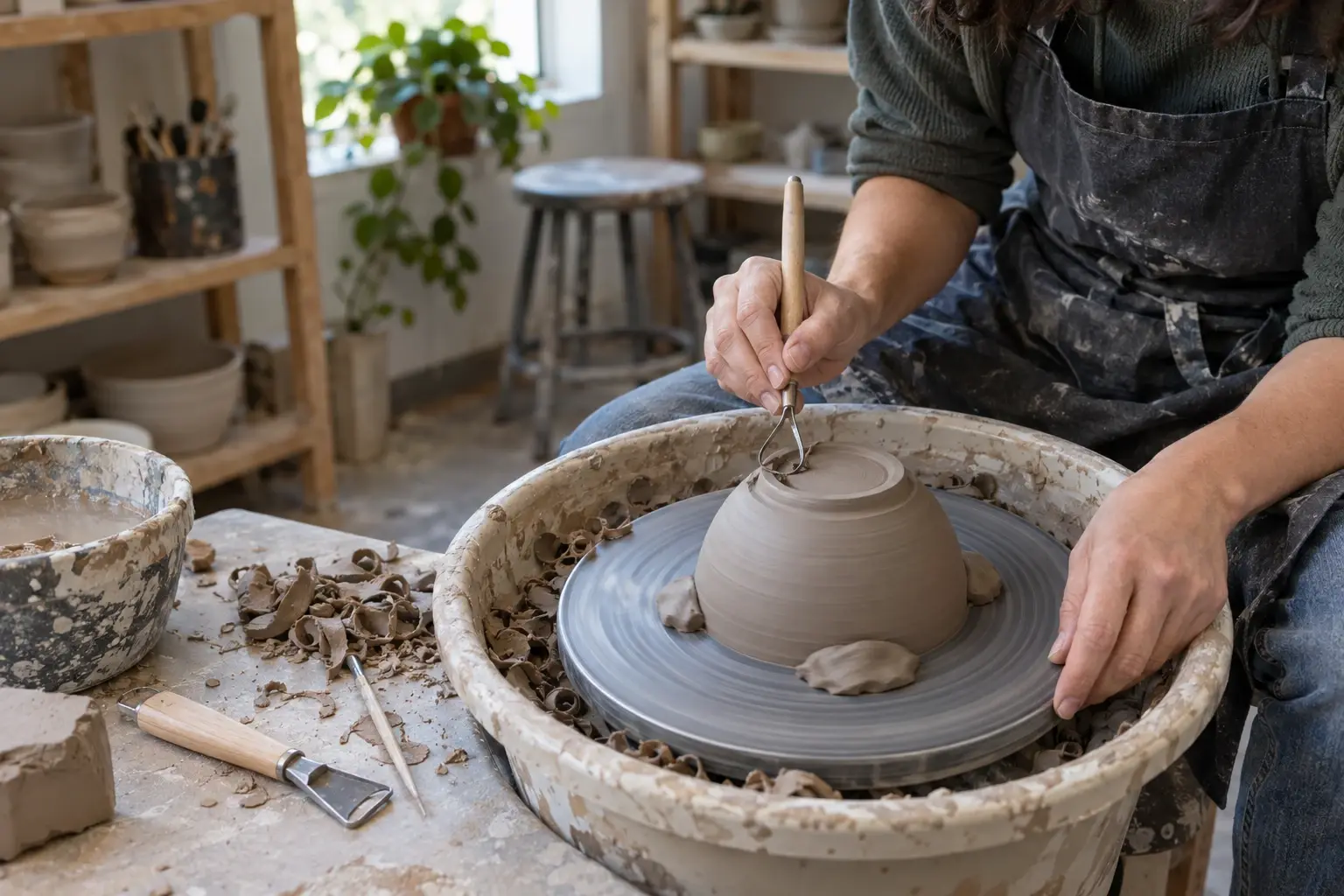
1. Wedging, wheel setup, posture, and centering. 2. Opening the clay while keeping the base even. 3. Pulling consistent cylinders and compressing rims. 4. Shaping simple bowls or cups without thinning the walls too quickly. 5. Trimming leather-hard work and making a stable foot. 6. Adding handles, lids, or surface decisions only after the basic form is repeatable.
The instructor should explain what to change when a pot collapses, wobbles, cracks, or becomes too thin. You should not need every project to succeed. The useful sign is that you can identify the next adjustment.
For a class that assigns practice projects, check whether the sequence supports specific skills rather than producing unrelated objects. This guide to pottery wheel projects for beginners can help you compare a class syllabus with a sensible progression.
What should you compare before enrolling?
Use this quick decision aid. Score each class from one to three for fit:
| Factor | 1 point | 2 points | 3 points | |---|---|---|---| | Practice access | Class time only | Limited open studio | Regular extra practice | | Instruction | Occasional feedback | Demonstrations and feedback | Clear staged instruction | | Equipment | Bring most supplies | Basic tools supplied | Equipment and materials explained clearly | | Firing | Unclear or separate | Some details provided | Clay, glaze, firing, and pickup are defined | | Class size | Feedback is uncertain | Moderate support | Instructor can watch each student | | Schedule | Hard to attend | Manageable | Easy to attend consistently |
A higher total is not automatically better. A smaller class with less open studio time may suit you better than a large class with generous access if you need frequent correction.
Also calculate the real cost: tuition, clay, tools, firing, storage, transportation, and optional practice sessions. If you later decide to buy tools, start with only the items used in your first forms. The pottery tools for beginners starter kit offers a useful way to separate immediate needs from equipment you can postpone.
FAQ: pottery wheel classes for beginners
Should I buy a wheel before taking a class?
Usually, no. Take enough lessons to learn whether you enjoy wheel work, how often you will practice, and which equipment features matter to you. Then compare a home wheel with your actual space and routine.
How many classes do I need?
There is no fixed number. Choose a course long enough for you to repeat centering, cylinders, trimming, and basic shaping. Judge progress by control and diagnosis, not by the number of finished pots.
What if the class does not include firing?
Ask whether you may use the studio kiln separately, whether outside firing is allowed, and who is responsible for labeling and handling your work. Do not assume firing is included because the class is held in a ceramics studio.
Keep this nearby while you make, then let the next piece be your own.