
TL;DR
Pottery wheel trimming tools work best when the tool shape, clay firmness, wheel speed, and pot support all match. Start with a small curved loop, a flat-ended tool, and a narrow detail tool, then practice shallow cuts on two similar leather-hard forms before buying a larger set.
Choose pottery wheel trimming tools by the cut
A trimming tool does not need to remove a large amount of clay to be useful. The right shape should make one controlled cut easier.
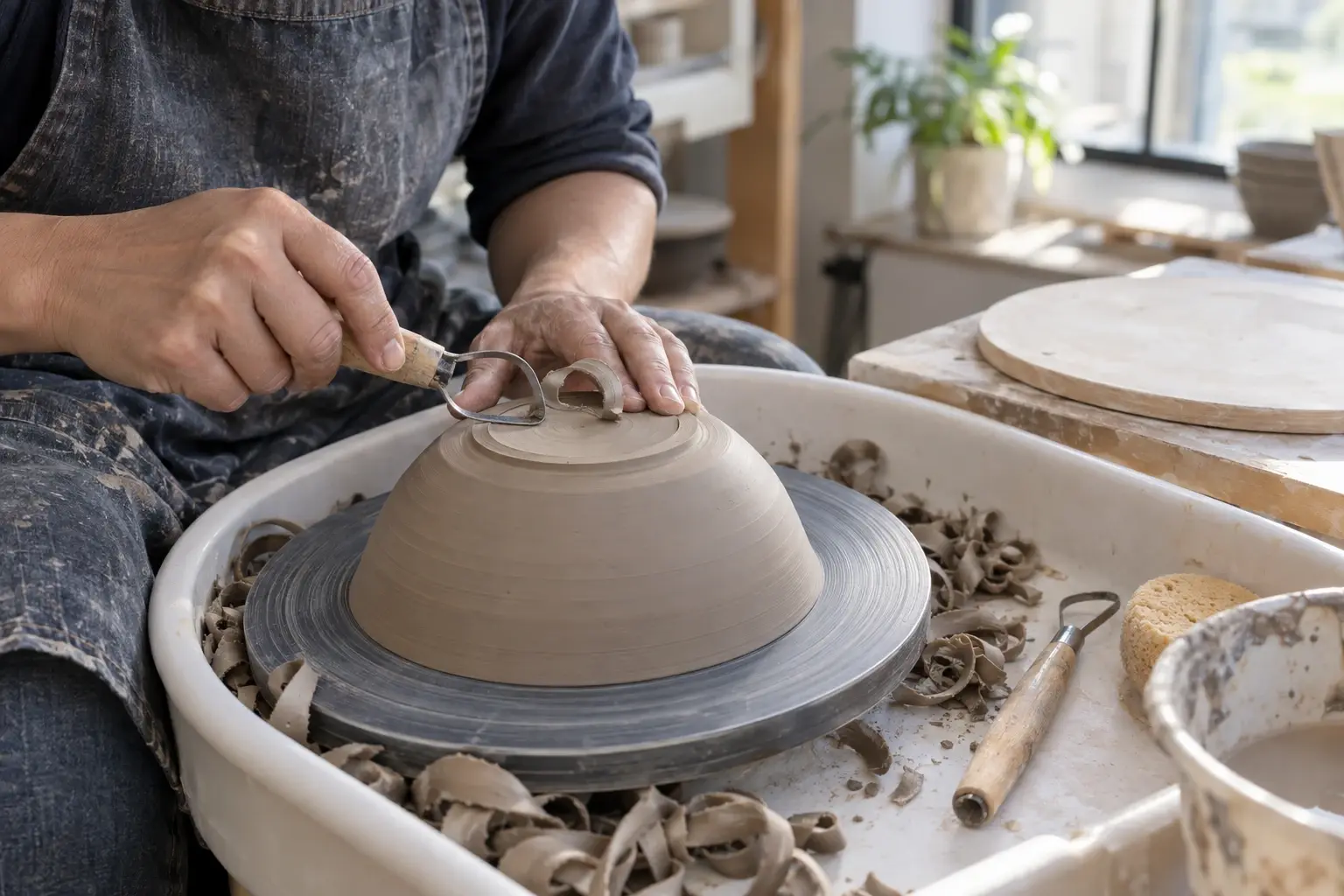
- Curved loop: A practical first choice for opening a recessed foot and following a rounded profile.
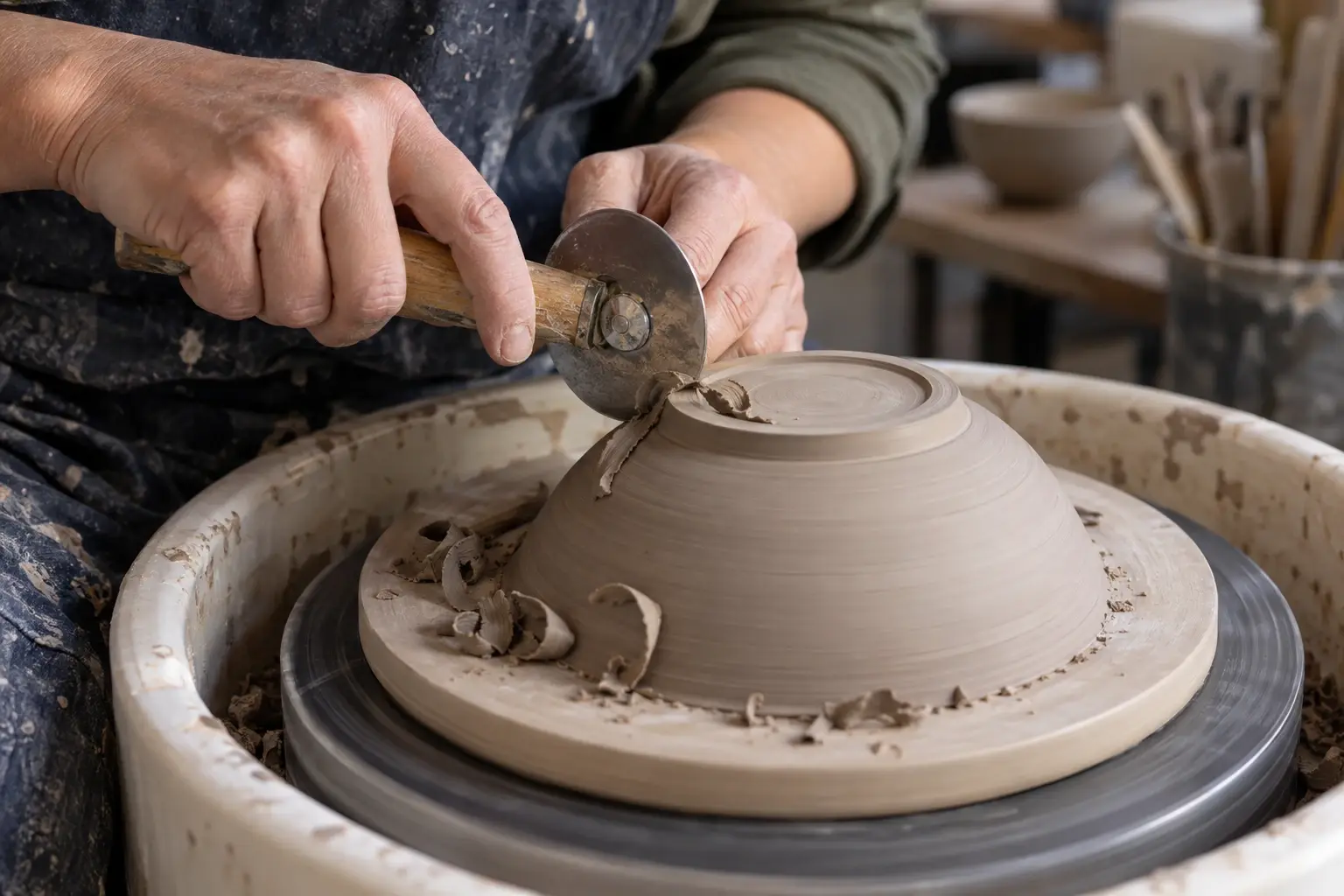
- Flat or square-ended tool: Useful for flattening the base of a foot ring and defining a crisp outer edge.
- Narrow pointed tool: Helps clean tight transitions, refine a small gallery, or remove a thin ridge left by a wider tool.
- Wide loop: Better for broad bowls or plates, where a narrow tool can leave repeated grooves.
Buy for the forms you actually make. A mug-and-bowl maker can often work comfortably with three shapes, while a set built around narrow-necked vessels may need smaller loops and more precise points. For a closer look at individual tool jobs, compare the shapes in this pottery trimming tools guide.
What wheel speed should you use for trimming?
Use a speed slow enough that you can stop the cut immediately, but fast enough for the pot to rotate smoothly under the tool. If the edge chatters, first reduce pressure and support the pot more securely. If the cut feels uneven because the tool catches at the same point each turn, check whether the piece is off-center before increasing speed.
A useful starting routine is simple:
1. Spin the pot slowly and find the high point by watching the rim or outer wall. 2. Re-center the piece before trimming the foot. 3. Make one light pass to reveal the thickness and clay condition. 4. Deepen the recess gradually rather than pushing the tool to its final depth in one pass.
Keep your tool hand braced against the splash pan, wheel tray, or your other hand. A supported tool is easier to steer and less likely to dig into a soft spot.
Support the pot before cutting the foot ring
Most trimming problems begin with movement, not with the tool edge. A pot that shifts, flexes, or wobbles will produce uneven cuts even with a good tool.
For flat-bottomed forms, a small clay pad or several soft clay lugs can hold the piece in place. For rounded bowls, tall forms, or uneven rims, use a support that matches the form rather than forcing the pot down onto the wheelhead. A pottery trimming chuck can help support shapes that do not sit securely upside down.
Press only enough to steady the pot. Heavy pressure can distort leather-hard clay or make release difficult after trimming.
Clean foot rings come from a repeatable sequence
A clean foot ring usually has three features: a defined outer edge, a flat contact surface, and a gradual transition into the recessed center.
Trim in this order:
- Establish the outer diameter with a shallow circular cut.
- Flatten the contact surface with a light, level pass.
- Remove clay inside the ring in overlapping cuts.
- Soften sharp edges only after the foot is complete.
Stop periodically and run a fingertip lightly across the foot. This checks for a raised ridge, an overly sharp edge, or a foot that is narrower than the form can comfortably support. If you want a consistent ring on several similar pots, a pottery trimming disc may make your preferred profile easier to repeat.
Set up a trimming station that reduces interruptions
Keep the wheelhead clear except for the pot, centering aid, and a small amount of soft clay for lugs. Place your three most-used trimming tools within reach, with handles facing the same direction. Keep a brush or soft rib nearby for clearing loose trimmings without brushing them across the foot.
Before a longer session, trim two similar pieces and note four things: clay firmness, wheel speed, tool shape, and how much pressure produced a clean shaving. Change only one of those choices on the next pair. That simple record makes it easier to tell whether a new tool is genuinely helping or whether the real issue is timing or support.
Tool quality matters after the basics are working
Once your trimming sequence feels reliable, compare tools by edge geometry, handle comfort, shaft stiffness, and how well the size fits your usual forms. A sharp, comfortable tool cannot correct a pot that is too soft or poorly supported, but it can make repeated trimming less tiring and more predictable.
If a tool starts dragging rather than shaving, inspect it before forcing the cut. A rough edge may need maintenance or replacement. Keep specialty shapes as later additions, not as substitutes for steady centering and controlled passes. For wheel setup considerations that affect trimming comfort, see this pottery wheel for beginners guide.
Keep this nearby while you make, then let the next piece be your own.