TL;DR
A cheap pottery wheel for beginners can work well if it delivers smooth control at low speed, a wheelhead large enough for the forms you plan to make, and a motor that does not stall under centering pressure. Compare those three specifications before price, because a wheel that cannot center 3 lb of clay reliably will cost more in wasted time and material than a slightly more expensive model that performs consistently.
Check Low-Speed Torque, Not Just Motor Wattage
Manufacturers often list peak motor wattage, but that figure does not tell you whether the wheel will maintain steady rotation under the hand pressure required for centering. Look for a specification that describes torque at low RPM or states the maximum clay weight the wheel can center without stalling. A wheel rated for 5 lb or more gives you room to practice with different clay amounts and forms as your skill develops. If the specification sheet only lists wattage and gives no centering-weight claim, search for user reports that describe motor performance under load.
Match Wheelhead Diameter to the Forms You Will Make
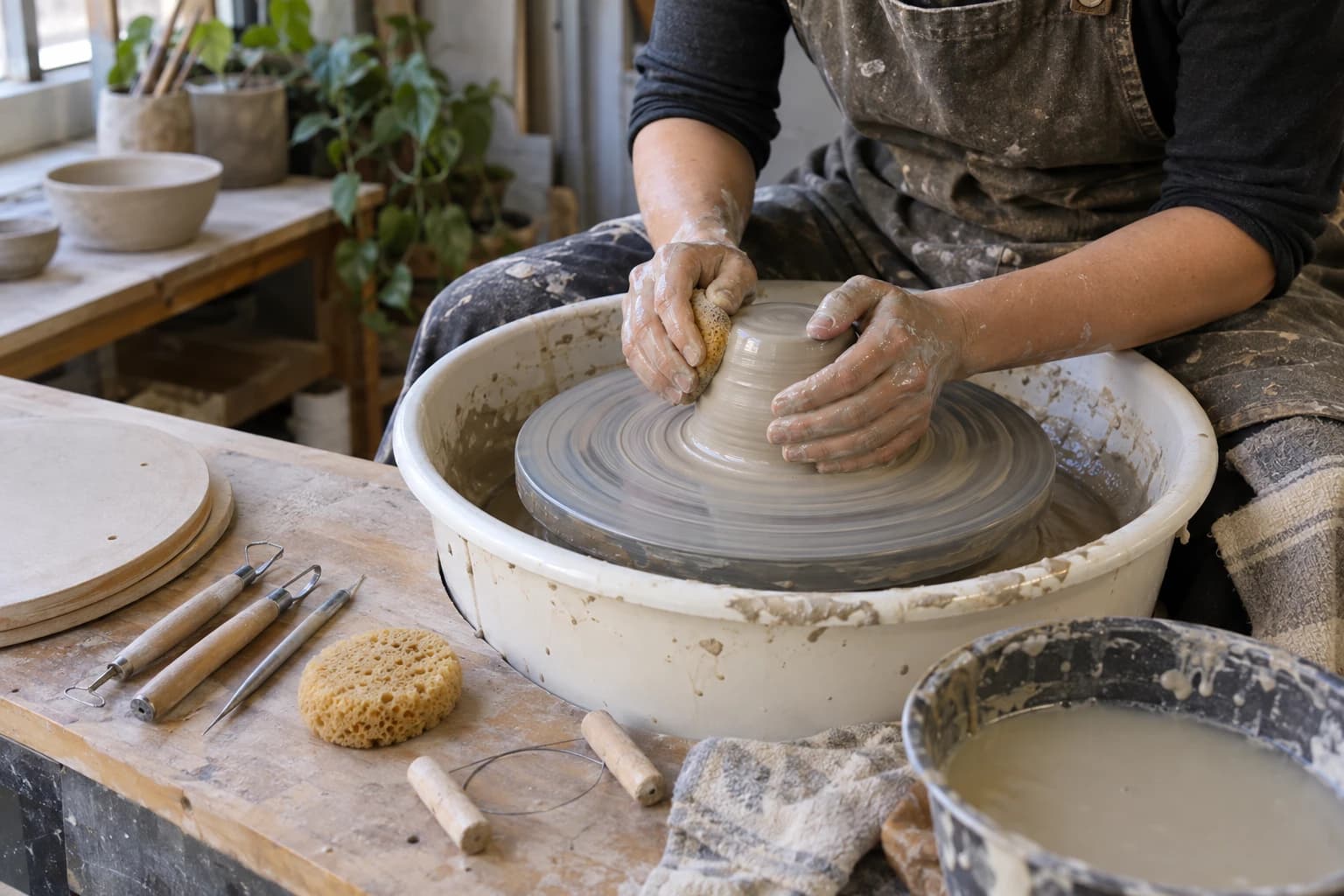
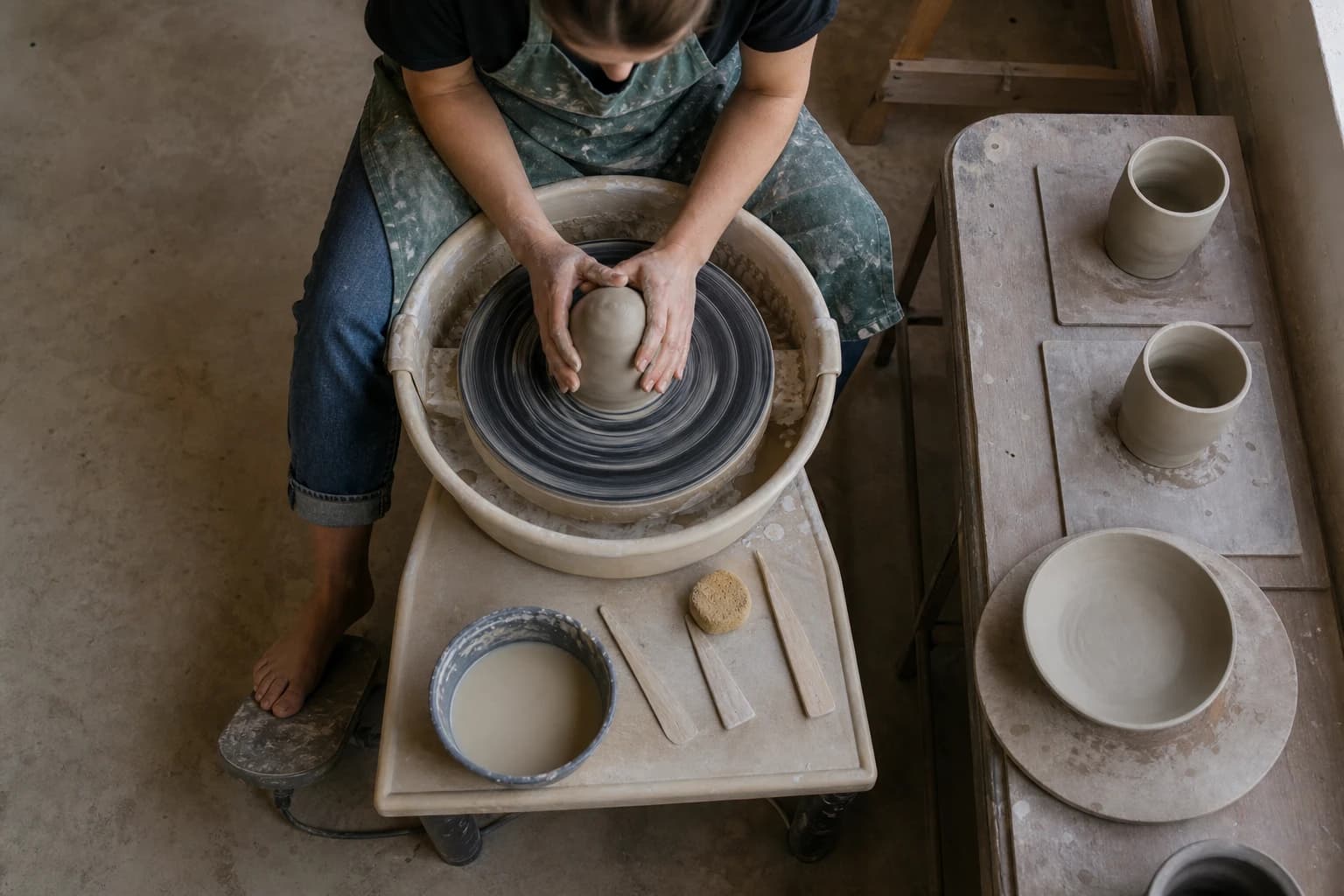
A wheelhead between 10 and 12 inches accommodates mugs, bowls, and small plates without requiring you to trim the bat or reposition your hands constantly. Smaller wheelheads limit the diameter of shallow forms and make it harder to brace your arms during pulling. Larger wheelheads add cost and require a bigger splash pan, which may not fit a compact workspace. Measure your table or stand before comparing models, and confirm that the splash pan can be removed and cleaned without tools.
Test Foot-Pedal Sensitivity Before Buying
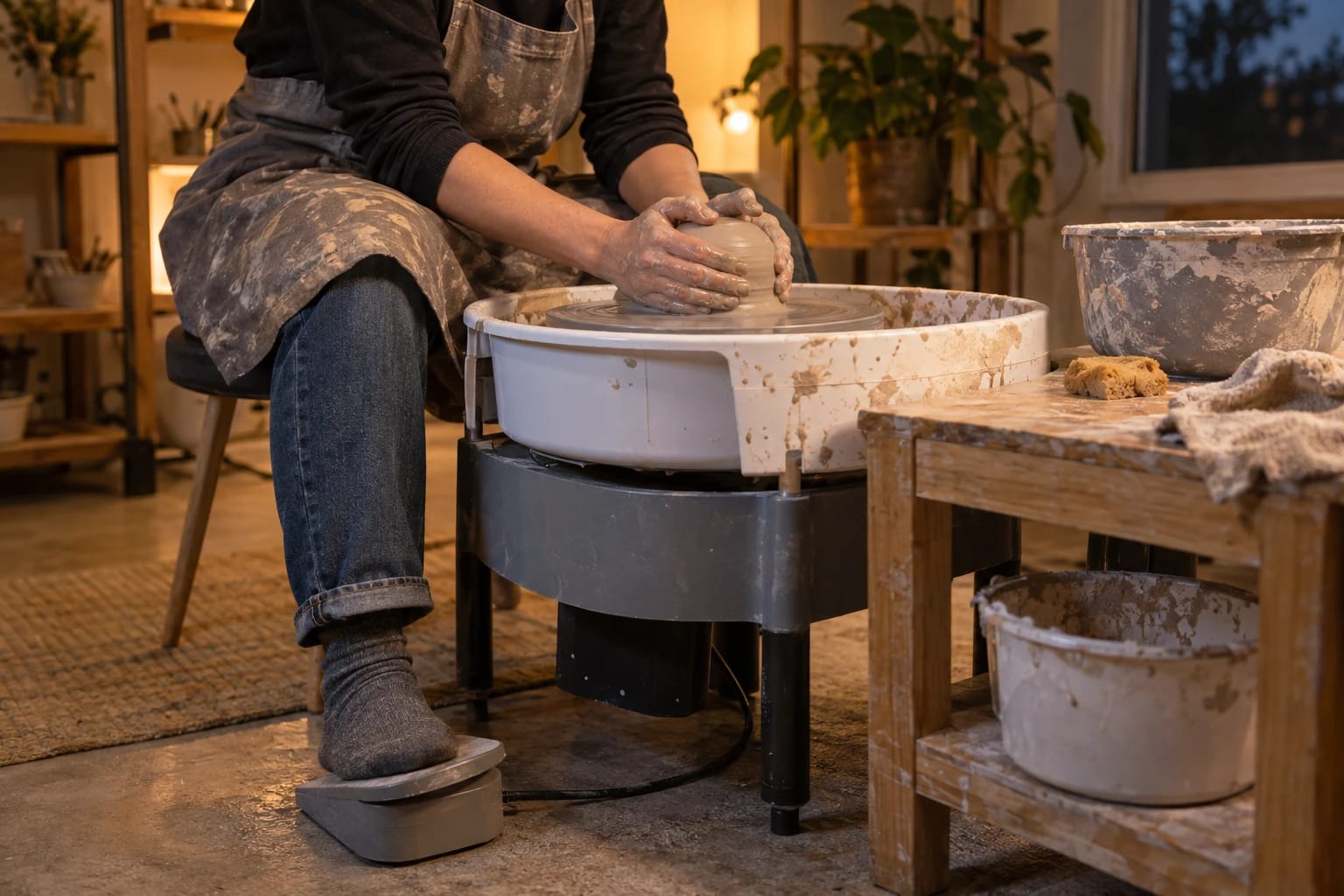
Smooth speed control at the low end of the range (20 to 60 RPM) is where beginners spend most of their time centering and opening. A pedal that jumps from zero to fast rotation or that requires constant micro-adjustments makes centering harder to learn. If you can visit a showroom or studio that stocks the model you are considering, press the pedal slowly and watch the wheelhead accelerate. The transition should feel gradual, and releasing the pedal partway should hold a steady intermediate speed. Some budget wheels use on/off switches instead of variable pedals; those designs force you to adjust speed by hand and interrupt your focus during centering.
Compare Noise, Vibration, and Portability
A quieter motor is easier to work with during long practice sessions and causes fewer complaints if you share a home. Belt-driven wheels tend to run quieter than direct-drive models at the same price point, but they may require occasional belt replacement. Vibration at any speed suggests poor bearing quality or an unbalanced wheelhead, and it will transfer into your clay and make centering feel unstable. If the wheel includes a stand, check that it can be assembled without wobbling and that its height suits your seated posture. Portable tabletop wheels save space but require a sturdy work surface that will not shift under lateral hand pressure.
For a deeper comparison of motor specifications and control systems, read the beginner electric pottery wheel buying guide.
Inspect Included Accessories and Replacement Costs
Some budget wheels include a bat system, splash pan, and trimming tools. Others sell those items separately, which raises the total setup cost. Check whether the bat pins match a standard size so you can buy additional bats later without ordering proprietary parts. Replacement splash pans, belts, and foot pedals should be available from the manufacturer or a third-party supplier; a model that requires special-order parts from overseas will cost more to maintain over time. A wheel sold as part of a pottery wheel kit for beginners may bundle accessories you already own, so compare the kit price against buying the wheel and needed accessories separately.
Durability and Warranty Terms
A one-year warranty that covers motor and electrical components is standard for entry-level wheels. Longer warranties suggest the manufacturer expects the wheel to last, but read the terms to confirm what is covered and whether you must pay return shipping for repairs. Plastic splash pans and housings are lighter and cheaper than metal, but they crack more easily if the wheel is moved often. Cast-aluminum wheelheads resist warping and clean up more easily than pressed steel. If you plan to use the wheel daily, a slightly higher upfront cost for durable materials will reduce replacement and repair expenses.
When to Spend More or Buy Used
If your budget allows, a mid-range wheel with a proven motor, metal construction, and widely available replacement parts will cost less to own over five years than the cheapest new model. Used wheels sold by local studios or potters often include bats, tools, and delivery, and they let you inspect the machine before buying. Check for cracks in the wheelhead, smooth bearing rotation when you spin it by hand, intact wiring, and a foot pedal that responds predictably across the speed range. A used wheel from a recognized brand with available parts is often a better long-term choice than a new wheel from an unfamiliar manufacturer with no local service.
Once you have chosen a wheel and practiced centering, refer to pottery wheel projects for beginners for a skill-building sequence that prepares you for trimming, pulling, and shaping.
FAQ
Can a cheap pottery wheel center 5 lb of clay? Some can, if the motor delivers adequate torque at low speed. Check the manufacturer's centering-weight specification and search for user reports that describe performance under load before assuming a low-priced wheel will handle larger clay amounts.
What is the difference between a tabletop wheel and a wheel with a stand? A tabletop wheel requires a separate sturdy work surface and is easier to store or move. A wheel with a stand includes legs or a cabinet, holds the splash pan in place, and positions the wheelhead at a fixed height. Choose based on your available workspace and whether you need portability.
How long does a beginner pottery wheel last? With regular cleaning and occasional belt or bearing maintenance, a well-made beginner wheel can last five to ten years. Budget wheels with plastic housings and undersized motors may require earlier replacement if used daily.
Keep this nearby while you make, then let the next piece be your own.