TL;DR
A pottery wheel kit bundles the wheel with accessories such as bats, trimming tools, a sponge, and sometimes a splash pan or instructional material. Buy a kit when the included items match your immediate needs and cost less together than separately. Skip the kit if you already own basic tools or if the bundled accessories do not suit the forms you plan to make.
What a useful pottery wheel kit includes
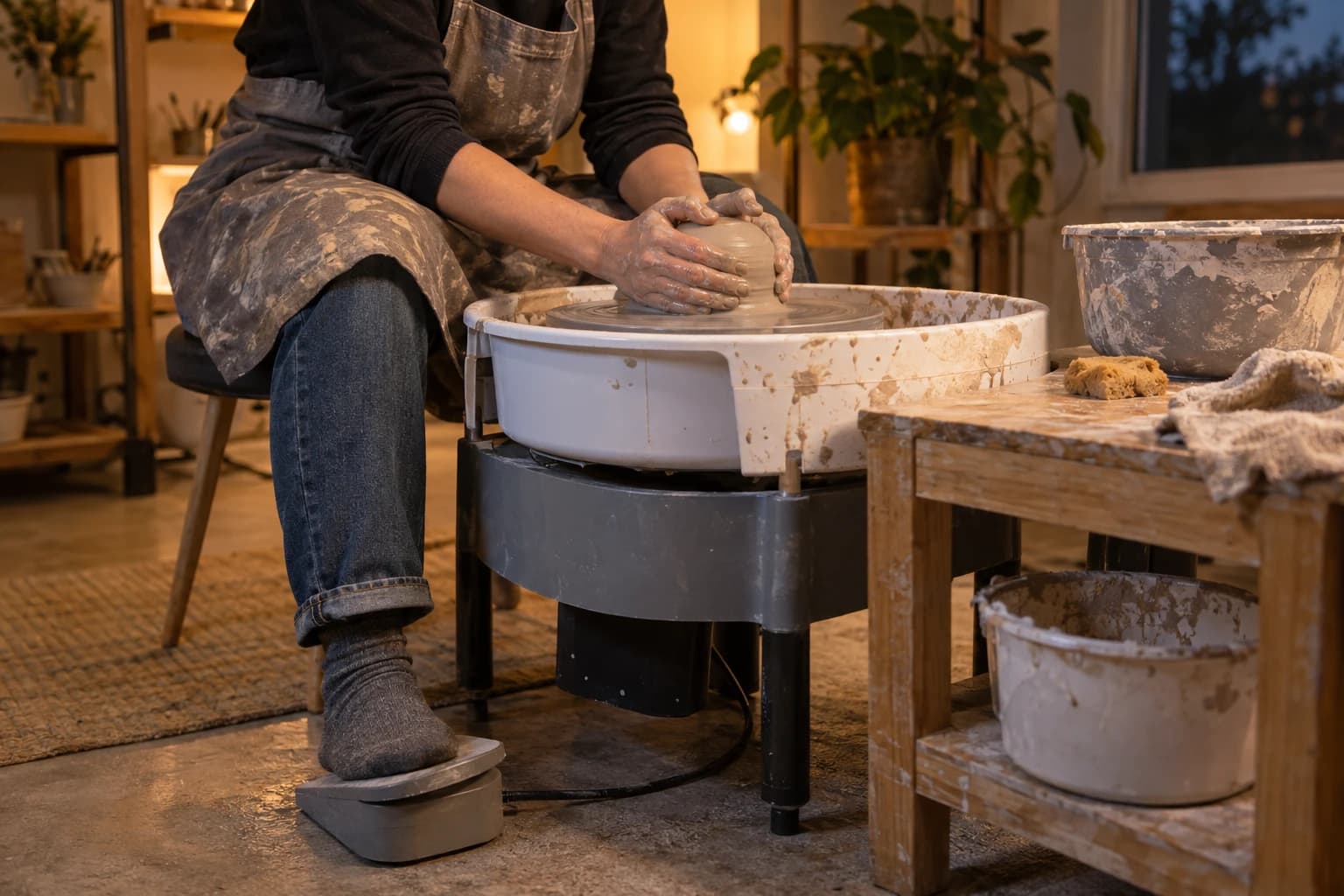
A beginner kit should start with a wheel that offers stable low-speed control, a wheelhead large enough for the forms you want to center, and a motor that maintains torque under pressure. The beginner electric pottery wheel buying guide explains how to compare those specs before choosing a wheel.
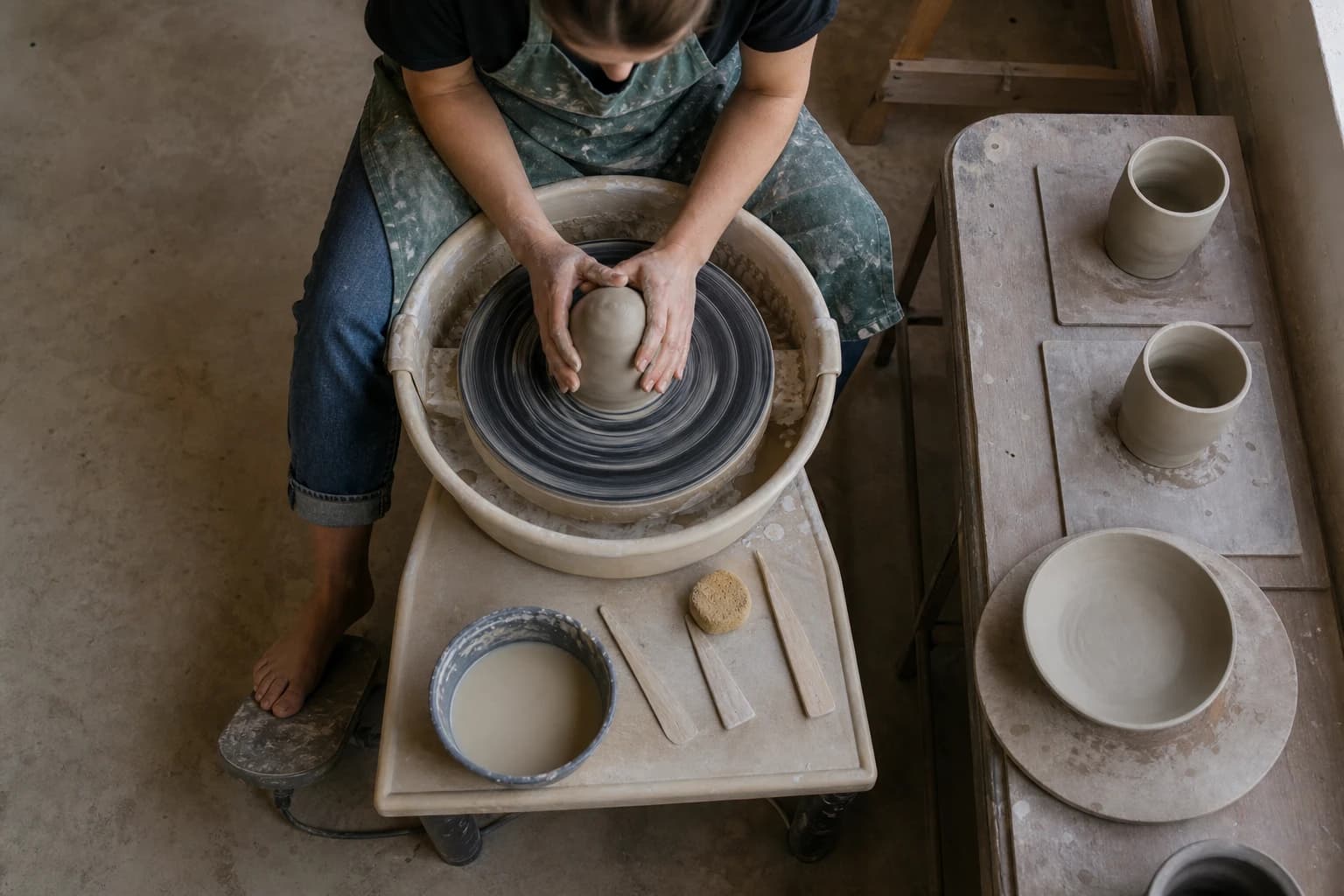
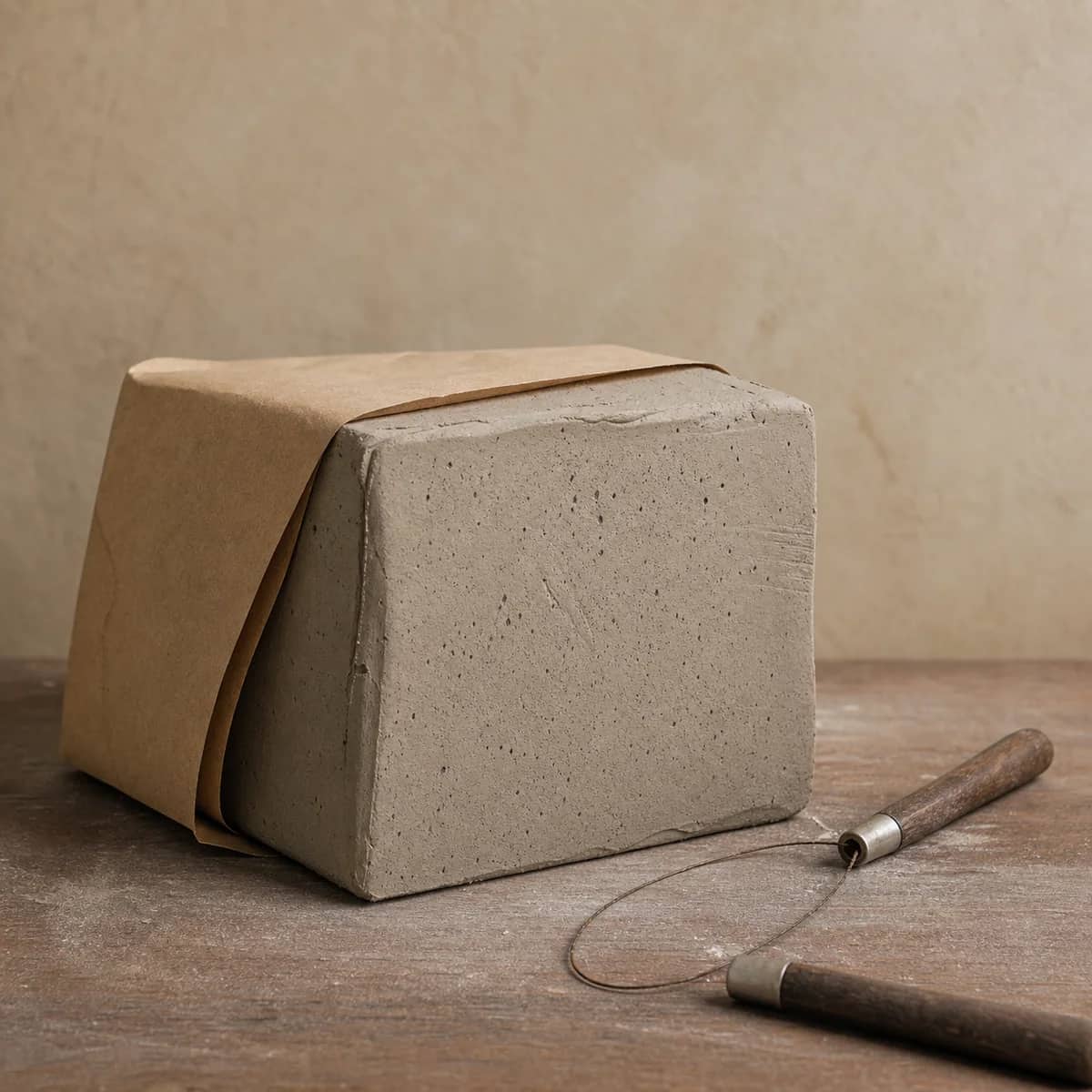
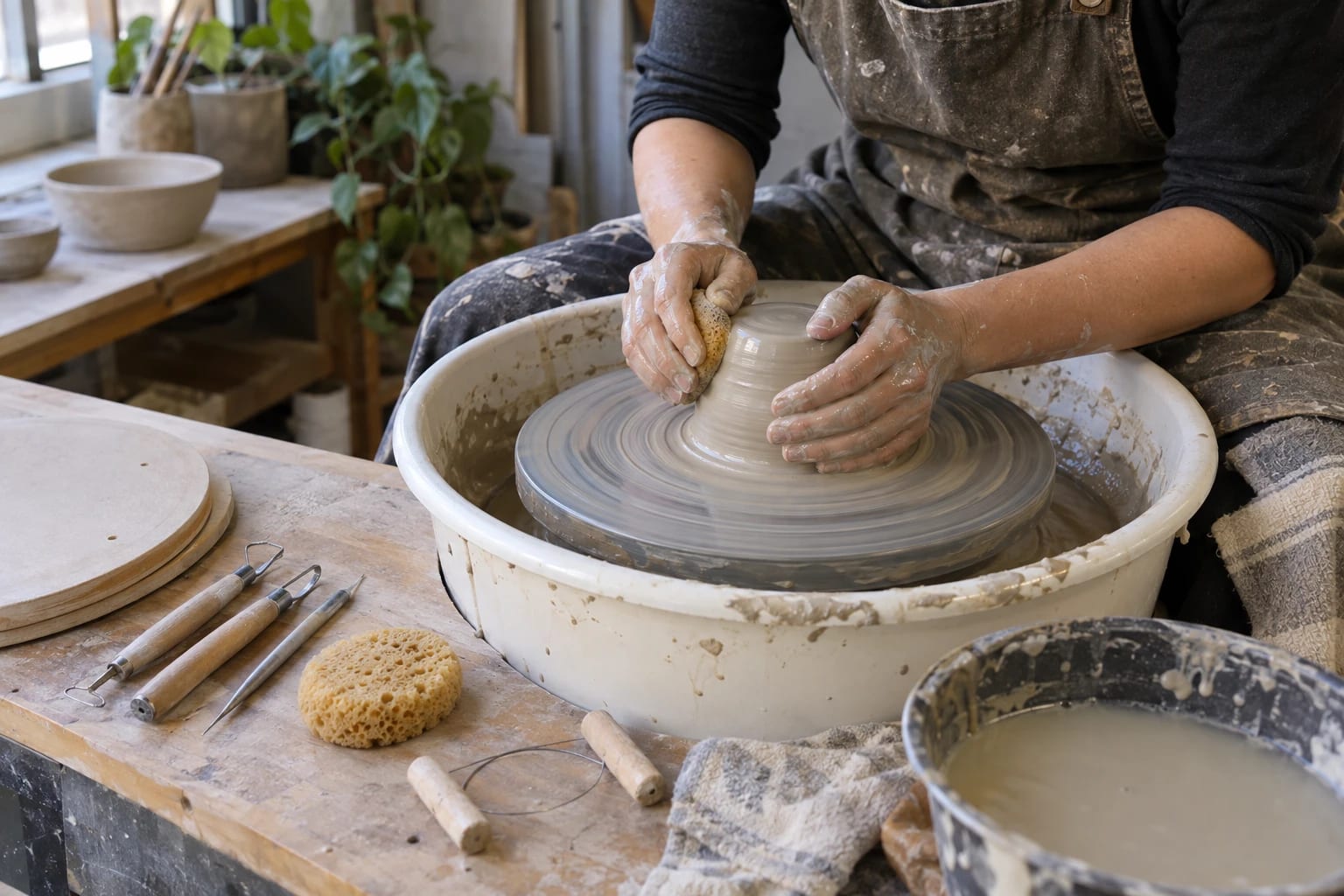
Useful accessories in a kit include removable bats (plastic or plaster), a set of basic ribbon trimming tools, a natural sponge, a wire cutting tool, and a needle tool. Some kits add a splash pan or apron. Bats let you remove wet work without distorting it. Trimming tools shape foot rings and refine profiles once the clay reaches leather-hard. A sponge controls water on the clay surface and cleans the wheelhead between sessions.
Accessories you can buy later
Many kits include items that matter more after your first few months of practice. A trimming turntable is helpful when you refine foot rings by hand, but it is not essential while you learn to center and pull walls. Advanced shaping ribs, calipers, and specialty trimming profiles can wait until you know which forms you make most often and which tools feel comfortable in your hand.
If a kit bundles instructional videos or a booklet, check whether the same content is freely available online. Some manufacturers offer tutorial series on their websites that cover centering, opening, and pulling techniques without requiring a kit purchase.
When buying the wheel separately makes sense
If you already own pottery tools for beginners from a handbuilding class or a previous studio membership, a standalone wheel may be a better choice. Compare the kit price against the wheel price plus the cost of any missing accessories. If the kit saves less than 15-20 percent and includes tools you will not use soon, buy the wheel alone and add accessories as your workflow requires them.
Some kits pair a capable wheel with low-quality trimming tools that dull quickly or bats that warp after a few uses. Read reviews that mention accessory durability, not just the wheel itself. A kit is only good value if the included items last through your first year of regular practice.
Comparing kit value across brands
List the accessories in each kit and price them individually from the manufacturer or a pottery supply retailer. Subtract the total accessory cost from the kit price to find the effective wheel cost. If that figure is close to the standalone wheel price, the kit offers real savings. If the accessories are worth less than the discount, you are paying for convenience rather than value.
Some brands bundle their entry-level wheel with a shallow splash pan that does not contain slip well or bats that fit only that manufacturer's wheelhead. Check whether the included bats use a standard pin or universal fit so you can replace or add to them later without compatibility issues.
FAQ
Do I need bats in my first kit? Bats let you remove wet pieces without touching them, which prevents distortion. If the kit includes at least two bats that fit the wheelhead securely, they are worth having from the start.
Can I use a kit wheel for larger forms later? That depends on the wheel's centering capacity and wheelhead diameter. A kit wheel rated for 10-12 pounds of clay and a 12-inch wheelhead will handle most beginner pottery wheel projects and many intermediate forms. Check the specs before buying.
Are beginner kits compatible with all clay bodies? The wheel itself works with any clay, but some kits include plastic bats that can crack when used with heavily grogged stoneware. If you plan to use coarse clay, confirm that the bats are made from durable plastic or composite material.
Keep this nearby while you make, then let the next piece be your own.