
TL;DR
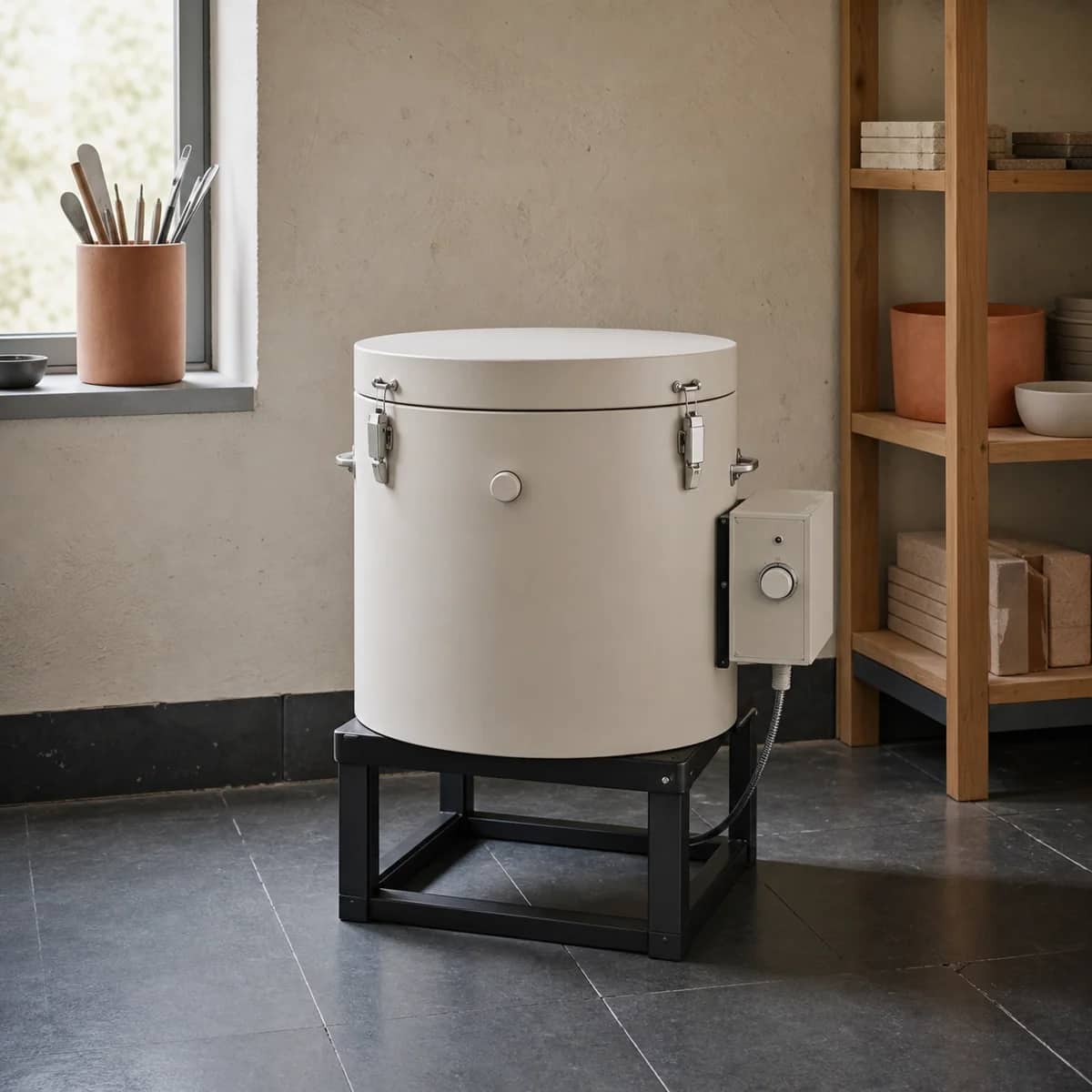
The best electric pottery kiln for sale is the one that matches your actual batch size, clay and glaze firing range, available electrical service, and installation location. Compare usable chamber space and total setup requirements before comparing controls or headline capacity.
What should you check before buying an electric pottery kiln for sale?
Start with four facts about your studio:
- The largest form you regularly make
- The number of pieces you want to fire together
- The clay and glaze firing ranges you use
- The electrical service and location available for the kiln
This prevents a common buying mistake: choosing a kiln by outside dimensions or maximum chamber volume, then discovering that shelves, posts, clearance, or the electrical supply limit how you can use it.
For background on room layout, storage, and workflow, see setting up a home pottery studio space and equipment.
How much kiln capacity do you actually need?
Choose capacity from your repeatable work, not from an occasional oversized piece. Measure the height, width, and depth of the forms you make most often, then allow room for shelves and posts. Remember that usable stacking space is smaller than the listed chamber dimensions.
A simple capacity test helps compare listings:
1. Sketch the shelf levels you would use for a typical bisque load. 2. Mark the space required by your tallest pieces and any posts. 3. Count how many finished pieces fit without crowding or touching. 4. Repeat the exercise for a glaze load, where spacing and placement may differ.
If most loads would be only partly filled, a smaller kiln may fit your cash flow and firing rhythm better. If you regularly split work across several firings, compare the time and handling involved with a larger chamber, but do not buy capacity your electrical setup or room cannot support.
The small electric kiln for pottery guide is useful when your work is mainly mugs, small bowls, tiles, and test pieces.
Which electrical requirements decide the purchase?
Before contacting a seller, identify the electrical supply available at the intended location. The kiln manual and local electrical requirements must determine whether a model can be installed there. A qualified electrician should assess the circuit, connection, and any work needed for your space.
Do not assume that a standard outlet is suitable because a kiln is physically small. Electrical demands vary by model, and a long extension cord or improvised connection is not a substitute for proper installation. Ask for the exact electrical information in the current manual, then have the proposed location checked before purchase.
Also confirm where the power connection will sit relative to the kiln, controls, walls, combustible materials, and access paths. Keep the equipment manual available from the research stage onward, because its placement and operating requirements take priority over a general buying checklist.
Which kiln features matter in daily studio work?
Prioritize features that make firings repeatable and easy to monitor:
- A controller that supports the firing programs your clay and glazes require
- Clear temperature and program information during a firing
- Access to witness cones so you can check heat-work rather than relying only on a displayed temperature
- Replaceable wear parts and service information that you can understand before buying
- A lid, door, and control layout that suit the room and your working position
Automatic controls can reduce routine monitoring, but they do not remove the need to load thoughtfully, use compatible materials, and follow the manual. A kiln with more settings is not automatically a better match if you will rarely use them.
For a broader explanation of choosing an electric kiln around a home or small-studio workflow, read how to choose a pottery electric kiln for a home or small studio.
How should you compare kiln listings?
Use the same worksheet for every model. Record the answers in this order:
- Internal chamber dimensions
- Shelf arrangement and usable loading space
- Electrical information from the manual
- Controller functions and firing-program flexibility
- Required placement and ventilation provisions
- Included shelves, posts, thermocouple, or other components
- Replacement-part and service information
- Delivery access, lifting requirements, and final location
- Total setup cost, including any electrical or ventilation work
Treat missing information as a reason to pause, not as permission to guess. Product pages can omit details that affect installation or workflow. Ask the seller for the current manual and model identification, then compare those documents with your studio plan.
Ventilation is a separate planning decision. Review electric kiln ventilation for a home studio and follow the kiln manual, local rules, and any qualified installer’s requirements for the final arrangement.
A practical purchase decision
Buy when the model passes all three checks: it fits your usual work, your electrical and room constraints can support it, and you understand how you will load and monitor it. If one check fails, pause the purchase and solve that constraint first.
A short test can make the decision clearer. Draw one typical bisque load and one typical glaze load using the proposed shelves and posts. Then compare the resulting firing frequency, handling effort, installation work, and space use across two or three models. The best listing is the one that supports your real workflow with the fewest unresolved assumptions, not necessarily the largest or most feature-heavy kiln.
Keep this nearby while you make, then let the next piece be your own.