TL;DR
A pottery trimming bat needs to stay flat, remain centered on the wheelhead, and hold a leather-hard pot without allowing it to shift. Material matters less than those three conditions, so test the bat you own before replacing it.
Does your pottery trimming bat need replacing?
Before buying a new pottery trimming bat, check whether the problem is the bat, the attachment method, or the pot’s trimming stage. A bat that appears sound can still create chatter and uneven foot rings if it rocks, bows, or sits off-center.
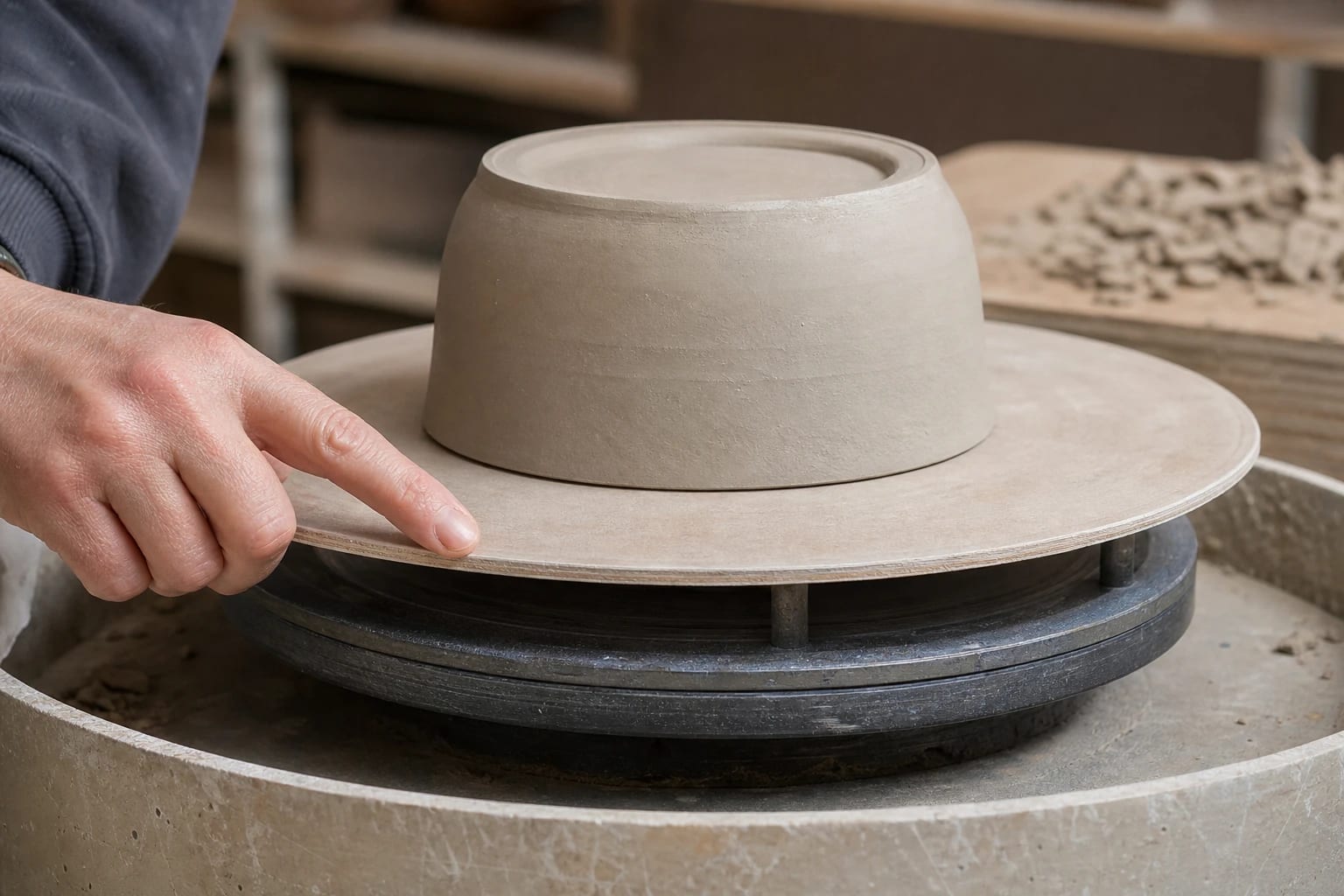
Place the clean, dry bat on the wheelhead and turn the wheel slowly. Watch the outer edge from the side. Then rest a fingertip lightly near the edge while it turns. A repeating rise and fall suggests the bat is not sitting flat or has warped.
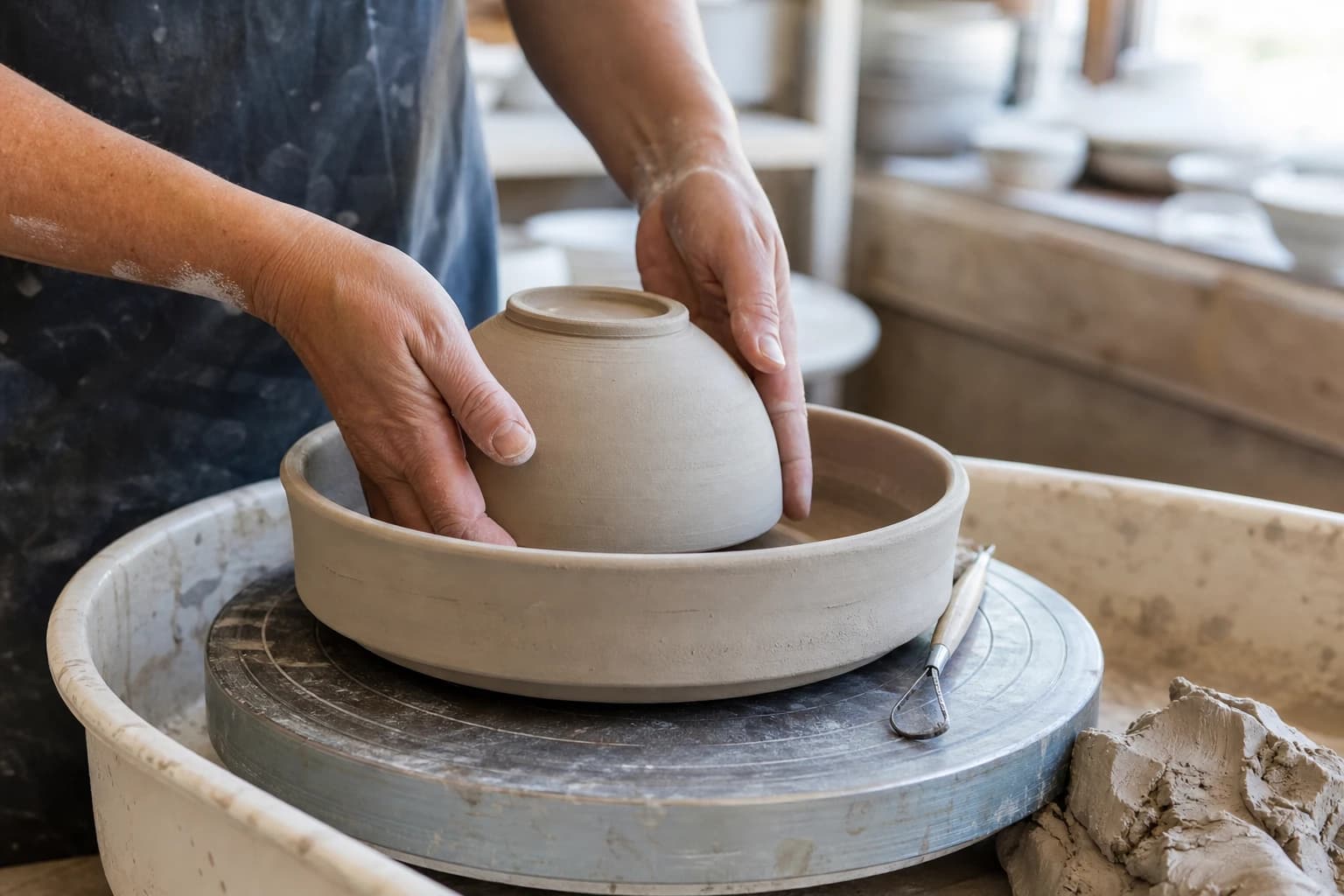
Next, set a plain leather-hard test pot upside down at the center. Turn the wheel slowly and look at the rim. If the rim travels in a circle rather than staying visually steady, stop and identify whether the bat, wheelhead, or pot is off-center. Do not try to correct a large wobble with trimming pressure.
For more help separating clay readiness from setup problems, see how to tell when clay is ready for pottery trimming.
Flatness matters more than bat material
Plastic, wood-based, and other rigid bats can all work for trimming when they are clean, flat, and compatible with the wheelhead. A material choice becomes important when it affects those basics in your studio.
A bat that absorbs water may change shape if it is repeatedly left wet. A very smooth surface may need a different holding method than a slightly textured one. A heavier bat may feel steady once mounted, but it is not automatically flatter or better centered.
Choose based on the forms and routine you actually have:
- Pick a bat that mounts securely with your wheel’s existing bat-pin or attachment arrangement.
- Favor a surface large enough to support the bases you trim without crowding the wheelhead.
- Choose one you can wipe clean between pots, so scraps do not hold a pot at an angle.
- Avoid using a visibly swollen, chipped, or bowed bat for close foot work.
If you are selecting a wheel and want to avoid an attachment mismatch, compare wheelhead workspace and accessory compatibility before treating bats as a separate purchase.
How should a pot be held for trimming?
The goal is restraint, not maximum stickiness. A secure pot stays in place under light, controlled tool pressure and releases without damage.
For a broad, even base, use a small amount of soft clay as a temporary anchor. Press the pot down gently, then run the wheel slowly and check the rim for wobble before trimming. Keep the clay attachment away from the area you plan to cut.
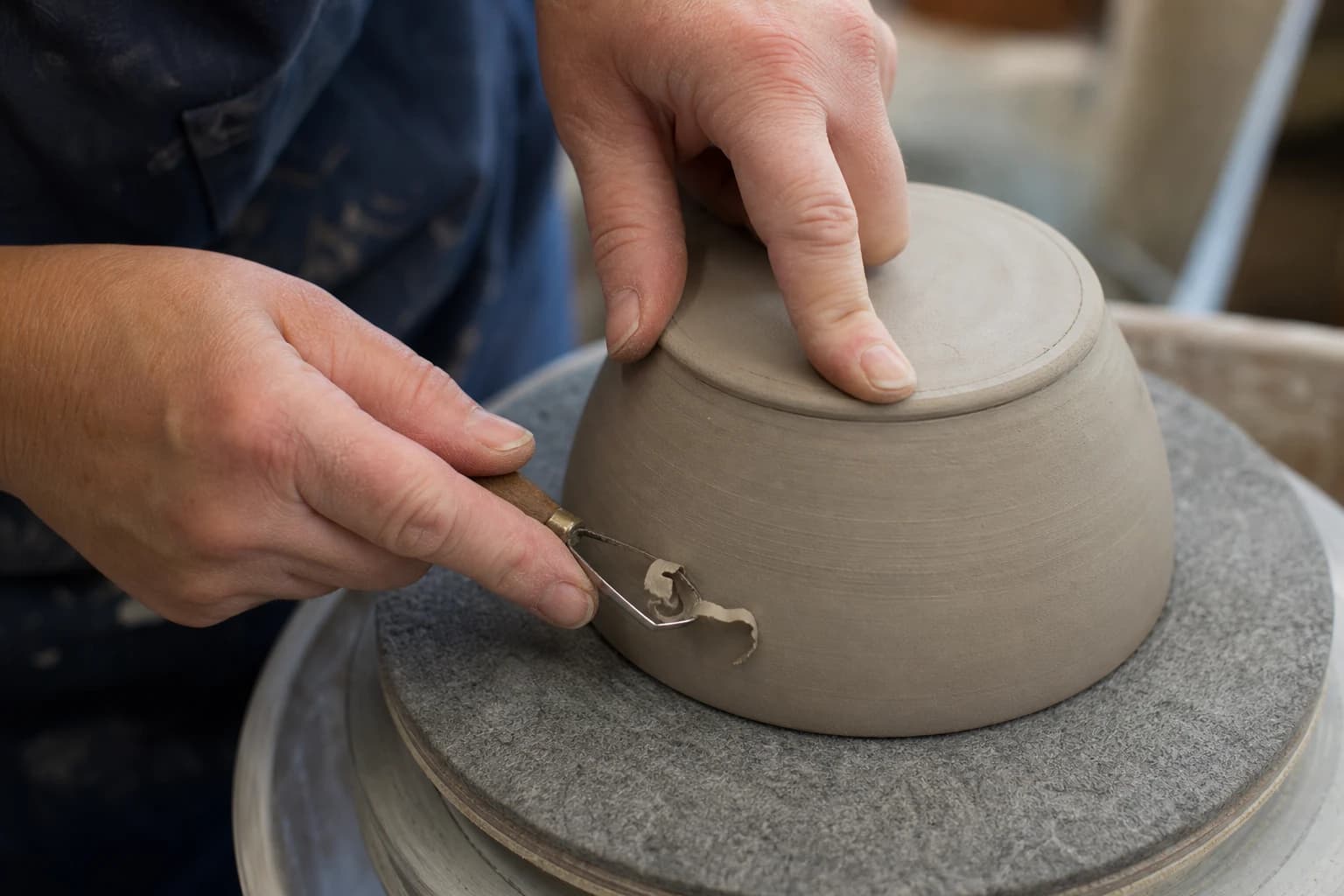
For a narrow foot, rounded base, or uneven form, a clay chuck may support the pot more evenly than forcing the base onto a flat bat. A pottery trimming chuck is especially useful when the pot needs support around the wall rather than direct contact at one small point.
Avoid attaching a pot to a bat with so much force that removal distorts the base. If the pot shifts, first check its leather-hard condition and centering. Add only enough support to prevent movement.
A five-step bat test before you buy
Use this repeatable check on your current bat and on any prospective replacement:
1. Clean the bat and wheelhead so dried clay cannot create a false wobble. 2. Mount the bat as you normally would and rotate it slowly. 3. Watch the edge from the side for a rise and fall. 4. Center an upside-down practice pot and check whether the rim runs true. 5. Make a few light trimming passes, then stop if the pot begins to creep or chatter.
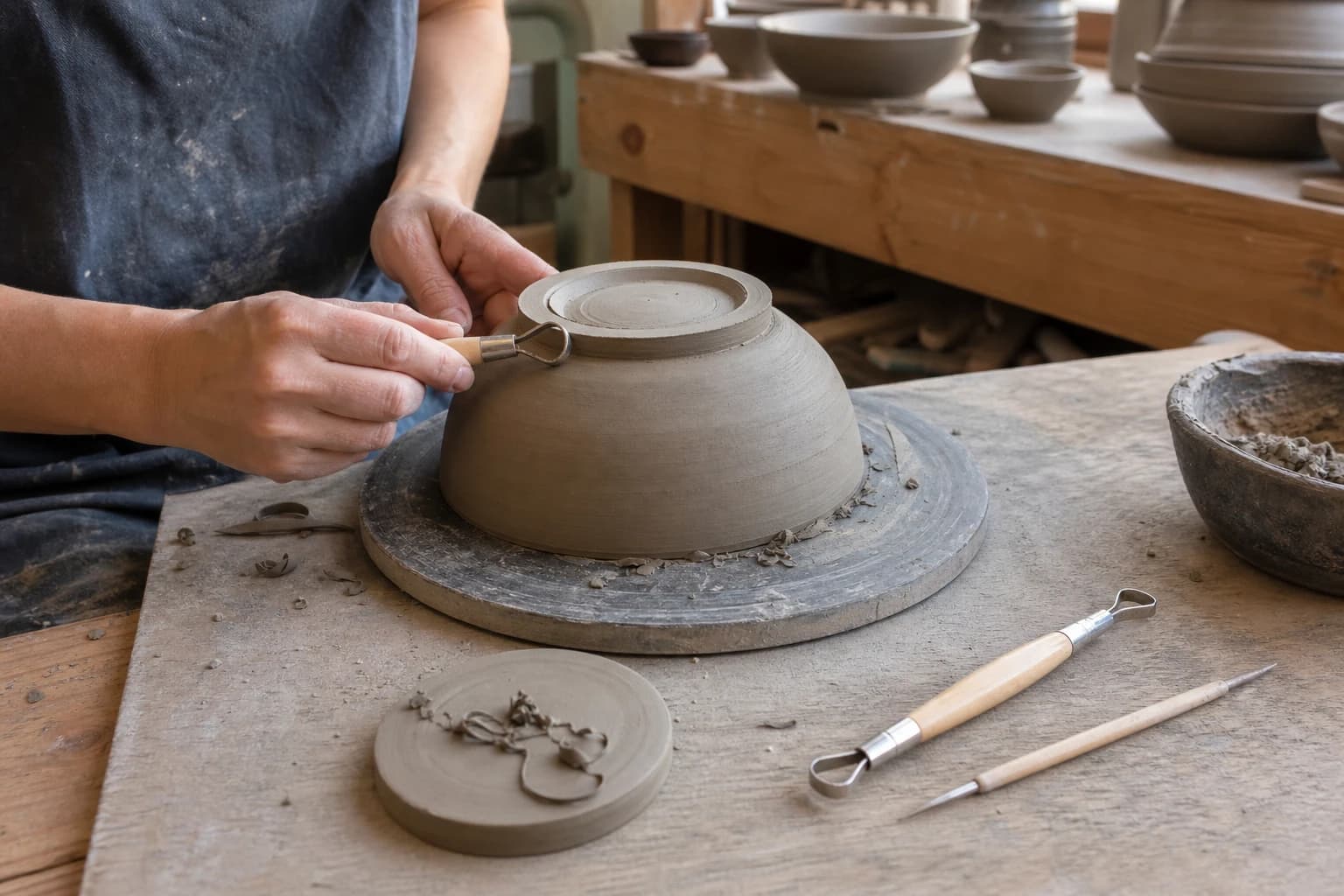
Write down what failed: mounting, flatness, centering, or grip. This separates a bat problem from a tool-control problem. If the pot is stable but trimming still feels rough, inspect the cutting edge and shape of your pottery trimming tools.
A stable setup protects the decision you make
A perfectly flat bat cannot compensate for a pot that is too soft, a wheelhead covered in trimmings, or a tool pushed too aggressively. Conversely, changing bat material will not solve a single warped or poorly seated bat.
Keep one clean bat for trimming when possible. Store it where it is supported rather than leaning under weight, and check it again after it has been exposed to water or a major temperature change. A simple visual spin test takes little time and can prevent a promising pot from being trimmed off-center.
Keep this nearby while you make, then let the next piece be your own.